4 reasons to attend the Taylor University Professional Writers Conference

One of the hats I wear is coordinator of the annual Taylor University Professional Writers Conference, held every summer on the university’s beautiful campus. And I am inviting you.

Just a little over 10 years ago, we started this conference, wondering, “If we build it, will they come?” Well, came they did, and we’ve been running a successful conference ever since. The conference is a natural outgrowth of the Taylor University Professional Writing major, where students are trained, among other things, to navigate the world of publishing. Meeting and networking (and sometimes interning) with agents, authors, editors, and social media experts from across the Christian publishing industry is just one of the many plusses of our program.

Here are 4 reasons you should attend our 2025 conference:

1. It’s short and inexpensive.

Our General Conference runs a day and a half and is packed with sessions and fun. It runs from Friday, July 25 at 1:00 to Saturday, July 26 at 5:00. During that time are options of 32 different sessions, 3 keynotes, open mic readings, faculty book signing, and one-on-one appointments.

And all of that (including meals) for just $139. You’ll get Friday dinner, and Saturday breakfast and lunch, and all of the activities above. If you’d like to stay overnight on campus, you can for an extra fee of $70/night.

2. Add a day for some extra, advanced training.

For $139, including meals, you can opt to come to one of our pre-conference tracks. Beginning at 1:00 on Thursday, July 24 and ending with lunch on Friday, July 25. This is an opportunity to go deeper with a particular topic. You can choose from the following two options.

Option A: Deep POV / Prepping Your Proposal

In this Advanced Track, you’ll be privileged to learn from literary agent, Linda Glaz, who had been acquiring manuscripts, editing them, and coaching writers for 13 years. You’ll learn on Thursday about deep POV, the kind of writing that will deepen the experience of the reader and allow him/her to stay in the characters’ points of view. Then, on Friday, you’ll do a deep dive into how to write a solid book proposal–one of your first steps for the gatekeepers in the publishing work.

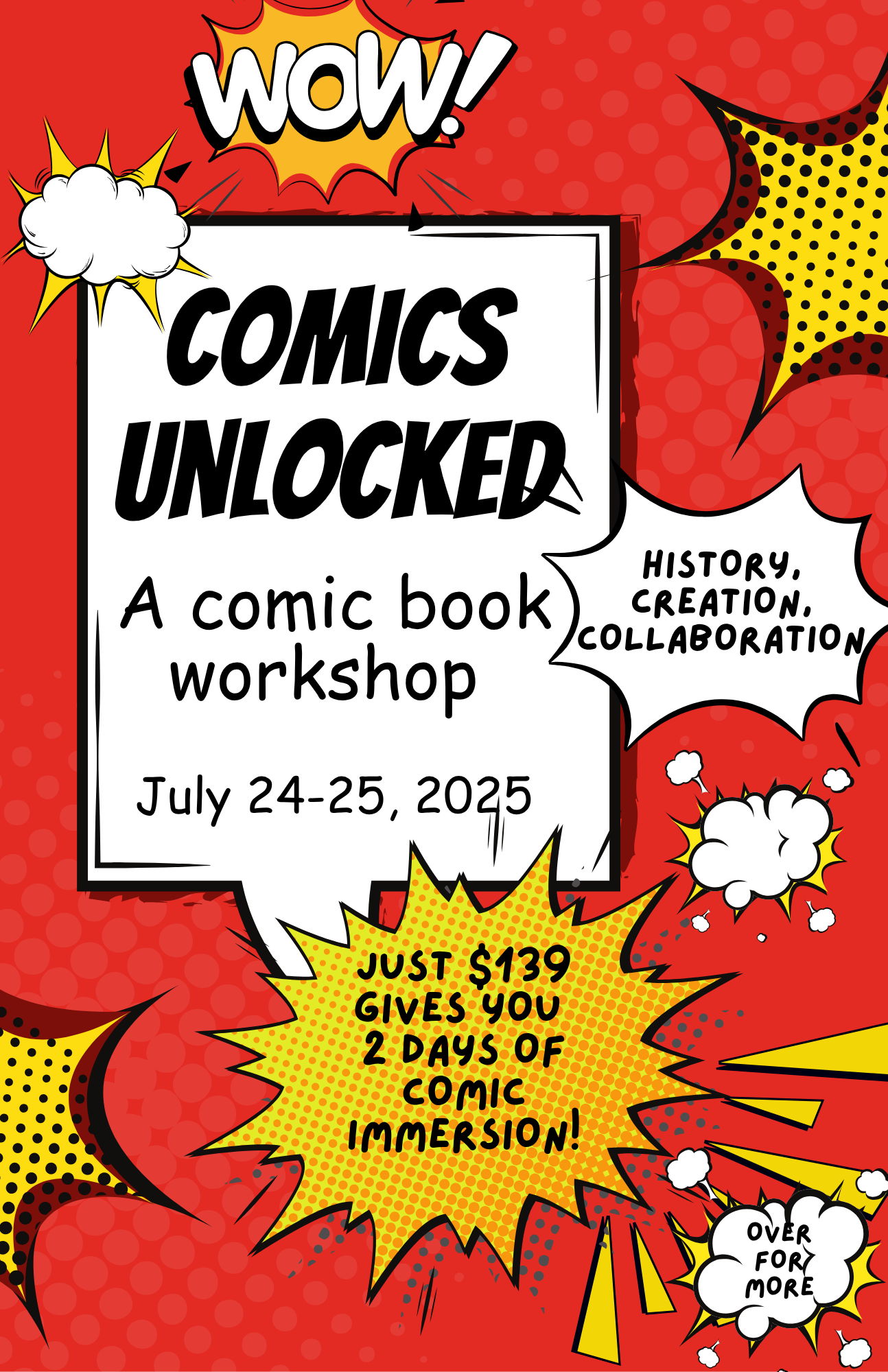
Option B: Comics Unlocked

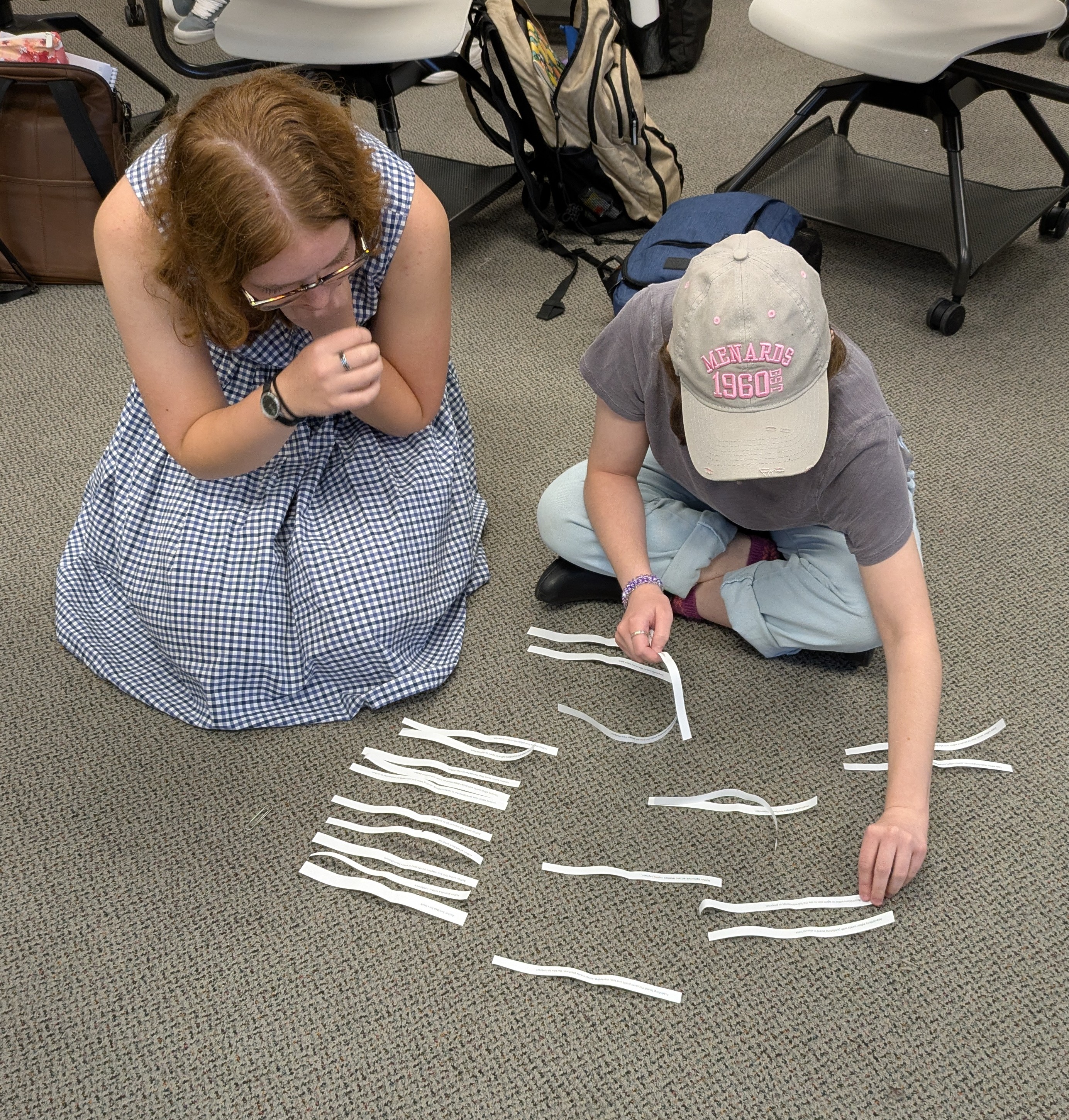
​Your teachers (two Taylor U students) have been interested in comic books for their entire lives and are excited to share their knowledge with you. In their Comics Unlocked sessions, you’ll learn the history of comics, the craft of comic book creation (including formatting, script writing, pacing, and page layout), the artist/writer collaboration process, and possible paths to publication. You’ll also have the opportunity to work on your own comic book pitch and plan.

3. Do both a pre-conference track and the general conference for a reduced price.

If you choose one of the pre-conference tracks AND the general conference, you get both for $249. You’ll move seamlessly from having lunch on Friday after your pre-conference session to the general conference that begins at 1:00 p.m.

Some snapshots from our 2024 conference.

4. We’re great for all ages, types, and levels of writers.

Never been to a conference before? We’re ready to help you navigate with our friendly faculty and helpful staff (who just happen to be Taylor U Professional Writing students).

Just getting your feet wet in the writing world? We’re great for beginning writers to learn about what it takes and how to get started when it comes to being a writer.

Think you’re too old to start writing? You’re never too old. Lots of Bible characters have taught us that.

Think you’re too young? If you’re at least 16, we especially want to invite you to the conference. You’ll get to take part in all the sessions and networking, plus our college student staff will give you evening activities and a sense of what college life is all about.

Thinking you’re too advanced to need a conference? Maybe you’ve been around the industry a long time; maybe you’re a published author. Even so, there is never a time that you don’t need a refresher or some encouragement. And even better, you bring your expertise to those newer writers.

Check out the conference website at www.tupwc.com and register today!

A “Find Your Tribe” gathering of nonfiction writers at the 2024 conference.

Create a personal social media calendar

As I mentioned in a previous post (4 keys to your author social media strategy), you as a writer need to be on social media, you need to choose the platform(s) that most works for you, and you need to be posting consistently.

“Aye, there’s the rub” (to quote Shakespeare). It’s difficult to be consistent.

In that post, I suggested that you create a weekly schedule that you can keep up with (and because that weekly schedule can repeat, you easily have a monthly schedule). I said that perhaps on Monday you’ll share on Facebook about something you learned in research for your book. On Wednesday you’ll post on Pinterest some photos you found about the time period of your historical fiction. On Friday, you’ll share the link to an article you read that was pertinent to your book’s topic. On Saturday, maybe a Canva-created quote from your book.

But if you’re a visual person like me, perhaps putting this on a calendar (physical or electronic) will help this make sense. This will keep you from worrying about posting or getting behind and having lapses of days or weeks at a time.

As I was posting around the release of Pathway to Publication, I needed to create a visual plan to help me to both remember to post and not stress about remembering to post.

Below is a sample week that I created at the time. This one week provided a template for the rest of the month — which then created a habit that’s easy to remember. Each day I describe a post or two and which platform. Of course, when I feel inspired, I can post more often. I take Sundays off and breaks on Saturdays between blog posts. And I only blog once a month. I wish I could do more, I just don’t have it in me with my other responsibilities.

Sample One Week Social Media Calendar

MonTuesWedThurFriSat
Insta and X: Create a Canva with helpful line from book.
Post.
FB and X:
Post regular weekly Typo Tuesday pictures.
X: Share a link to an article of interest about writing or books.Insta and X: Post humor meme about writing, teaching, or books. X: Ask convo starter question. Insta: Photo “day in my life.”Website: Work on blog. Plan 1x or 2x month. Share on FB & X.

You may have other social media to post on, or you might set aside a day each month to work on a newsletter. The point is to decide what you need to do and then schedule time each week or month to get it done.

So much less stress when you just have to do what is scheduled on each day to do!

Beyond the weekly schedule, I try to be aware of annual holidays and special days throughout the year tied to my brand — writing, editing, books, communication, teaching. (The following are courtesy of the Days of the Year site.) These can help focus the quotes I use.

  • January: New year, resolutions, how you can set up for a successful writing year, setting goals; January 9 (National Clean Your Desk Day); January 23 (National Handwriting Day)
  • February: God’s love for us; February 7 (National Send a Card to a Friend Day); February 14 (International Book Giving Day); National Library Lovers Month; Freelance Writers Appreciation Week (second week)
  • March: March 2 (Dr. Seuss Day); March 2 (World Book Day); March 4 (National Grammar Day); Easter (March or April)
  • April: Easter (March or April); spring cleaning; April 6 (National Bookmobile Day); April 20–26 (National Stationery Week); April 23 (World Book Night); April 27 (World Stationery Day); April 30 (Independent Bookstore Day)
  • May: My college students graduating; May 3 (Write a Review Day); May 16 (National Biographers Day); May 19 (National Notebook Day); Memorial Day
  • June: my professional writing summer academy week; June 23 (National Typewriter Day)
  • July: Info about the upcoming Taylor University Professional Writers Conference (held end of July); July 1 (Write a Letter Appreciation Week); July 4 (Independence Day); July 30 (Paperback Book Day)
  • August: Prep for the teaching semester; August 5 (Blogger Day); August 9 (National Book Lovers Day); August 31 (We Love Memoirs Day)
  • September: Back to teaching; Read a New Book Month; Sept 1 (World Letter Writing Day); September 6 (National Read a Book Day)
  • October: October 1 (International Coffee Day); October 18 (National Chocolate Cupcake Day—I love cupcakes; sue me); October 29 (National Cat Day—I own way too many cats)
  • November: November 4 (Fountain Pen Day); November 15 (I Love to Write Day); Veterans Day (I’m an Air Force brat); Thanksgiving
  • December: December 21 (National Short Story Day); Christmas

Now if you check up on me, you’ll probably not see this continued activity because I know what I should do but am not very good at execution. I did fairly well around the release of my book but have not been consistent since. Writing this post is making me think I need to get myself back on track.

What about you? What do you do to stay motivated and consistent with your social media postings?

Gif courtesy of https://metricool.com/social-media-gifs/

How to spot (and avoid) publishing predators

I’ve seen it happen one too many times (and one time is too many) — well-meaning writers get caught in the net set by predatory “publishers.” The writers thought they were getting published, only to find themselves with an inferior product (if indeed they end up with any product at all) and out a whole lot of money.

In a writers Facebook group recently, someone posted that they had received a phone call from a publisher who wanted to publish her book. She had some red flags (how did they even get her number, she wondered), so she asked the group for advice. Thankfully, every response warned her that this is a scam. I so appreciate all those seasoned writers in the online world helping one more person to not be a victim.

It’s sad to say, but the world is full of folks who are ready to take money from us moony-eyed writers who simply want to get our words out there. So how do you spot a scam?

You can spot these “publishers” by how eager they are to publish your book. Their process is simple. They will target you, do a sales job, flatter you and your book, make big promises, and then ask for money.

The fact that they target you is the first red flag. That’s not how the publishing process works. Generally, literary agents and acquisitions editors are wading through piles of proposals. They are working with the folks who know the process, not out seeking newbie writers and calling them on the phone offering to publish for a fee.

Let’s say you wrote a post on Facebook about finally finishing the writing of your book and then, magically, you receive an email or phone call from a company that effuses about your book and says they want to publish it!

Wow, you think, I didn’t realize it could be so easy!

Well, my friend, it isn’t. These folks are simply preying on new authors who haven’t yet gained the knowledge and experience of what it takes to publish a quality book. In short, they will publish anything as long as they get their money from you up front. They have no editorial standards. Their goal is not to create a quality product or see your book do well.

They are going to approach you first, flatter you, do a sales job, ask you to send them your manuscript, and ask for a credit card number for a large chunk of money (we’re talking in the thousands: $4K, $5K, $12K) for a list of services that they say they will provide (some of which are virtually meaningless, others that may or may not be delivered or may not be up to industry standards — such as their editorial process). They will send you a contract but generally the terms are not standard in the industry.

Hear me say this: These publishers are not trying to work with you to create a book of high quality. They just want your money.

You see, with traditional or independent publishers, they invest in your book so they have an interest in it selling well. They vet your work before publishing by studying your book proposal and sample chapters. They edit and copyedit and proofread and lay it out and create a compelling cover design and help with marketing. Because they make an investment in your book, they want to see it do well. They want to make back their investment and make money on it so that you also can make money on it.

Not so with these scam publishers. You will pay money and have no say over anything. Most detrimental of all, they contractually often take away your rights to your book — meaning you actually no longer own your book. You’ll have paid out of pocket and lost control of everything — including your book. It’s a lose-lose. These predatory publishers can afford to publish anything (no matter how poorly written or how poorly someone they hire edits it) because they aren’t making money on the sale of quality books — they are making money off you, the client. You pay them up front, so they get their money regardless of what happens with your book sales.

There is absolutely no risk to them. Some may offer up a little bit of service, but very often you will find yourself with a poor quality product that only works against you. Again, it’s a lose-lose for you.

Note that I’m focusing on those places who contact you. These may fashion themselves as “publishers” or “hybrid publishers” or “self-publishers.” And unfortunately this puts a bad face on the legitimate self-publishing or hybrid companies that, while they do charge money for their services, are working on a business model that is trying to help you create a superior product. See the link in the bulleted list below of ratings of self-publishing companies.

The key is, if it sounds too easy and too good to be true, it probably is. So before you outlay a chunk of your life’s savings, do some thorough research.

  • Look for information about the company online, especially complaints.
  • Check out this list of ratings for self-publishing companies.
  • Insist on receiving a sample contract that you can review. (If they want money first, don’t give it to them.)
  • Ask for some names of books the company has published that you can review. (Even if the company is legit, you do want to see what other types of books they publish so you know if you want to be part of their catalog.) If you can get your hands on physical books, even better, so you can check the quality. Get in contact with those authors online to ask about their experience.
  • Check out this post with more information about what to look for in order to avoid publishing scams.
  • Check out Writer Beware for other advice.

Chances are, you do all of the above with that publisher who called and flattered you, and you’ll discover a scam. Steer clear. Ultimately, you may continue your quest to get traditionally published, or you may steer toward a hybrid or self-publishing route. But you’ll be in charge, you’ll research and contact legitimate companies, and you’ll be able to create a product you can be proud of.

4 keys to your author social media strategy

As much as I talk and teach about social media, I have rarely written about it on this blog. Turns out, 2015 was the last time. In rereading that post from nine years ago, I see that it stands the test of time. While social media constantly changes, some things stay the same. One thing that is the same:

If you want to get your book published, you need to be out there on social media.

So how do you build a social media strategy? I know many of you struggle with this. But every publisher or agent will tell you that it is vital that you have a presence on social media. Let me help you get over your distress and offer four key points.

1. It’s not all about you.

That’s meant to make you feel better. Being on social media as a writer means the privilege of engaging with your “tribe” (a Seth Godin term), the community of writers — and not just writers, but writers writing in your genre, published and unpublished, local or around the world. On social media you find and follow those people. It has never been easier to connect with your favorite authors and with other likeminded writers working in the trenches. Seriously, we need one another.

Make your social media about those folks. Celebrate their successes. Read their books and learn from them, then share them on your social media, write reviews, be excited. Point to others, not at yourself. The more you do this, I guarantee you’ll begin to build a network of people around you who will support you when your time comes.

2. But you should also share about you–authentic you.

But at the same time, you need to let people see a window into your world. You’re not just lurking over in their world while presenting a blank slate about your own. That’s hardly helpful because the whole purpose is to join these networks of people. So let them know you a little. But be you. Be authentic.

Share about your writing process: was today a great day of writing? Why or why not? What works best for you? Share about what you’re researching and learning. All writers know the rabbit trails we can get on when we’re researching information on the internet. What new pertinent (or not) information did you learn today? Then you can get a little more personal.

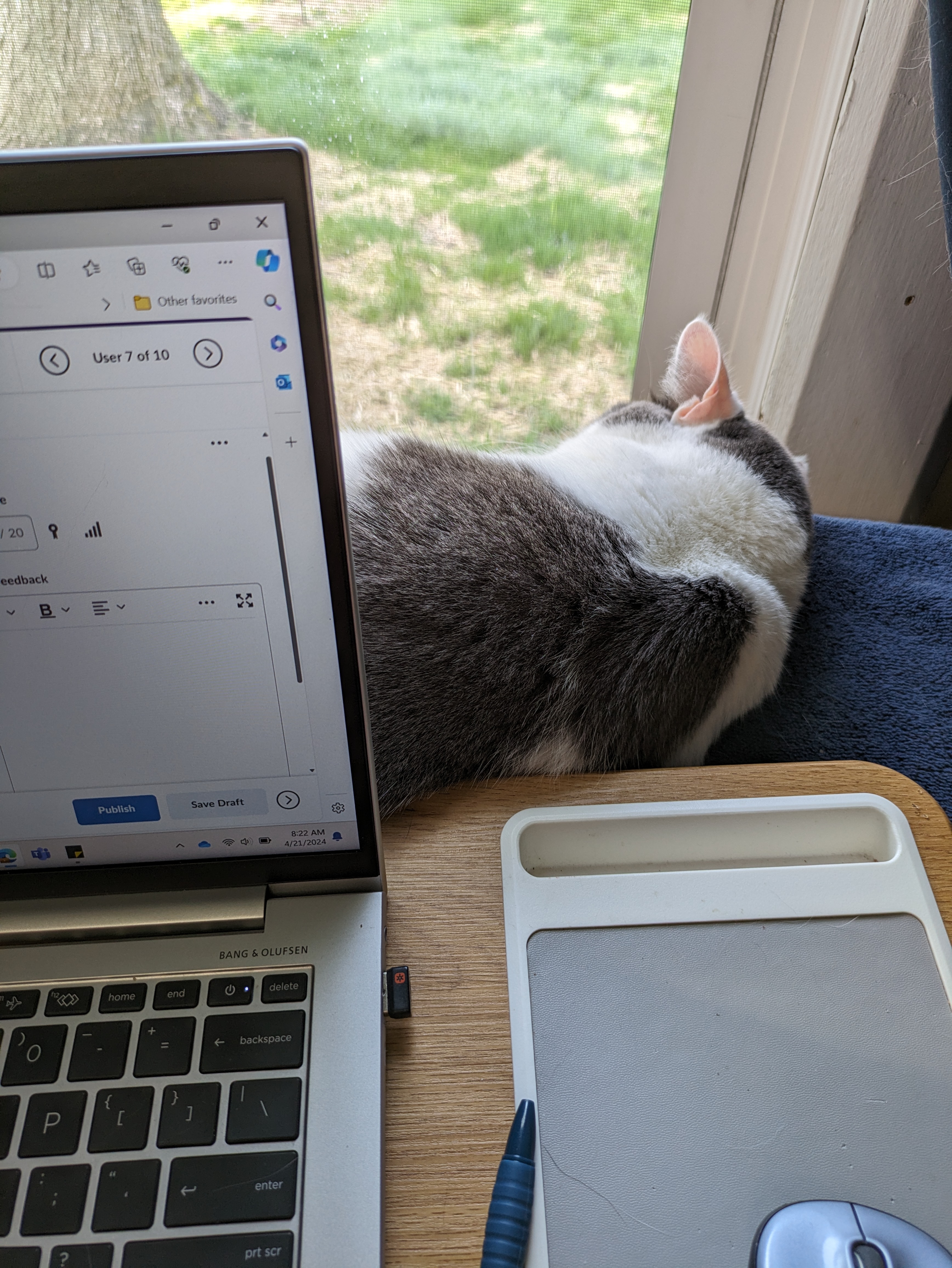
Pinky is not helpful at all.

You don’t need to go overboard, but do know that people are interested. Talk about how your cats are not helpful. Pets are always safe and fun, especially if you don’t want to share family photos or information. Fine, just stick with your writing. I would advise you to stay out of politics unless that’s what your book is about. Just stay on brand. You can do all of these whether you’re blogging or posting on social media.

3. You don’t need to be everywhere.

You can’t do every social media platform and do it well. After all, you have a book to write and, I assume, probably a million other things going on in your life. You should be on the platforms you’re comfortable with and where your readers are. I would advise that you have a website, because that is your own piece of real estate that all of your social media can point back to. This is where you have your author photo and bio and your blog (and yes, you need a blog so it can showcase how you write and that you can indeed write).

From there, perhaps you just want to do Facebook. Or Goodreads. Or Pinterest. If you’re writing YA, then you need to be where the young people are, which is probably Instagram. Study how to use these platforms well. Find your favorite authors or writers you admire and see what they’re doing on these platforms to give you ideas.

4. Post and engage consistently.

This ties back to the “if you want to get published” theme and the “you can’t be everywhere” idea. You may despair that you haven’t been active for a long time or you don’t have many followers. That’s okay. Start back in again, and then create a weekly schedule that you can keep up with. It has to work for you or it won’t work.

Perhaps on Monday you’ll share on Facebook about something you learned in your research. On Wednesday you’ll post on Pinterest some photos you found about the time period of your historical fiction. On Friday, you’ll share the link to an article you read that was pertinent to your book’s topic. On Saturday, maybe a Canva-created quote from your book.

Then, as people engage with you, engage with them. While many social media experts will talk about how you need X number of followers to even be considered for publication, that’s not true everywhere. If you’re building a following and engaging with your followers, if you’re actively and consistently posting on brand, if you’re showing yourself as winsome and creative and someone any publisher would love to work with, well, you’re doing it exactly right.

Realize you’re building relationships. That’s the most important thing you can do as you build your social media and create your author platform. It’s not all about you. You don’t have to become an internet influencer posting selfies all day. In fact, that’s the opposite of what you want to do. Focus not on yourself but on your tribe and your readers. Put good content out there that will be interesting and helpful to them.

Be you. Be there. Enjoy. Drop your blog link or social media handles below so I can follow you!

Formatting your Word documents the way publishers want them

Microsoft Word can be a mystery, I know. I have worked on manuscripts since way before Word came to be (back when we carried our precious documents from computer to computer on the 5-1/2 floppy — yes, actually floppy — disks). Well, and before that, I worked on an actual typewriter. But I digress. Over the years, I’ve seen the Microsoft Word program change and evolve, making life so much easier for all of us writers.

As I created both my Word by Word book, and then it’s companion titled Pathway to Publication, I wanted to give my readers material to help them with the formatting of their Word documents to the standards that most publishers require. In this post, I talked about some of those standards. In many of my “Let’s Get Tech-y” posts, I gave step-by-step instructions along with screenshots to help Word help you do what you need to do.

But guess what? I have now actually entered the world of YouTube <raucous applause>.

Minions image courtesy of GIFER

I mean, I currently have 8 videos and 2 followers, so I’m basically an influencer now.

In any case, I will continue to create simple videos to help writers navigate Microsoft Word on my YouTube channel (@lindataylor4207).

So far, I have the following videos for your enjoyment:

Creating a Table of Contents in Microsoft Word (2 Options)

Creating a Copyright Page (and Noting Bible Versions on It)

Creating a Title Page in Microsoft Word

Inserting Page Breaks (and Why You Should Do So)

Adding Page Numbers AND Adding Page Numbers Except on the Title Page

Deleting Double Spaces, Replacing Hard Tabs, and Fixing Those Pesky Straight Quotes

Building a Manuscript Template

Adding Style Tags to Microsoft Word Documents

Help me help you. If you have a question about something in Microsoft Word, feel free to ask and I’ll try to answer and add the video to my channel.

Happy writing, everyone!

How can I help your writers group?

One of the joys of having written a book about the publishing process is gaining the opportunity to step out of the pages and help people in person. I wrote the book to advise writers who have a manuscript (or maybe at this point, just an idea) and are asking, “Now what?” My book lays out the pathway to publication. And while I hope lots of writers find help in the pages, I also know that sometimes coming to a gathering to discuss the process and get answers to their questions is even more helpful.

So I’m offering up just that. I’d love to meet your writers group, come and hang with you at one of your meetings, share some of what is in the book, and do a brief workshop to help writers get started.

The workshop will walk writers through the basic questions that publishers want to know — whether you’ve got a book idea or an article idea. I’ll help the writers in your group articulate the focus of their writing and make a plan to move forward.

I’m happy to come and do a one-hour session, or even a couple of hours. Let me know where your group is at, the questions, they have, and the type of advice that would best help them. If you’re beyond my driving distance, I can set up a Zoom call for as long as you need.

Contact me for availability and charges. I promise, I’m very affordable! We’ll work together.

Let me help take the mystery out of the publication process. Let me help the writers in your group take their first steps on the pathway to publication.

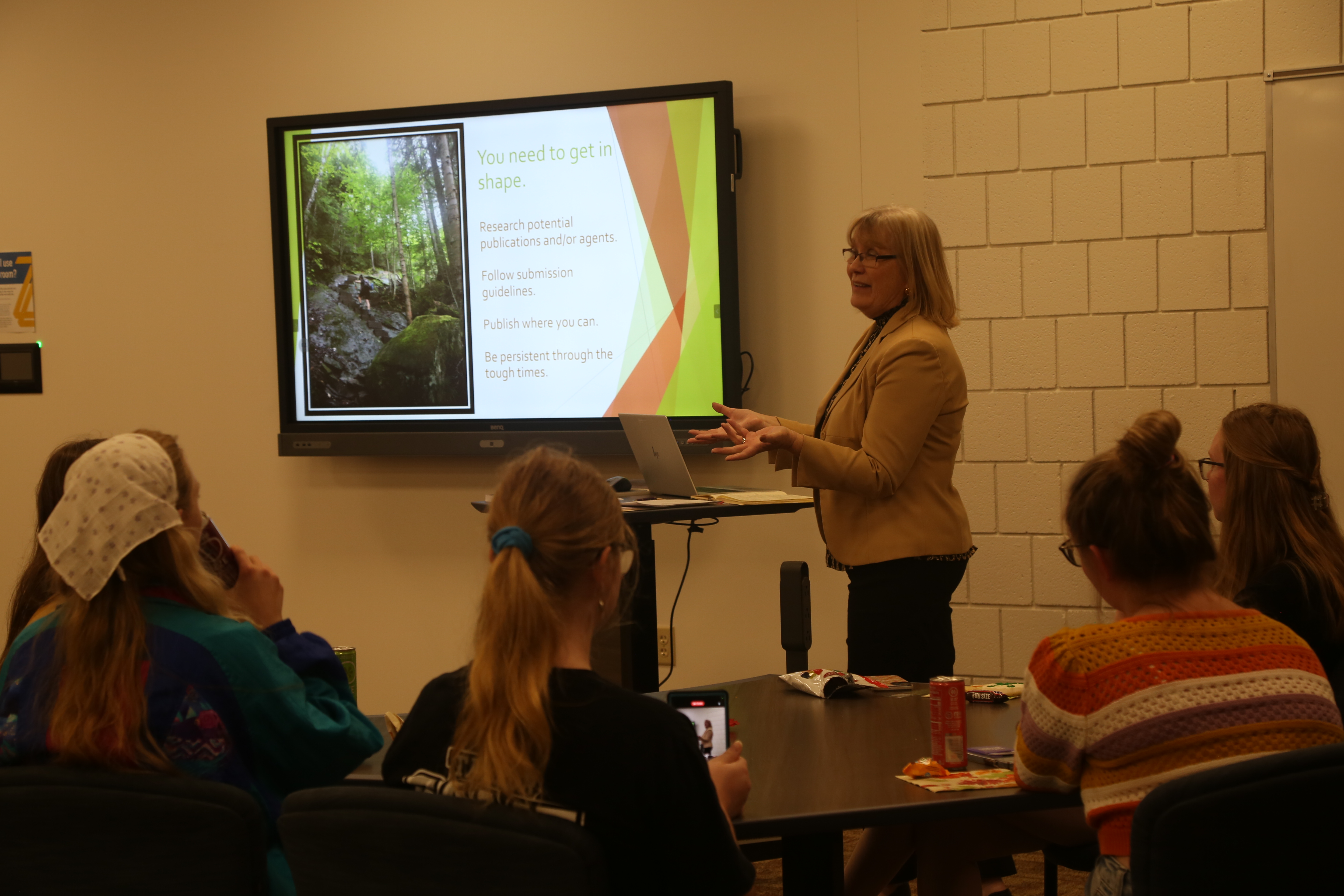
Following are a few photos from my book talk/workshop at Taylor University. (Cookies may or may not be included!)

Keeping me humble – adventures in typos

We writers know that, on the one hand, we need self-confidence to put our writing out there and dare to get published, but we also need humility. We don’t want to go out into the publishing world with an arrogant attitude.

I dare say we will be served up humility constantly — we probably don’t need to seek it. We just need to learn how to deal with those times when embarrassing things happen.

Here’s my latest dilemma. I’ve talked on this blog about my latest book, Pathway to Publication. I’m very proud of this book (seriously, in the best way; you know, that “humble proud” attitude). I feel very good about the book and what it can offer writers.

There’s a meme out in the world that says if you want to do a really good proofread, get your book published and then open to any random page.

I laughed and laughed.

Then yesterday, I opened my book to two random pages.

I found two (count ’em, TWO) typos in my brief foray. This does not bode well for the rest of the book. I promise, my book was proofread by me, by editors, by the publisher, and again by me. I have no one to blame but myself. Me. Professional editor. Me.

Original meme is from shencomix.com

Here they are, for your viewing pleasure.

First, on page 17, right away in the “How to Use This Book” section, I managed to say first that readers could download a “Microsoft Word or Excel” version of the worksheets on my website. Dear readers, I meant “Microsoft Word or PDF” (PDF appears later). In my proofread, I slid right right past it.

This second one, again, in my brief visit back into my printed book, appears on page 47, end of the first paragraph. Clearly I edited something in that sentence and left out the word “What” at the beginning (or I could have seen this and deleted the word “about”).

Seriously. Excuse me while I go away and eat some humble pie.

It’s just part of the process. I join a legion of professionally published books out there with typos.

https://en.wiktionary.org/wiki/ugh

Indeed, in her keynote presentation this past weekend at our Taylor University Professional Writers Conference, Maggie Rowe made clear to all of us that we need to “embrace humility.”

Well, humility and I are hugging it out right now!

Have you ever found a typo in your own work, after the fact?

Trail Angels and Trail Magic – Writer Style

As I’ve discussed in this post (and if you’ve been one of the wonderful folks who purchased my latest book Pathway to Publication), you know that I make comparisons of writing a book and getting it published to the very wearisome task of doing a thru-hike on the Appalachian Trail. My sister began her thru-hike on the trail on March 23, the day before my book released (definitely a God-thing), and as she blogs about her trip, I think the comparisons continue to be apt. You can find her blog at The Trek, Carol Fielding. Her trail name (all hikers have a trail name) is Fortune Cookie. More on that below.

You need the right gear, you need to be ready to face difficulties and overcome them, you need persistence, and you need a healthy dose of confidence as you try to get a book published. It’s a long trek.

A couple things I didn’t include in the book and have only discovered through my sister’s blogs are the terms “trail angels” and “trail magic.” On April 5, she writes this in a post titled “Angels and Magic in Georgia“:

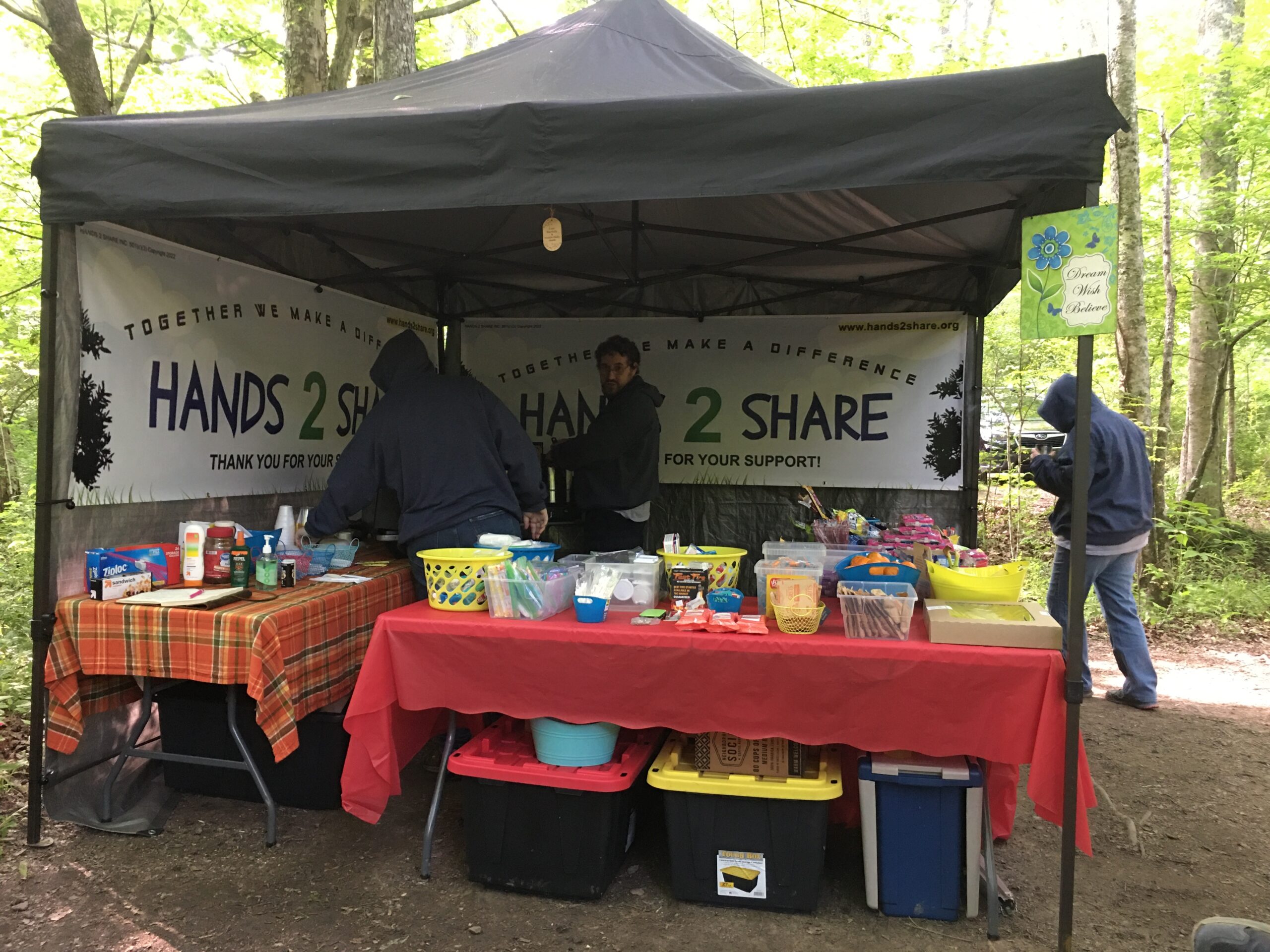
“In case you don’t know what trail magic is, it’s when people set up at a road crossing or parking lot with food and drink. Sometimes they actually hike the food in and pass it out on the trail. Food you can’t carry with you on the trail. Fresh food. Those people are called trail angels and to hikers they are truly angelic.”

Folks who live near the Appalachian Trail will provide for hikers passing through. Sometimes it’s containers of fresh water beside a tree. Sometimes it’s chips and candy bars. Sometimes it’s a full-fledged setup with hot breakfast or a barbecue. Carol describes several instances of trail magic so far — Matthew with his chips, granola bars, and apples; a ministry with a tent making breakfast for all of the hikers; a church near the trail providing shuttle service to their kitchen and a free meal; the Southern cookie lady who set up fresh water and homemade cookies.

The need for fresh water is a constant, especially in these dry summer months. Photo courtesy Carol Fielding.
Carol writes, “Nothing warms the heart of a hiker more than seeing a sign that reads, ‘Trail Magic Ahead.'” This group provides hot food and help with resupplying hikers with necessities. Photo courtesy Carol Fielding.

This got me to thinking about my trail comparisons with the book publishing process. Writing is by necessity a lonely endeavor. We walk the trail with only our thoughts (and our characters and our outlines) to keep us company. We get discouraged. The first draft is no better than a rain-soaked sleeping bag. The editing process looks as daunting as that hike up Clingman’s Dome. (In case you didn’t know, that’s the highest peak on the trail at 6,643 feet. Also the highest in the Great Smoky Mountains in Tennessee.)

We writers do indeed have our own brand of trail magic! We have writers conferences that encourage and inspire like a nice hot breakfast after some days of instant oatmeal. We have critique group friends who take the time to sit with pieces of our manuscript and help us make it better. We have beta readers who willingly take on the entire book in order to give feedback. We have writers groups that meet physically or online to encourage one another. We have numerous non-writer friends who understand us and help in whatever ways they can.

Basically, trail magic is folks caring for one another. And we writers have that in spades.

Oh, and about her trail name. My sister happened to get this little gem with some Chinese takeout in mid-2022, a year into planning her hike.

Photo courtesy Carol Fielding

And you know what? I think it applies to our writing trek as well.

Who has provided “trail magic” for you? Tell me about it in the comments.

Writers Need Thick Skin, Part 2: Dealing with Acceptance

As I noted in Part 1 of this topic, writers need a thick skin in order to handle the inevitable rejection that occurs as they submit their writing for publication.

Here, in Part 2, I want to discuss the entirely opposite reason that we need thick skin — dealing with the results of being accepted for publication: the inevitable reviews.

(The following is excerpted from my book Pathway to Publication, now available from Amazon.)

Be prepared for negative reviews

I’m going to burst your bubble, but only a little bit. I’m going to warn you about the perils of publication. Granted, this was your goal. But I want to make sure you’re prepared with a thick skin for the reviews of your book—maybe not in major publications, but everywhere that readers go. On blogs. On book reviewing websites. On Goodreads. On Amazon. And even when you write articles or blogs, be ready for folks to chime in wherever they can.

https://tenor.com/view/bubbles-gif-6215216

When your book is published, folks will read it and give their opinions. You may receive some five-star reviews on Amazon or Goodreads. You may receive some one-star reviews. Some readers will say yours is one of the best books they’ve ever read. Others will say your book wasted their time, and they didn’t finish reading it.

Be ready for both types of reviews. Take them at face value, realizing that never has any book pleased everyone. It always amazes me—the vast variety of comments and how a book can resonate with some people and be completely disliked by others.

I’ve started going to the Goodreads site online every time I finish a book, first to put it on my virtual shelves to keep track of what I’ve read, then to settle in and look for one-star reviews. Sometimes I have to scroll a bit, and sometimes they are waiting for me on the first page. I want to understand what makes people dislike a book. Sometimes the reviews help me pinpoint a niggling concern I had as I was reading—something I couldn’t quite put into words. Other times, it seems that readers are looking for something to complain about.

Some authors say that you shouldn’t read your reviews at all, for those very reasons.

But, let’s face it. You will.

When you see these reviews, you can’t do anything. These aren’t critique readers or your editor commenting. You can’t make changes. These are readers of your published work putting their opinions out in the world for all to see.

Take everything in stride. Remember that you can’t please everyone. Don’t take the one-star reviews so deeply to heart that you decide never to write again because you’re a failure. But, at the same time, don’t take the five-star reviews so deeply to heart that you decide never to write again because you can’t possibly do another book that would be as good. And if you do get many five-star reviews, stay humble.

Reviews are reviews. When you get hit with a one-star review (and you most likely will), don’t engage, go to battle, or try to change their mind. They read it, they didn’t like it, end of story. Move on. Some people just won’t get what you were trying to say or do in your book.

The problem is that no matter how many encouraging four- or five-star reviews you may get, it is those one- or two-star reviews that will keep you up at night, doubting yourself.

To make yourself feel better, choose a couple of favorite books you’ve read recently (choose some that are fairly new—not a classic from the 1800s).

Go to Goodreads or Amazon. Type in the title, find the book, and read the reviews. Read some five-star reviews (yay! They agree with you!). Now read some one- or two-star reviews (boo! They hated the writing, the metaphors, the characters, the plot, whatever).

Now realize that if your favorite book has such a variety of reviews, surely you are in good company.

Your best defense is to keep marketing your book and engaging with the folks who liked it—they are your audience, and they surely know others who will also like the book. And don’t be ashamed to ask for a positive review from them.

But don’t ASK for trouble

Here is where I get concerned and want to offer a warning. What you don’t want to happen is for your book to get legitimate negative reviews. What I mean is don’t be in such a hurry to self-publish (for instance) that you don’t have your book edited or proofread. If reviewers comment on typos and poor writing, that’s on you. Another issue would be rushing a book to press without fact checking or consideration of truthfulness. Seems obvious, right? Well, here is my plea to be careful and not to count on your editors to catch everything.

I never really thought about this until I finished reading Three Cups of Tea, by Greg Mortensen and David Oliver Relin. From the cover, it sounded like a lovely read about a man seeking to make a difference in Pakistan and Afghanistan in the late 1990s and early 2000s by building schools in remote villages. It topped The New York Times bestseller list for three years, so it must be good, right?

Well, not so much. It was an okay read. I didn’t love it, although I found it inspiring.

I finished the book, went to Goodreads to do my thing, and spent the rest of the afternoon reading review after review, which led me to article after article. The reviews, many of them glowing at first about the topic of the book (although many didn’t like the writing) turned negative after flaws and inconsistencies in the book began to be pointed out. Then in 2011, the 60 Minutes TV show did an exposé about parts of the book that had been allegedly fabricated, along with alleged mismanagement of funds by Mortensen’s nonprofit. Some articles and blogs vilified the book and the authors. Others pointed out the great work Mortensen had done in the region in spite of those lapses in judgment.

All that to say, sadly, the hard work of the book has given rise to questions and lawsuits. What was the motivation for the material that was not factual—such as the story of getting lost coming down from a failed attempt to summit K2 and crossing a bridge to a village (a bridge that did not exist at the time)? This story in the book’s opening provides the impetus for the remainder of the book. So, having that story’s facts on the first pages challenged called into question the rest of the book.

The author recounts another story of visiting Mother Teresa’s charity just after her death and his thoughts as he was able to sit quietly with her body. Problem is, the author says he was there in 2000, but Mother Teresa died in 1997 (not difficult to fact check). And none of the book’s editors caught it.

Mortensen said in interviews that various details had to be conflated to get the millions of original words down to the workable and publishable amount. Perhaps it was just faulty memory, or editing gone awry, or running stories together to keep the narrative moving. I don’t know. I just know that as I read beyond the whiny reviews by people who didn’t like the writing style and got to these very problematic issues that took down the author’s reputation, I felt terribly sad.

Be cautious with what you put into the world

This is merely a cautionary tale. In your rush to get your book out there, don’t skip the important steps because, trust me, you won’t get away with it. Don’t publish a book that hasn’t been vetted, edited, copyedited, fact-checked, and proofread. Make sure it is truthful and represents writing you’re proud of.

Then, when the inevitable nay-sayers don’t like your book, their reasons will be from their own particular tastes versus legitimate concerns. But in the process, you can stand behind your work with no apologies or backtracking.

The experience of getting published is like nothing else! But as you trek along the pathway to publication, take your time, be careful, do it right. Your moment at the mountaintop will be the better for it.

Copy taken from Linda K. Taylor, Pathway to Publication (Friendswood, TX: Bold Vision Books), March 24, 2023, pp. 211-215.

Pathway to Your Dreams

She’s leaving today.

My sister, that is. Today she leaves to begin on a dream that she’s been holding in her heart for over thirty years. She begins her thru-hike on the Appalachian Trail.

She has been planning this trip for the past couple of years. I first heard about it during a quiet late December evening in 2021 as we sat together chatting, keeping vigil over our dying mom. We held her hands and whispered, and Carol told me of this plan.

And now, the day has come. She and her husband (who will be accompanying her on portions of the trail) have donned their well-prepared backpacks and taken the first steps toward a decades-old dream.

My sister and brother-in-law at the first white blaze that marks the southern start of the Appalachian Trail on Springer Mountain, GA. Only 2,190 miles to go!

It was in some of those quiet conversations with Carol that a thought came to me: The kind of preparations and patience and planning required for such a trek for her to reach that dream are comparable to the kind of preparations and patience and planning required to get a book published.

I was in the beginning stages of writing my book about the process of publication. I was struggling for a hook, plagued by imposter syndrome. But her words ignited something in me.

And Pathway to Publication — the title, the plan, the hook, and eventually the cover design were born. (Thank you, Bold Vision Books for this perfect cover. Read more about the book on this page here on my site.)

When you get ready for a long hike, you don’t just put on your gym shoes and start walking. You need preparation, plans, accurate maps, and appropriate equipment. Likewise, when you step onto the pathway to publication, you can’t rush the process. The publishing world has its own language, processes, and gatekeepers. You need to take the time to develop a plan, create the required pieces, and understand each step along the way.

I wrote this book for the dreamers. Those of you out there who so much want to get published. You have a manuscript but you don’t know what to do next. What are the steps on the pathway to that dream of publication?

My book will help you get there.

My sister is making her dream a reality. I’m hoping to help you make your publication dream a reality.

The book can be purchased on Amazon here.

And, incidentally, if you’d like to follow along my sister’s journey, you can read her blog updates here at “The Trek.”

I’m here to help be your guide on this pathway. Please feel free to contact me! In addition, I’d love to speak to your writers groups or conference. Helping writers is what I do.

Let’s grab our gear and get started!