How do I become an editor? (Part 3)

The last person who works on the words in the manuscript is the proofreader. This is still part of the editing process, but the proofreader has little say about the manuscript itself. By the time the proofreader gets the manuscript, the designer and typesetter have done their jobs and created a PDF that will look like the final book.

The proofreader looks over the entire book visually, then reads every word, every sentence, every paragraph, and every piece of punctuation. Any corrections are marked on the PDF and sent back to the typesetter for correction.

If content editing is the 10,000-foot view, and if copyediting is the 1,000-foot view, then proofreading is the 10-foot view. At this point, the content edit has handled the big-picture issues and the copyedit has cleaned up all of the sentences. Now, as proofreader, you should be able to dig in and look closely for errors.

The proofreader’s job

The proofreader is not an editor or copyeditor. No one wants the proofreader’s input on the book’s content, or how well the sentences are written, or whether a character is flat or not. Truly, no one cares. That is not the proofreader’s job to give that kind of feedback.

While proofreaders are looking for errors only, it’s a far bigger job than just reading copy. The proofreader carefully goes over the entire visual look of a project—whether it’s the pages of a book or a magazine or a newspaper. Even if a manuscript looks perfect when turned in to typesetting, errors can occur in layout that don’t show up on a manuscript.

For example, if a random tab is embedded in the Word document—a tab that hasn’t resulted in actually moving the words to an odd location on the line (perhaps because the tab was close to a tab stop and therefore is there but not seen)—that tab will rear its ugly head on the typeset page by taking the words and spreading them far apart on a line. Only the proofreader will see this.

In the same way, sometimes Microsoft Word can bury random font sizes and, when typeset, suddenly the font size on a page will vary between paragraphs. I’ve proofed pages where I could clearly tell that one paragraph had a slightly larger font than the surrounding paragraphs. I had to mark it and ask the typesetter to double check the font size and fix it to be consistent.

If copy has to fit into a certain pre-designed space on a page (say a column in a magazine or newspaper, or a small page in a devotional book), run-over can occur, resulting in copy that just appears to be missing. A proofreader can go through and delete as needed to keep the piece intact but have it still fit. This is where having a proofreader who is a wordsmith can be very valuable. Generally, you don’t want to leave this to typesetters to do (and they don’t want to).

Proofreaders look over the pages to make sure the visual elements look right and are consistent. When I proofread a book, for example, I look at individual elements across all of the pages; that is, I don’t try to look for everything on every page at the same time. Sometimes there are too many things happening on the pages.

I have proofread several devotional books. In one series in particular, every page had a date, every month had its own color that was used for the running heads (those dates) and various parts of the copy. The first paragraph of each devotional used a drop cap (a larger capital letter, also in that’s month’s color). There were specific spacing and centering issues, and a box at the bottom held a few words of encouragement for the day.

The types of errors I found were color mistakes, too many words in a devotional resulting in the typeset page ending in the middle of a sentence (I had to go back to the original manuscript to find out what the rest of the devo said and then find a way to edit so that it would fit), some spacing issues at the ends of lines, hyphenation problems, and ellipses that broke over lines and needed to be pulled back together.

Proofreaders check the running heads—in the case of books, these are the lines across the tops of the pages. Usually on the verso (left-hand, even numbered) page, the book name appears; on the recto (right-hand, odd numbered) page is the chapter title. The proofreader checks that the chapter title running heads are indeed in the chapter with that name. I once was looking at Bible pages and the book of Deuteronomy still had the Genesis running head; another time I proofread a book where the running head on the verso page was missing a word out of the title.

Very few of the corrections will have to do with spelling or grammar errors if you had a good copyeditor; most will have to do with issues that arose in typesetting and would not be seen until proofreading those typeset pages.

The process of proofreading

When I proofread a book, I use a checklist (included below) to make sure that I remember to look at everything.

Overall look

It’s important to first do an overall look at the book, page by page. It’s impossible to try to do that while reading the pages. Better to go page by page and check visual elements first. For instance:

  • most books have justified right margins; scan each page that all paragraphs are consistent
  • if the chapter beginnings are all to start on a recto, or if they can start on either a recto or verso, that this is indeed happening
  • if the chapter start pages all begin in the same spot—that is, if they begin halfway down the page, that the spacing is the same on all of them
  • if the chapter title begins with a number or the number along with a title that the numbers are sequential and that the fonts are the same (I once proofed a book that had two chapter 8s and no chapter 9—it was just a typo)
  • that if the first paragraph of a chapter begins with a drop cap (a larger first letter dropped down into the paragraph) that every chapter begins with a drop cap
  • alignment along tops of bottoms of pages
  • running headers or footers are consistent
  • consistency across all pages and design elements

The actual reading

After all of this is completed, only then do I go back and read every word. Every word. From the title page, through the copyright page, through the Table of Contents, through the endnotes.

  • mark only true errors and inconsistencies
  • watch for widows and orphans (the single word or two sitting alone at the top or bottom of a page)
  • correct grammar, spelling, and punctuation
  • following the publisher style guide and editor style sheet
  • citations: footnotes or endnotes; bibliography entries

For illustration of some of the above points, check this post for when I was proofreading my book.

Becoming a proofreader

As with the copyediting job, proofreading can also be your entree into the editorial publishing world. Often these jobs are outsourced by publishers to freelancers. Much of the advice and resources for becoming a copyeditor apply to being a proofreader. You need to know grammar, punctuation, and spelling; you need to understand the style manuals, guides, and sheets; you need to practice. Here are a few more:

(1) Learn how to work with Adobe (you’ll need it on your computer so you can open the PDF files). A free version allows you to do what you need to do — see the PDF pages and highlight and note errors. With a free version, you can’t actually make the edits; you can only mark them — but seriously, leave the revisions to the typesetter who knows what she’s doing. A change you make could cause a page to reflow, creating other issues on subsequent pages. So stay in your lane and just mark the changes.

(2) Practice whenever you can — not just with reading words but also with noticing inconsistencies in visuals (fonts, colors, spacing, etc.). Offer to proofread others’ writing — blogs, resumes, cover letters, the church newsletter, anything. Just continue to hone your skills.

Here are a few online resources for practice:

(3) As noted with copyediting, don’t use AI tools like ChatGPT. Don’t ever put a PDF of someone’s work into such a program! It has to be done by you. If an experienced proofreader can come along behind you to help you see what you might have missed, that would be invaluable in your training.

(4) Hone your skills in attention to detail. Often I’ve been proofreading a manuscript and come across some inconsistency that jars me. For instance, something like a name, Billie. I’ll think to myself, “Didn’t I see it spelled as Billy somewhere else?” A quick search for Billy will show me if that’s the case; the number of instances of one or the other gives me a sense of what the author really wanted to do. And I would make a note that the name needs consistent spelling.

(5) While most proofreading is done on PDFs, once in a while you may have to proofread on actual paper. This is where you’ll need to learn proofreader marks. I’ve placed a sheet here that you can download to learn some of the most used markings.

As noted with Part 2, Copyediting, proofreading can also be an entree into the publishing world.

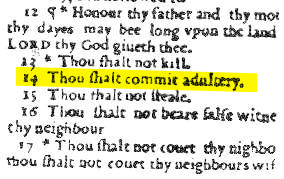
And as a final note, whatever monk was proofing what became known as The Wicked Bible, missed the word “not”:

Courtesy Wicked Bible, Wikipedia

We proofreaders often save people a whole lot of confusion and consternation. And sometimes morality!

How do I become an editor? (Part 2)

Following along from Part 1 of this little series about becoming an editor, today we’ll talk about the copyediting process.

I tell my students that this (or proofreading) will be the entry level job in a publishing house. To break in, they will look for jobs as copyeditors or sometimes they’re labeled as editorial assistants.

In a publishing house, after the content editor, in consultation with the author, finalizes the manuscript and considers it solid at the big-picture level, the manuscript will move on to a copyeditor.

The copyeditor reads at a more micro level. The macro work has been completed, so the copyeditor focuses on every paragraph, every sentence, every word, every bit of punctuation. She reads closely for sentence construction—looking for dangling or misplaced modifiers, run-ons, lack of parallelism, correct subject and verb forms. He fact checks and queries if something doesn’t make sense. She marks if a transition is needed. He checks spelling, grammar, and punctuation and works to be correct without changing the author’s voice or stylistic choices. (Yes, sentence fragments are often just fine.)

In addition, the copyeditor makes sure that the the manuscript follows house style guidelines. For instance, some Christian publishing houses may have a style that uppercases deity pronouns (He, His, Him, etc.). The copyeditor will make sure all pronouns for God, Jesus, and the Holy Spirit are capitalized. However, if an author doesn’t want it that way (or if everything were vice versa), the copyeditor notes that on the style sheet. On that sheet goes anything specific to a manuscript that the copyeditor doesn’t want proofreaders to change when they do their pass.

The copyeditor makes the manuscript readable.

But wait, there’s more! The copyeditor also makes sure the front matter (title page, copyright page, table of contents, dedication page, etc.) and back matter (appendix, index, endnotes) are in place. He might often be charged with writing the back cover copy for the book.

Besides understanding the role and where you would fit into the publication process, what else do you need to know to be a copyeditor?

Grammar, punctuation, spelling

You need to absolutely know the basics, but beyond that, you must be willing to get into the weeds to really understand where commas should go, how to use semi-colons, nuking passive voice (when necessary), or how to render footnotes and bibliography entries.

Here are a few resources:

  • The students in my editing class use The Copyeditor’s Handbook (currently in its 4th edition) and the accompanying The Copyeditor’s Workbook (also currently in 4th edition). Working through these books will provide a solid foundation for you to know more than you ever wanted to know about grammar and punctuation. But to be an excellent copyeditor, you need these skills. I highly recommend these books for your personal study and reference if you want to be a copyeditor.
  • For fun and to test your skills, take advantage of several weblinks that offer grammar quizzes. See what you know; test what you still need to learn or improve. Try: Punctuation Practice Test; Free Grammar Quizzes (you can pay for more access, but try all the free stuff first); Purdue Online Writing Lab (OWL). Work your way through all of these. Find out your weak spots and then study up!
  • Work on your spelling and know the correct word. You do know the difference between disinterested and uninterested? Affect and effect? Venomous and poisonous? Save this link on your computer, Easily Confused Words, to check on words where you’re just not clear. Study them, learn them. When a word gives you pause, look it up! Your dictionary is still your best friend.
https://www.writeforharlequin.com/inside-harlequin-copy-editing-with-taryn-ortolan/

Style manuals, guides, sheets

You’ll need to know how to use style manuals; these industry “bibles” provide the standards for correct usage of anything from how to write people’s titles or addresses, to how to render times of day, to how to write centuries, to the order the front and back matter pieces. Study these books and always have them on hand as references when you come across something you need to know how to do correctly.

  • If you want to get into book editing, you should have a copy of The Chicago Manual of Style (currently in its 18th edition) or a membership to its website. This is the standard guidance for all of book publishing.
  • For magazine and news editing, which use AP style, you’ll want a copy of The Associated Press Stylebook (currently in its 57th edition).

Style guides are specific to every publisher, every organization. They should have standardized spellings and usages for words or other notations specific to the industry. For example, each Christian publisher may have a different way to write Bible book abbreviations and references, or different spellings for names of people or places (is it Ishbosheth, Ish-bosheth, or Ish Bosheth — actually all three are correct depending on the publisher).

If you’re working for a particular company as an employee or freelancer, get their style guide. The guide supersedes the style manuals (noted above), so you always go to the guide first.

As you work on a particular project, you may create a style sheet that will go with that project, noting any choices made by you or the author that differ from the style guide or style manual. For instance, I once proofread a book in which the author wanted the word Heaven capitalized. In most style guides, that word is lowercased, but because the author wanted it that way, that word went on the style sheet. That way, when the book went to the proofreader, he wouldn’t lowercase the word as incorrect.

Microsoft Word

Chances are you’re working in Microsoft Word, which is the industry standard for manuscript submissions. As a copyeditor, you can make use of the Editor tool (on the Home ribbon) that can do a quick check of spelling, grammar, punctuation, and other writerly issues. I would only use this as a preliminary pass, however, as it isn’t perfect.

  • Learn how to do track changes. (And learn how to hide track changes while you’re working. That can help you avoid introducing errors while you copyedit.)
  • Learn how to accept and reject changes.
  • Learn how to do commenting. This is so important in explaining a change you’re making or querying when needed.
  • My YouTube channel has several videos that can help you with other tasks, such a inserting a title page, adding a Table of Contents, or doing basic cleanup tasks before you begin copyediting.
  • One video explains how to use templates and style tags. You may or may not need to do this for a publisher, but if it comes up, this video can help.

And note, never put what you’re working on into ChatGPT for a proofread or grammar check. You’re basically giving away that writing when you do so — someone’s creative work, a professor’s research, or company internal information. Steer clear!

Practice

Practice copyediting every chance you get. Offer to read the church newsletter or the worship song slides (!!). Anytime anyone has written anything, it needs another set of eyes. Let those eyes be yours.

Consider certifications

You might consider enhanced training and professional certifications through organizations such as ACES: The Society for Editing, EFA (Editorial Freelancers Association), or CIEP (Chartered Institute of Editing & Proofreading, based in the UK), or other courses at local colleges or writers conferences. You will always learn something new.

After all, we editors are saving the world by fixing one typo at a time!

How do I become an editor? (Part 1)

I’ve had several students take my Editing class and end up saying that it was that class that helped them discover what they wanted to do for a living. They’d been casting around, trying to be writers, and realizing that their love for words did not necessarily translate into becoming the next great American novelist. But give them a fresh manuscript to respond to, to make suggested changes on? They were off and running. They discovered that their love for words—both as readers and as writers—helped them be able to consider a manuscript, see the places where it fell short, and make suggestions. They wanted to become editors.

In my Editing class, we cover all stages of editing. I explain to my students that they probably won’t naturally enjoy all three of them—content editing, copyediting, proofreading—instead, they’ll probably take to one over the others. Inevitably, by the end of the class, some have discovered that they love the big-picture editing; others really liked the grammar portion of the class and wanted to copyedit because they can get in and mess with the sentences; others particularly enjoyed the proofreading we did on PDFs because they loved looking for errors.

It’s natural to gravitate to a particular form of editing. However, if you truly want to try to do this as a potential career, your starting point is going to be in the area of copyediting (more on that in upcoming posts). Rarely do content editing jobs open up without requiring several years of experience. However, that doesn’t mean, if this part really does come naturally to you, that you can’t do this as a freelancer.

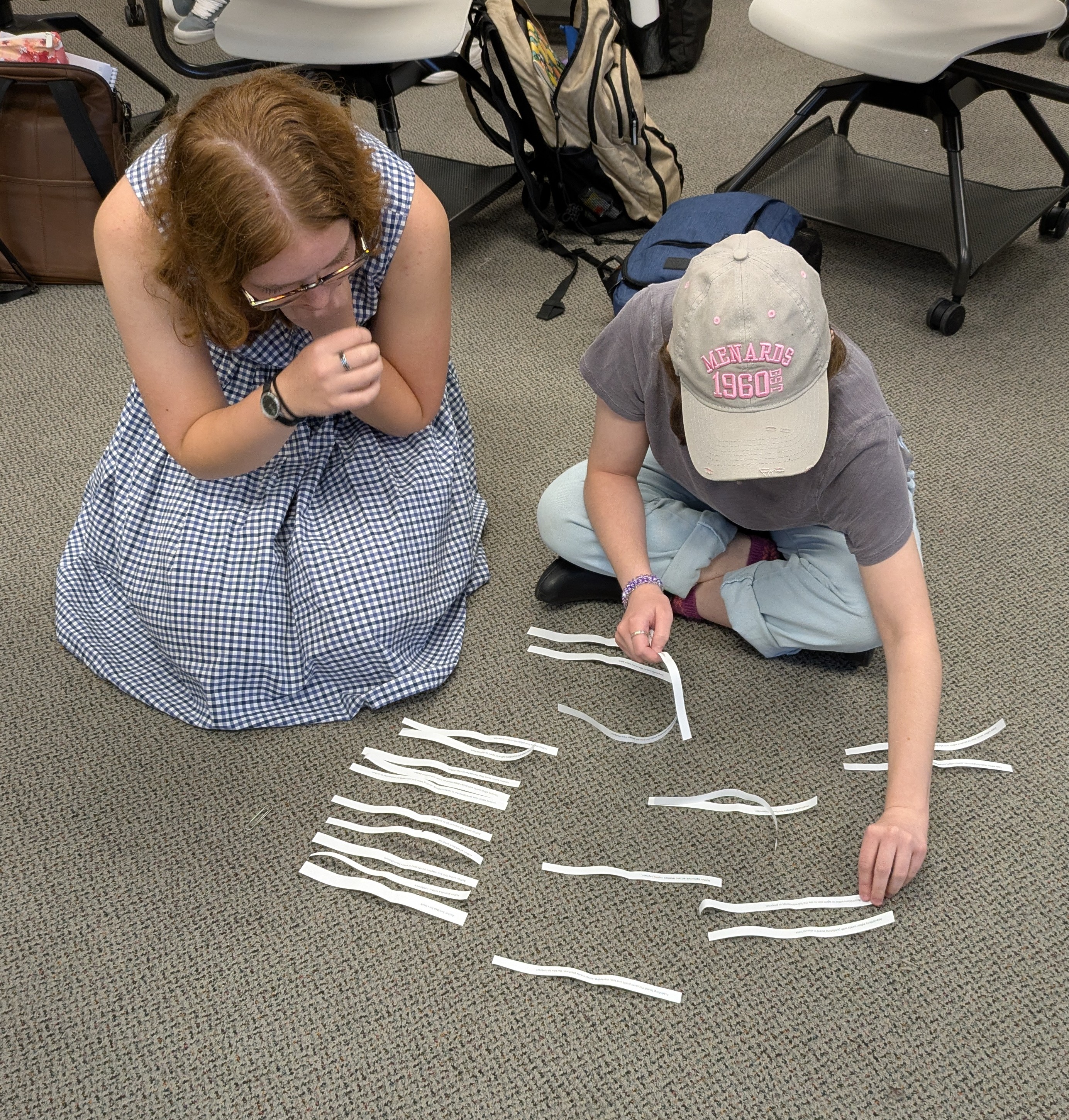
Learning the phases of the book editing process and putting them in the correct order.

Of course, some students realize that they don’t like any of it and just want to stay on the other side of the table as writers. That’s fine. I tell them that at least the class gave them an understanding of what editors do so that, if and when they get a book contract, they’ll understand how their editor is trying to help them.

So whether you’re thinking of hanging out a shingle and doing freelance editing, or if you’re looking for a job at a publication of some kind (whether books, newspapers, or magazines), over the next few posts, I want to share with you key things to do to help you become an editor.

Content editing: the big picture

Let’s talk about the first pass on a manuscript: content editing. This has other names — sometimes developmental editing (which goes back a couple of steps and helps an author actually put together the book) or line editing. In any case, content editing is big picture editing.

For fiction: You’re reading for plot, setting characterization, rising action-climax-falling action (Freytag’s triangle), pacing, and theme. Do you want to keep reading? Is the story compelling?

For nonfiction: You’re reading to make sure the topic is covered well, that the book flows logically, that it’s written well for the target audience, that sources are noted and correct, and other things depending on the manuscript. If you’re working on a memoir, many of the factors you watch for in fiction also come into play.

Genres matter

Just as you may find yourself drawn to different types of editing, you will also find yourself drawn to different genres when it comes to what you like to edit. And you can gain expertise in those genres and focus your editing there.

For example, in nonfiction, content editing a memoir will be different from content editing a self-help book; in fiction, content editing a romance novel will be different from content editing a fantasy or sci-fi novel. Not that you can’t cross genres, but you’ll find a comfort zone and will be able to do your best work once you find it.

When content editing, it helps for you to understand how the genre works. If you love fantasy writing and understand it and hope to edit it, then continue to read lots of fantasy. Read your favorite fantasy authors, read blogs by fantasy writers, read the best of the best. And then, for good measure, read a few bad books as well so you can discern what is making the difference. When you’re marinating in a genre, content editing that fantasy manuscript will be easier because you’ll more easily see what’s missing and what will improve it. You’ll recognize the overused tropes and you’ll get a sense of what draws you as the reader into the story.

Of course, that doesn’t mean you should read only fantasy. Read widely. Read the classics. Read outside your favorite genre. Read nonfiction books about writing and editing. The more that you learn about the process for both writers and editors, the better content editor you’ll be.

Stay in your lane

When doing this pass, you don’t worry about grammar or spelling or sentence structure—instead, you’re reading to see how the whole book hangs together. Your mind can’t process the big picture elements if you’re also trying to correct grammar and punctuation along the way. Besides, you may end up having the author cut or revise whole sections of the book, making it a waste of time to copyedit the detail. Leave that for the copyeditor who comes next in the process after the manuscript has been finalized by the author and content editor.

Follow along in coming weeks for more on becoming an editor, focusing on the copyediting role.