How do I become an editor? (Part 1)

I’ve had several students take my Editing class and end up saying that it was that class that helped them discover what they wanted to do for a living. They’d been casting around, trying to be writers, and realizing that their love for words did not necessarily translate into becoming the next great American novelist. But give them a fresh manuscript to respond to, to make suggested changes on? They were off and running. They discovered that their love for words—both as readers and as writers—helped them be able to consider a manuscript, see the places where it fell short, and make suggestions. They wanted to become editors.

In my Editing class, we cover all stages of editing. I explain to my students that they probably won’t naturally enjoy all three of them—content editing, copyediting, proofreading—instead, they’ll probably take to one over the others. Inevitably, by the end of the class, some have discovered that they love the big-picture editing; others really liked the grammar portion of the class and wanted to copyedit because they can get in and mess with the sentences; others particularly enjoyed the proofreading we did on PDFs because they loved looking for errors.

It’s natural to gravitate to a particular form of editing. However, if you truly want to try to do this as a potential career, your starting point is going to be in the area of copyediting (more on that in upcoming posts). Rarely do content editing jobs open up without requiring several years of experience. However, that doesn’t mean, if this part really does come naturally to you, that you can’t do this as a freelancer.

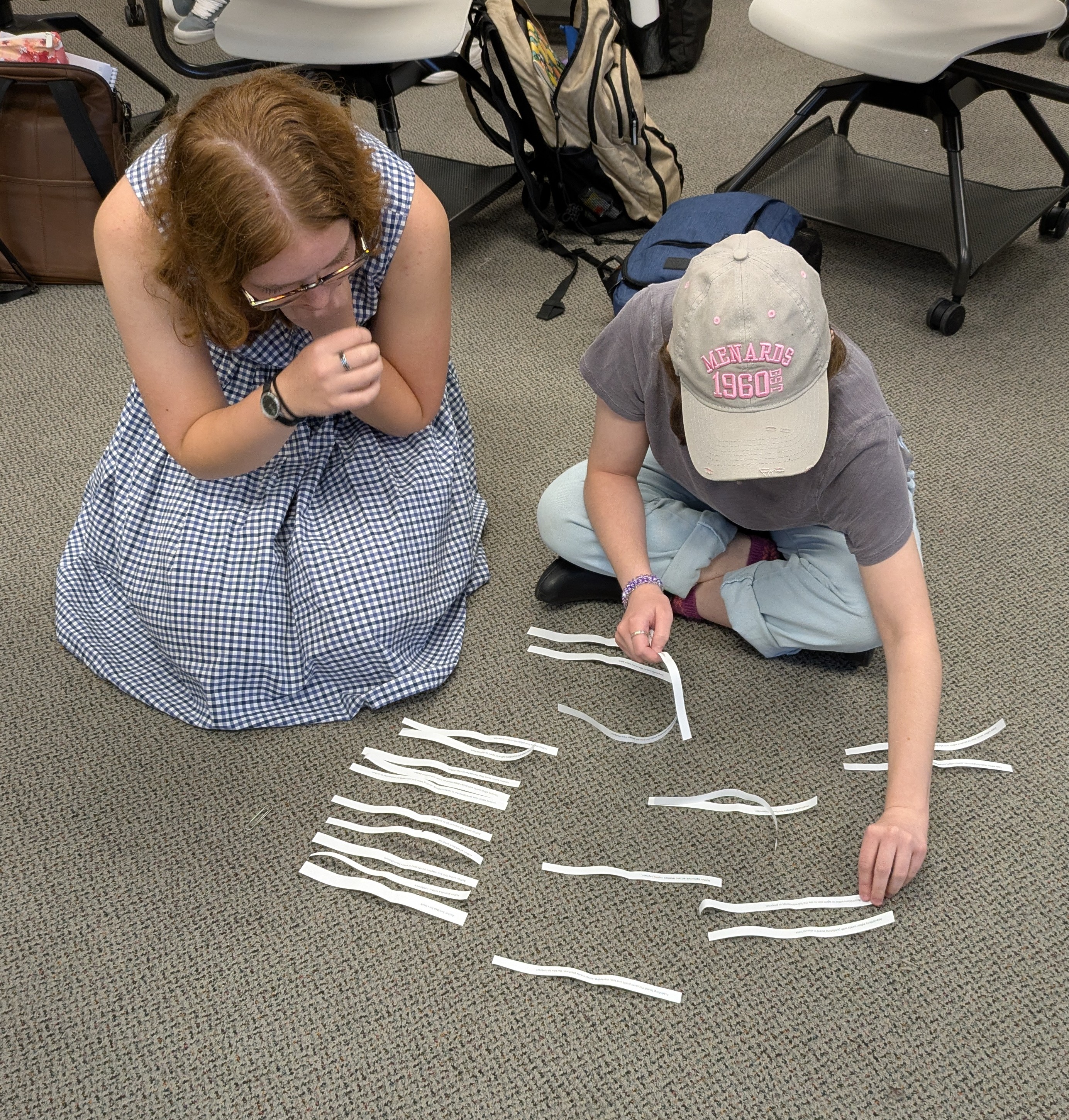
Learning the phases of the book editing process and putting them in the correct order.

Of course, some students realize that they don’t like any of it and just want to stay on the other side of the table as writers. That’s fine. I tell them that at least the class gave them an understanding of what editors do so that, if and when they get a book contract, they’ll understand how their editor is trying to help them.

So whether you’re thinking of hanging out a shingle and doing freelance editing, or if you’re looking for a job at a publication of some kind (whether books, newspapers, or magazines), over the next few posts, I want to share with you key things to do to help you become an editor.

Content editing: the big picture

Let’s talk about the first pass on a manuscript: content editing. This has other names — sometimes developmental editing (which goes back a couple of steps and helps an author actually put together the book) or line editing. In any case, content editing is big picture editing.

For fiction: You’re reading for plot, setting characterization, rising action-climax-falling action (Freytag’s triangle), pacing, and theme. Do you want to keep reading? Is the story compelling?

For nonfiction: You’re reading to make sure the topic is covered well, that the book flows logically, that it’s written well for the target audience, that sources are noted and correct, and other things depending on the manuscript. If you’re working on a memoir, many of the factors you watch for in fiction also come into play.

Genres matter

Just as you may find yourself drawn to different types of editing, you will also find yourself drawn to different genres when it comes to what you like to edit. And you can gain expertise in those genres and focus your editing there.

For example, in nonfiction, content editing a memoir will be different from content editing a self-help book; in fiction, content editing a romance novel will be different from content editing a fantasy or sci-fi novel. Not that you can’t cross genres, but you’ll find a comfort zone and will be able to do your best work once you find it.

When content editing, it helps for you to understand how the genre works. If you love fantasy writing and understand it and hope to edit it, then continue to read lots of fantasy. Read your favorite fantasy authors, read blogs by fantasy writers, read the best of the best. And then, for good measure, read a few bad books as well so you can discern what is making the difference. When you’re marinating in a genre, content editing that fantasy manuscript will be easier because you’ll more easily see what’s missing and what will improve it. You’ll recognize the overused tropes and you’ll get a sense of what draws you as the reader into the story.

Of course, that doesn’t mean you should read only fantasy. Read widely. Read the classics. Read outside your favorite genre. Read nonfiction books about writing and editing. The more that you learn about the process for both writers and editors, the better content editor you’ll be.

Stay in your lane

When doing this pass, you don’t worry about grammar or spelling or sentence structure—instead, you’re reading to see how the whole book hangs together. Your mind can’t process the big picture elements if you’re also trying to correct grammar and punctuation along the way. Besides, you may end up having the author cut or revise whole sections of the book, making it a waste of time to copyedit the detail. Leave that for the copyeditor who comes next in the process after the manuscript has been finalized by the author and content editor.

Follow along in coming weeks for more on becoming an editor, focusing on the copyediting role.

Great editors: Starling Lawrence

I was asked recently about what God has taught me through my writing career. While I do admit to enjoying writing, really most of my learning has been through my editing career. In both cases, however, the key lesson has been humility.

On the one hand, writers need humility to handle the (often many) edits of our work, and (often) outright rejection. Editors also require humility because we labor in the background. We don’t get credit for the work; that remains with the author, as it should. But those books became what they did because of the hard work of the editor with the author. That’s why I’ve enjoyed celebrating unsung editorial heroes on this blog; folks such as Maxwell Perkins, Faith Sale, and Tay Hohoff, among others.

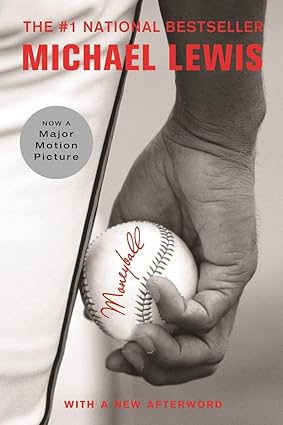
This past month, we lost yet another legendary editor, Starling Lawrence, who had a 55-year editorial career at W. W. Norton. I have to admit, of course, I’d never heard of him, but I’ve certainly heard of books he edited, including The Perfect Storm by Sebastian Junger, and Moneyball and The Blind Side by Michael Lewis (all three of which were books before they became movies).

When he started at Norton in 1969, Lawrence had the unenviable job of “reader,” sifting through the “slush pile,” the name for the pile of unsolicited manuscripts that came into the offices and were dropped somewhere for someone to eventually take the time to read. He said that this job taught him “an important lesson about patience and paying attention to the job, no matter what it is.” Publisher’s Weekly noted that, “As he panned for gold among the submissions, he trained ‘a voice that has endless patience for what does interest him,’ as Lewis put it.”

The W.W. Norton website wrote this tribute: “During his more than five decades at Norton, Lawrence had an unmatched impact on the trade list, shaping its character with culturally important books that sold millions of copies. Lawrence discovered future bestsellers in unlikely places: the slush pile of unsolicited manuscripts, the dusty top shelf of an agent’s bookcase, and in proposals rejected by the rest of the industry. As he once noted, ‘It is remarkable in hindsight that for two of the most important books I ever acquired, Sebastian Junger’s The Perfect Storm and Michael Lewis’s Liar’s Poker, there were no other offers on the table.’”

With the latter author, Michael Lewis, Lawrence built a strong relationship that led to 17 books, including the above-mentioned Moneyball and The Blind Side. Lewis wrote of Lawrence, “When I sit down to write, the only voice I hear in my head is Star’s” (W.W. Norton website).

That’s a powerful editor/author relationship!

Across his five decades at Norton, Lawrence championed and edited “scores of era-defining books” (ShelfAwareness). “‘It is impossible to overstate the effect Star Lawrence has had on Norton,’ said Julia Reidhead, chairman and president. ‘His taste was as confident and true as his spirit, and he transformed our list with some of the greatest writers of our time'” (W.W. Norton website).

That’s an amazing legacy. While he did write a few of his own books, he spent most of his career in the shadows, behind the scenes, relegated to the Acknowledgments page (if at all) of the many books for which he as the best reader, the shaper, the author encourager.

That’s what I’m teaching my students in Editing class right now. If they want this career, it will be extremely rewarding but will not bring them fame or fortune. They must do it for the love of the words and the love of good stories.

Keeping me humble – adventures in typos

We writers know that, on the one hand, we need self-confidence to put our writing out there and dare to get published, but we also need humility. We don’t want to go out into the publishing world with an arrogant attitude.

I dare say we will be served up humility constantly — we probably don’t need to seek it. We just need to learn how to deal with those times when embarrassing things happen.

Here’s my latest dilemma. I’ve talked on this blog about my latest book, Pathway to Publication. I’m very proud of this book (seriously, in the best way; you know, that “humble proud” attitude). I feel very good about the book and what it can offer writers.

There’s a meme out in the world that says if you want to do a really good proofread, get your book published and then open to any random page.

I laughed and laughed.

Then yesterday, I opened my book to two random pages.

I found two (count ’em, TWO) typos in my brief foray. This does not bode well for the rest of the book. I promise, my book was proofread by me, by editors, by the publisher, and again by me. I have no one to blame but myself. Me. Professional editor. Me.

Original meme is from shencomix.com

Here they are, for your viewing pleasure.

First, on page 17, right away in the “How to Use This Book” section, I managed to say first that readers could download a “Microsoft Word or Excel” version of the worksheets on my website. Dear readers, I meant “Microsoft Word or PDF” (PDF appears later). In my proofread, I slid right right past it.

This second one, again, in my brief visit back into my printed book, appears on page 47, end of the first paragraph. Clearly I edited something in that sentence and left out the word “What” at the beginning (or I could have seen this and deleted the word “about”).

Seriously. Excuse me while I go away and eat some humble pie.

It’s just part of the process. I join a legion of professionally published books out there with typos.

https://en.wiktionary.org/wiki/ugh

Indeed, in her keynote presentation this past weekend at our Taylor University Professional Writers Conference, Maggie Rowe made clear to all of us that we need to “embrace humility.”

Well, humility and I are hugging it out right now!

Have you ever found a typo in your own work, after the fact?

Guidelines for Quoting Bible Material: Part 2

As noted in Part 1 of this topic, quoting material from the Bible (and indeed any source) can be tricky. Editors need to be sticklers when it comes to sacred texts (and indeed, with any quoted material).

I offered 5 guidelines in Part 1. Here are 6 more guidelines when quoting (and then copyediting) material from the Bible.

(6) Watch your punctuation.

In addition to the quotation marks noted in Part 1, watch for other types of punctuation. The style for typing a verse within the text of a manuscript is generally quotation followed by punctuation. Notice in the following example that there is no punctuation at the end of the verse itself; instead, the period follows the close parenthesis of the reference.

“In the beginning the Word already existed” (John 1:1 NLT).

If your verse ends in a question mark or exclamation point, put that inside the close quote and put a period after the close parenthesis.

“Who has a claim against me that I must pay?” (Job 41:11 NIV).

“And Abraham said to God, ‘If only Ishmael might live under your blessing!’” (Genesis 17:18 NIV).

Notice in the Genesis verse that I had to add the open and close quotation marks around the entire verse, which means I had to put single quotations marks around Abraham’s words. The exclamation point stays, and the period is placed after the close parenthesis.

However, note that when you have a text in a block, the punctuation closes out the block with the reference without punctuation following.

You saw me before I was born. Every day of my life was recorded in your book. Every moment was laid out before a single day had passed. How precious are your thoughts about me, O God. They cannot be numbered! I can’t even count them; they outnumber the grains of sand! And when I wake up, you are still with me! (Psalm 139:16–18 NLT)

(7) Watch how you use ellipses.

Most publishers are fine with quoting a portion of a verse without ellipses at the beginning or the end. That is, if you’re talking about Jesus and what he said, and you want to drop off the “Jesus said” at the beginning of the verse and just quote what he said, you don’t need to include ellipses to indicate that you dropped the words “Jesus said.” The same often goes if you’re quoting just the first part and not the end; you don’t necessarily have to include the ellipses trailing at the end. Of course, you must use ellipses if you’re dropping material from the middle of the verse, or dropping a verse from a series of verses, to indicate that material is missing.

However, I would advise you to make these kind of changes carefully. Always remember that you’re working with God’s Word. Be respectful of it for its own sake and for the sake of your readers. Be careful not to cause contextual problems with ellipses. Make sure that you are letting the verse say what it says, without causing confusion by dropping out parts of it.

(8) Follow consistency in references.

While it’s important to know what to do with the Bible book name throughout your references, you will need to make several other consistency decisions as well—or you might ask your publisher how they want you to do it by requesting their style guide. (You can also get advice from The Christian Writer’s Manual of Style.) This attention to consistency may seem like overkill, but trust me, if you make these decisions early on and are consistent, your manuscript will make so much more sense to an editor and ultimately to your readers. For instance, in the Christian Writer’s Manual of Style, you’ll find an alphabetized text that includes extensive word lists of Christian terms and suggested spellings and capitalizations, along with every other question you might have and want to look up (for example, “Clerical titles and clerical positions” and how to use them is in the section for the letter C).

If you’re going to be quoting several verses from the same chapter (say, you’re discussing the story of Daniel in the lions’ den and your readers know you’re in Daniel 6, but throughout the coming pages you’re working your way through different verses), decide how to handle each reference. It might look awkward to put the full book name or even the abbreviated book name and chapter in each reference after each quote. Maybe opt for saying (verse 6) and (verse 7) and (verses 8–9), or maybe even (v. 6) and (v. 7) and (vv. 8–9). Or maybe keep just the chapter without the book name (6:6), (6:7), (6:8–9). The most important consideration is clarity for your readers.

(9) Let readers know if you are using emphasis.

Perhaps you want to emphasize a portion of a verse you’re quoting. Do that by putting it in italics, but let your readers know that the emphasis is yours. (This rule is true for quoting from anything anywhere, not just Scripture.) After the reference, say something like “italics mine” or “emphasis mine.” If you want to focus on the word patience in these verses about the fruit of the Spirit, do this: “But the Holy Spirit produces this kind of fruit in our lives: love, joy, peace, patience, kindness, goodness, faithfulness, gentleness, and self-control” (Galatians 5:22–23 NLT, emphasis mine).

(10) Use brackets to indicate added material.

As we’ve established, quoting from anywhere is sacrosanct. Leave the quote exactly as it is rendered—and this rule is obviously extremely important in Scripture. But sometimes, you’re quoting and must give your readers some context. Indicate that you are editing the direct quote by putting the edited material in brackets.

For example, quoting Genesis 45:25, “So they went up out of Egypt and came to their father Jacob in the land of Canaan” (NIV). You might need to explain who “they” refers to. Revise the verse to explain who “they” is by replacing the word and putting the referent in brackets, as follows: “So [Joseph’s brothers] went up out of Egypt and came to their father Jacob in the land of Canaan.”

Don’t use parentheses, because parentheses could be part of the quote. The brackets make it clear that you have added the material.

(11) Stay true to the Bible version.

Take care to always use the place and people names as rendered in the version you’re using. For example: Is that son of Saul named Ishbosheth or Ish-bosheth or Ish-Bosheth or Ish Bosheth? It’s actually all of them, depending on the Bible version. Some versions have John the Baptist’s mother spelled with a z “Elizabeth,” some with an s “Elisabeth”; some have his father as Zechariah and some as Zacharias. In some, Esther is married to King Ahasuerus; in others, King Xerxes.

Did the Israelites wander for 40 years in the “desert” or in the “wilderness”? Depends. In some Bible versions, place names are rendered as two words, others hyphenate, others just run them together, and capitalizations vary: Baal Peor, Baalpeor, Baal-peor, or even Baal of Peor.

This is not an issue of error; it’s an issue of translation and sources and Greek and Hebrew—and I suppose, whatever the translation committee eventually agreed upon.

And then, of course, some versions include upper-case deity pronouns (such as the NKJV) and some do not. So in some cases God is Him, His, Himself; in others, him, his, himself.

Even if a publisher’s style guide says not to capitalize deity pronouns, if in that same book you quote from a Bible text that does capitalize those pronouns, then always quote the Bible text as it is.

I know it seems like a lot, but, as with anything, the more you do it the easier it will become.

When quoting anything from printed material, always be exact, always give the source, always double check yourself.

After all, if someone quotes you, you would want it to be your exact words.

Even Editors Need Editors

Here she is. All 332 pages of her. I told you about this book contract and, well, after some weeks of imposter syndrome and some constant worry about if I could actually write this book … well. Ta-da.

The working title is Pathway to Publication. I’m still trying on some subtitles, such as “A publishing professional turned college prof leads the way” or “guides you.” Not sure yet. But we have a little time to hone that part.

The writing process has not been easy. I look at these pages and honestly am astounded.

But it wasn’t done alone. It took a team of people to help me get to this point (and I’m not even at the publisher yet!).

A dear publishing friend helped me see beyond the “this has already been written a million times” dilemma to look instead at my personal perspective on this publishing process. She helped me see that I could write this from the college professor angle — so the book is shaped by the college classes I teach in Professional Writing and is very hands-on, including worksheets to help readers go from the theoretical to the practical. (Thank you, Kim.)

Another publishing friend recommended that I revise my website to focus on the teaching angle and build on that. (Thank you, Rhonda.)

My sister has been talking to me about preparations for her thru-hike of the Appalachian Trail next year. The more she talked, the more I discovered a hook I could hang this book on — preparing for the months on the AT could be compared to preparing a book for publication. That metaphor helped me lay out the chapters. (Thank you, Carol.)

A former student who now has a business helping authors promote their books will help me create a pre-publication marketing strategy. (Thank you, Jori.)

A high schooler I met at our writers conference teen track, who is new to the publishing process, is reading some chapters to help me know if I’m answering her questions. (Thank you, Eliana.)

A current student and another writer friend are reading to see if I’m staying true to the content and my voice, writing clearly, and speaking in the right way to my target audience. (Thank you, Anna and Dave.)

And, finally, yet another student who has started his own freelance editing business just completed an astounding copyedit of the manuscript. He caught me in my wordiness and in my tics. He smoothed and refined and questioned and commented. And, as I taught him in editing class, he remembered to offer a few positive comments as well. And boy, did I need them! (Thank you, Kipp.)

And I’m thankful to the many publishing professionals I’ve learned from across my almost forty years in the industry. Their wisdom guided this book. I’ve added their titles to a recommended books list and quoted several of them throughout. Instead of feeling like “this is just another book on the same topic,” I simply feel humbled to add my voice to the many others who have a passion to help writers.

All of this to say, we writers need folks around us — some with publishing advice, some with writing advice, some with editorial skill, some with marketing skill, some acting as the target audience readers — to bring out the best in our manuscripts.

I still have a week to go with this pile of paper before it goes off to the publisher. That’s why I printed it. I always need to see it on physical paper to highlight and mark the final changes I need to make.

Then, of course, the editor at the publisher will tear it apart — but I already know that. I teach about this. (Thank you, Bold Vision Books.)

I’m ready. After all, even editors need editors.

The Challenge of Christian Writing and Publishing

It’s been an interesting challenge, this past school year, as I’ve taken on new classes (translate—learn what I need to teach and then figure out how to teach it) and gotten out of my comfort zone.

But it has forced me to do some deep thinking about what I’m doing, why I’m doing it, and what really matters.

Why do I teach writing and publishing?

What do I really want my students to know?

In the past few months, three things have become more clear to me. For the Christian writers who come through the Professional Writing major at Taylor University, I am committed to them graduating with the following understandings:

  1. as Christians, I want them stand strong on the foundations of their faith, understanding that Scripture and their faith impacts every aspect of their lives; I want them to fall in love with God’s Word and see its power for the rest of their lives;
  2. as writers, I want them to understand that their love for and ability with words is a calling and a gift from the Caller that they should and must continue to hone and improve;
  3. as Christian writers, I want them to comprehend the power of those words and their responsibility to God for how they use their giftedness with words, especially as they seek to publish those words into the world.

How can my faith intersect my discipline as I teach the Professional Writing curriculum? How can I—a Christian publishing professional, editor, writer, and faculty member—bring these fundamental truths into our program? How can I bookend my students’ learning from their 101 introductory class to their final capstone class with these truths that matter?

It feels like a very heavy load.

But down deep in my soul, I sense that this is vital. This is more important than anything else I can do.

It is incumbent on Christian publishing professionals—whether authors or editors or publishers or marketers or bloggers or social media experts or agents—to deliver material that is well written, winsome, true, biblical, and honors Jesus Christ.

In a recent discussion, one of these Christian publishing professionals told me, “Too much of Christian writing is either preachy or saccharine. We need to bring wisdom, winsome words, and truth from our foundation into our writing.”

But what does that even mean anymore? The world is so deeply divided. Even among Christians there is so much division we sometimes act like a circular firing squad. I wonder how we can impact our world for good. How can we disagree about living out our faith (our politics, our work lives, our theological beliefs) but do so in a winsome and respectful way? How can we engage the questions so important in our culture, even as we disagree, while still being able to help others find what we have discovered in the foundations of our faith? In the end, that foundational piece is going to be all that matters to us anyway.

How do I guide my students to these understandings—even as we learn good writing and style tagging and editing and platform building and how to do a book proposal?

How do I guide them—even as we look for truth in Scripture and perhaps disagree on many other areas?

How do I help us all “work out our own salvation with fear and trembling” and work out our writing and publishing lives in the same way?

There’s a lot to unpack here, and I invite you to join me both as I prayerfully seek God’s guidance and express my thoughts in the blog. I invite you to comment with your own thoughts and ideas as I think this is a big conversation worth having.

Writers have a lot of power with their words.

And the world needs our very best.


From Manuscript to Book: As It Happens (Round 2)

“Okay, this next sentence just baffles me.”

“We need to stop here and talk about this.”

“Let’s delete the word somewhat.”

“I found another fake swear word. Add it to the list.”

“Wait, how did they get to the woods?”

“I’m gonna go ahead and remove this whole paragraph.”

“Can your face curl in anger?” (question asked of class) “How about contort?” (someone says) “Yes! That’s it.”

“I don’t know what’s going on here.”

“Wait . . . .!”

“This sounds like a Tim Burton movie.”

“I like that!”

“Wow. Good description.”

These are just a few statements I’m overhearing as I listen to my student editors work on the copyediting part of this project. (You can read about the content editing part here.)

IMG_20170411_101839209_HDR
It takes a village . . .

For this part, we revised the groups into three groups of four to focus on the three fiction manuscripts. The authors did what they could over the past month and sent us their full revised manuscripts. Now the new groups are diving into the copyediting phase. The manuscripts were moved onto Google docs where the groups can read together and comment along the way.

“This takes so long!”

Another comment.

They’re getting a real understanding of what’s involved at the copyediting level. It does take time to really consider every sentence, every word, every bit of punctuation. To make sure the facts are lining up, to make sure the reader won’t be confused, to make sure that the author is saying what s/he really means to say. (If my editors are confused, future readers will be confused. Now is the time to fix any concerns.)

IMG_20170411_103401247
“Copyediting is hard,” he complained. (Dramatic effect.)

There’s new appreciation brewing for how hard editors work and why they work so hard.

I think mission accomplished.

10 Things a Copy Editor Hates

This morning I turned in my first draft of my pristine 157-page thesis for my MFA program. Pushed send, felt a sense of accomplishment, opened the document back up just, you know, for pride’s sake, and found this phrase: “This is a book to tell help writers understand the publishing process . . .” Really? “Tell help”? On page 1? Right there. In my thesis about . . . editing?

Let’s just say, humble pie isn’t very tasty.

So to help myself feel better and remember that yes, indeed, I can edit and know a lot about it, here are 10 tips to help you with your own self-editing process, 10 things copy editors hate.

(1) Writers who press the space bar twice after the ending punctuation between sentences. 

See it?   Annoying isn’t it?   Because that is a no-no.

If you learned to type on a typewriter, you were taught to put a double space after your punctuation and between sentences. On a typewriter, every letter and punctuation mark and even space took up the same amount of space. So to clearly see the sentences and make a page readable, double spacing was needed.

But now our word processing software has typefaces that create proportional spacing, so that extra space is not needed. So stop doing it.

(2) Writers who quote sources and then don’t give me the source.

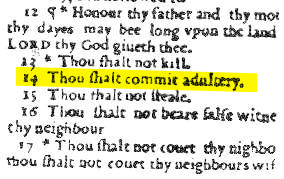
Lazy—and problematic. Same goes for Bible verses and no references or Bible version. (Please, thou shalt not do this.)

If you’re quoting a source, give it to me exactly. If it’s a book, tell me the author, title, publisher, date of publication, and page number. If it’s a magazine or journal, I need the title, the issue date, the article title, the author, the page number. If it’s on the Web, at least give me a hyperlink so I can find it and confirm all the needed information. If you’re quoting from the Bible or other religious text, give me all of the information I need, and make sure you’re quoting correctly.

(3) Writers who consistently use passive voice.

“The book was being written by a writer who wanted people to be inspired by it.” (Ugh.)

It’s lazy writing. You can spot passive voice if you find that you’re using a form of a “to be” verb over and over. In the above sentence, the “was being” and the “to be” are clues. If you change it up, you’ll find that you can use much more descriptive verbs: “The writer labored over the thesis, hoping that her words would inspire other writers.”

(4) Writers who add needless words.

“The writer wrote the sum of ten pages on each day of the seven-day weeks of the semester.” (Annoying.)

C’mon people. We’re way past the days when we were trying to stretch our writing to fill up the number of pages our English teacher required in our essay about The Great Gatsby. No more padding sentences. Good writing is succinct and to the point. Find the best verb, the best noun. Avoid adverbs. “The writer wrote ten pages every week during the semester.”

(5) Writers who dangle their modifiers.

“Sitting in a pile on the desk, the book writer looked at her manuscript.”

You have a dangling modifier if your modifier is not right next to the word being modified. In the sentence above, it sounds like the book writer is “sitting in a pile on the desk,” not the manuscript itself (although this could actually be true, depending on the book writer’s state of mind). These sentences sound right until you really look at them: “I saw the dead deer driving down the country road,” should be “While driving down the country road, I saw a dead deer.”

(6) Writers who don’t use the dictionary.

“I sat stationery as I wrote my letter on stationary.”

In the sentence above, the “stationary” words need to not be stationary; they need to be switched because they’re incorrect. If you’re unsure, look it up. If you’re even a tiny bit not sure, look it up.

(7) Writers who don’t understand commas.

Commas, put in the wrong places, are, and always, will be, annoying. (Yes, annoying.)

Commas are difficult, so don’t lose sleep over them. A copy editor lives and breathes commas and will make sure that your final piece has them placed correctly. But do your best. Check a grammar book or read a few articles online about commas to at least give you some groundwork.

(8) Writers who use random fonts and font sizes that change all over the place.

To impress whoever you’re submitting your manuscript to, follow the basic rules of submission: Times New Roman font, 12 point, one-inch margins, double spacing between lines. You can get away with a different font for your chapter titles, and you can bold or italicize where necessary, but other than that, stay clean and clear.

(9) Writers who write sentences that don’t have parallel elements, are mixed up, and because they are confusing.

Rereading your writing aloud to yourself can help you spot this one. It happens often when you’ve done some revising, so you need to go back and revise your revision to smooth it out and make sure your elements are parallel. “Writers who write sentences that don’t have parallel elements, are mixed up, and are confusing.”

(10) Writers whose subject /verb agreement aren’t correct.

This is a huge one. If I had a nickel for every time I fixed this. . . . Anyway, again, this error often gets introduced in the revision process where you’ve gone back and changed tenses or changed the number of subjects which then affects every other part of the sentence. So go back and read carefully to catch all of these: “Writers whose subject/verb agreement isn’t correct.”

But one thing I DO know . . . I always expect to find a random typo, no matter how carefully the manuscript has been self-edited. After a while, we just can’t see the forest for our own trees. After all, that’s what gives people like me job security.

I won’t stress (too much) about my typo on page 1. I’m sure there are more lurking in those pages. It’s funny but no matter how many years I put into this job, perfection still eludes me.

What’s the worst typo you’ve seen–in your own or in printed works?

Real-World Experience–My Students and Their Practicums

All of our majors in the Professional Writing department at Taylor University are required to do 160 hours of practicum experience. They do a variety of things, often based on a secondary interest–as long as they’re doing writing. One of my greatest privileges is to help them secure these practicums (sometimes they find their own; sometimes I mine my contacts to help them), to read their journal entries sent to me during the course of the practicum, and then to read their final reflection papers. If it’s possible, I try to visit them on site and talk to their supervisors.

Here are a few excerpts from this past spring and summer from a few of my students as they reflected on what they learned during the course of getting real-world experience. This young lady worked at a mission organization:

 In general, as I’ve been thinking about my internship experience so far, I think it’s been a pretty good fit. It’s allowed me to apply my skills as a writer and editor and refine them. I’ve been able to practice writing with an organization’s tone, and learning how to be creative within the confines of that tone. It’s given me opportunities to practice my interviewing skills, which I’m most excited about and have enjoyed best, I think. . . . I think will prove to be a good primer as I seek a job with a magazine or house within the next five years.

This person worked with a magazine:

I got to edit another article this week. One interesting thing that I learned when editing this is a little bit about the relationship between the writer and the editor. When I was sent this article to edit, [the publisher] told me that this writer was a really good writer, but she always turned her articles in late, too long, and with lots of mistakes. He said that he always spends the most time editing this author’s articles. I thought it was interesting, though, that he still really likes working with this author because she provides good content. So for this article I got some experience correcting many mistakes for formatting, grammar, and AP style. I also had to cut about 600 words. And since it was a scientific article, I had to make it easy enough for the common person to understand. It was a really fun challenge.

This young lady worked remotely for a publisher, reviewing, editing, and copyediting manuscripts:

Before starting this internship, copyediting was the only form of editing I felt really good at. However, in the past 10 weeks I’ve discovered I’m capable of evaluating, rewriting, proofreading, and more. My future editing career is by no means limited to just copyediting. Admittedly, after several weeks of doing everything but copyediting, it was great to go back to it. Copyediting is definitely the area I’m the most skilled at, as well as the area I most enjoy, which I’ve found is equally important.

On the last day of my internship, I sent my supervisor an email asking for advice about finding a job in publishing, skills I could improve on, etc. [She said], “Honestly, I think you have great editorial instincts. You’ve been well trained and you’re just a natural editor. One thing you could do is broaden your reading. Southern fiction, for example. I noticed there were  regional or generational things you didn’t know, which is normal because you’re young. You will learn about these things, but reading different types of literature and popular fiction will acquaint you with the ways that people from different regions, and countries, think and talk. But that’s about the only thing I can think of. I told Linda that you are among my two best interns ever. I hired the other one. I’m pretty sure you’ll get a job.”

And this young man worked at a local company doing more technical writing:

I spent my first full week at [company] reading and editing [their] training materials. The pace and dual nature of this work was a great fit for me, allowing me to work and learn simultaneously, and gather information for what would become the [company’s] Style. I became familiar with the software, terms, and procedures surrounding this product and made note of no fewer than 100 changes—from typos to phrasing—to the training material to make the brand more professional and consistent. . . .

Even though my title is Technical Writing Intern, I have actually done more editing than writing, which has honed my attention to detail. Through the different types of work I have completed so far, I have realized that I enjoy several aspects of editing fundamentally. Of the things editing requires of me, internalization and careful reading are two things I enjoy more than anything else.

I love it when my students get to hone the skills I’ve taught them and begin to find their callings!

My Favorite Books about Editing

So I’m writing a book. Yes indeed. A couple actually. One is for my MFA program; the other is for a small publisher. Both are about editing–one more in a memoir-esque fashion, the other more like a textbook, something I want to use in my future editing classes.

In the process of putting together my proposal, I needed to check out books similar to mine. As I ordered books online and checked them out from the local library, I fell in love with some of them–the voice, the humor, the helps, the advice, the exercises. So I thought I’d pass along to you some of my favorites. If you want to learn about editing or want to work more on being your own self-editor, you might check into some of these excellent resources. The great thing about reading books about editing is that you really get a double-whammy–you are also studying how to be a better writer, the kind of writer editors dream about!


dumCopyediting & Proofreading for Dummies, Suzanne Gilad. Wiley Publishing, Inc., 2007.

I’ve used this book in my editing class since 2010 when I first began teaching. The book does an excellent job of being very introductory, has exercises for practice, and incorporates vocabulary. It’s also the only book I could find that gives a clear delineation between copyediting and proofreading. It includes practice exercises, proofreading marks, and publishing vocabulary.


Stein on WritingStein on Writing: A Master Editor of Some of the Most Successful Writers of Our Century Shares His Craft Techniques and Strategies, Sol Stein. St. Martin’s Press, 1995.

I wrote more about this book in this post, so you can check it out there. Suffice it to say that this is one of those books that really will help you ask the right questions as you work on your own writing. He also offers advice to both fiction and nonfiction writers.


artfulThe Artful Edit: On the Practice of Editing Yourself, Susan Bell. W. W. Norton & Company, 2007.

Bell takes on the topic of editing yourself (and, by extension, others). She covers what she calls Macro-Editing and Micro-Editing. I love that she uses several pages working from information in Scott Berg’s book about Maxwell Perkins to discuss the editing process—and how Fitzgerald edited The Great Gatsby from Perkins’s advice. In between are testimonies from various authors about their editors. She discusses the history of editing–which is quite fascinating.


thanksThanks, But This Isn’t for Us: A (Sort of) Compassionate Guide to Why Your Writing is Being RejectedJessica Page Morrell. Jeremy P. Tarcher/Penguin, 2009. 

Morrell talks about her experience as a developmental editor, includes chapters that focus on the various elements of good writing (plot, suspense, characterization, stories, etc.), and teaches with anecdotes and examples. Her focus is on helping writers write better so that they can avoid getting rejected for the most common reasons that manuscripts get rejected.


companionThe Editor’s Companion: An Indispensable Guide to Editing Books, Magazines, Online Publications, and More. Steve Dunham. Writer’s Digest Books, 2014.

If you’re interested in more than just book editing, this one is a great resource. Dunham includes a level of content editing, copyediting, and proofreading. There are chapters on “Editing for Content,” “Editing for Focus,” “Editing for Precise Language,” “Editing for Grammar,” “Typography,” and some tips about word usage, words that are often misused, etc. He includes some checklists and examples. There is information about magazines, online publications, “and more.”


forestThe Forest for the Trees: An Editor’s Advice to Writers, Betsy Lerner, Putnam, 2010.

I also wrote about this one in a blog post. Lerner describes some general types of writers and then peeks behind the editor’s desk and into the publishing world. If you want an idea of what goes on in the editing world at a publishing house, this is a great book.


on writing wellOn Writing Well: The Classic Guide to Writing Nonfiction, William Zinsser, Harper Perennial, 2016.

No list of books would be complete without this little gem. If you often write nonfiction, this little guide offers everything you need to “write well.” We lost Zinsser in 2015, but his legacy lives on. I wrote more about this book in this post.


Of course, every copy editor should have style manuals (Chicago Manual of Style or an AP Style Guide). I’m sure I’m missing a few. If you’re an editor or interested in editing, what books have you read that you’ve found most helpful?