Great editors: Starling Lawrence

I was asked recently about what God has taught me through my writing career. While I do admit to enjoying writing, really most of my learning has been through my editing career. In both cases, however, the key lesson has been humility.

On the one hand, writers need humility to handle the (often many) edits of our work, and (often) outright rejection. Editors also require humility because we labor in the background. We don’t get credit for the work; that remains with the author, as it should. But those books became what they did because of the hard work of the editor with the author. That’s why I’ve enjoyed celebrating unsung editorial heroes on this blog; folks such as Maxwell Perkins, Faith Sale, and Tay Hohoff, among others.

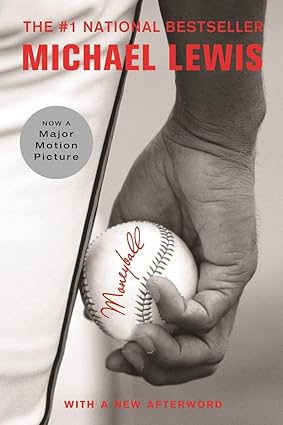
This past month, we lost yet another legendary editor, Starling Lawrence, who had a 55-year editorial career at W. W. Norton. I have to admit, of course, I’d never heard of him, but I’ve certainly heard of books he edited, including The Perfect Storm by Sebastian Junger, and Moneyball and The Blind Side by Michael Lewis (all three of which were books before they became movies).

When he started at Norton in 1969, Lawrence had the unenviable job of “reader,” sifting through the “slush pile,” the name for the pile of unsolicited manuscripts that came into the offices and were dropped somewhere for someone to eventually take the time to read. He said that this job taught him “an important lesson about patience and paying attention to the job, no matter what it is.” Publisher’s Weekly noted that, “As he panned for gold among the submissions, he trained ‘a voice that has endless patience for what does interest him,’ as Lewis put it.”

The W.W. Norton website wrote this tribute: “During his more than five decades at Norton, Lawrence had an unmatched impact on the trade list, shaping its character with culturally important books that sold millions of copies. Lawrence discovered future bestsellers in unlikely places: the slush pile of unsolicited manuscripts, the dusty top shelf of an agent’s bookcase, and in proposals rejected by the rest of the industry. As he once noted, ‘It is remarkable in hindsight that for two of the most important books I ever acquired, Sebastian Junger’s The Perfect Storm and Michael Lewis’s Liar’s Poker, there were no other offers on the table.’”

With the latter author, Michael Lewis, Lawrence built a strong relationship that led to 17 books, including the above-mentioned Moneyball and The Blind Side. Lewis wrote of Lawrence, “When I sit down to write, the only voice I hear in my head is Star’s” (W.W. Norton website).

That’s a powerful editor/author relationship!

Across his five decades at Norton, Lawrence championed and edited “scores of era-defining books” (ShelfAwareness). “‘It is impossible to overstate the effect Star Lawrence has had on Norton,’ said Julia Reidhead, chairman and president. ‘His taste was as confident and true as his spirit, and he transformed our list with some of the greatest writers of our time'” (W.W. Norton website).

That’s an amazing legacy. While he did write a few of his own books, he spent most of his career in the shadows, behind the scenes, relegated to the Acknowledgments page (if at all) of the many books for which he as the best reader, the shaper, the author encourager.

That’s what I’m teaching my students in Editing class right now. If they want this career, it will be extremely rewarding but will not bring them fame or fortune. They must do it for the love of the words and the love of good stories.

4 reasons to attend the Taylor University Professional Writers Conference

One of the hats I wear is coordinator of the annual Taylor University Professional Writers Conference, held every summer on the university’s beautiful campus. And I am inviting you.

Just a little over 10 years ago, we started this conference, wondering, “If we build it, will they come?” Well, came they did, and we’ve been running a successful conference ever since. The conference is a natural outgrowth of the Taylor University Professional Writing major, where students are trained, among other things, to navigate the world of publishing. Meeting and networking (and sometimes interning) with agents, authors, editors, and social media experts from across the Christian publishing industry is just one of the many plusses of our program.

Here are 4 reasons you should attend our 2025 conference:

1. It’s short and inexpensive.

Our General Conference runs a day and a half and is packed with sessions and fun. It runs from Friday, July 25 at 1:00 to Saturday, July 26 at 5:00. During that time are options of 32 different sessions, 3 keynotes, open mic readings, faculty book signing, and one-on-one appointments.

And all of that (including meals) for just $139. You’ll get Friday dinner, and Saturday breakfast and lunch, and all of the activities above. If you’d like to stay overnight on campus, you can for an extra fee of $70/night.

2. Add a day for some extra, advanced training.

For $139, including meals, you can opt to come to one of our pre-conference tracks. Beginning at 1:00 on Thursday, July 24 and ending with lunch on Friday, July 25. This is an opportunity to go deeper with a particular topic. You can choose from the following two options.

Option A: Deep POV / Prepping Your Proposal

In this Advanced Track, you’ll be privileged to learn from literary agent, Linda Glaz, who had been acquiring manuscripts, editing them, and coaching writers for 13 years. You’ll learn on Thursday about deep POV, the kind of writing that will deepen the experience of the reader and allow him/her to stay in the characters’ points of view. Then, on Friday, you’ll do a deep dive into how to write a solid book proposal–one of your first steps for the gatekeepers in the publishing work.

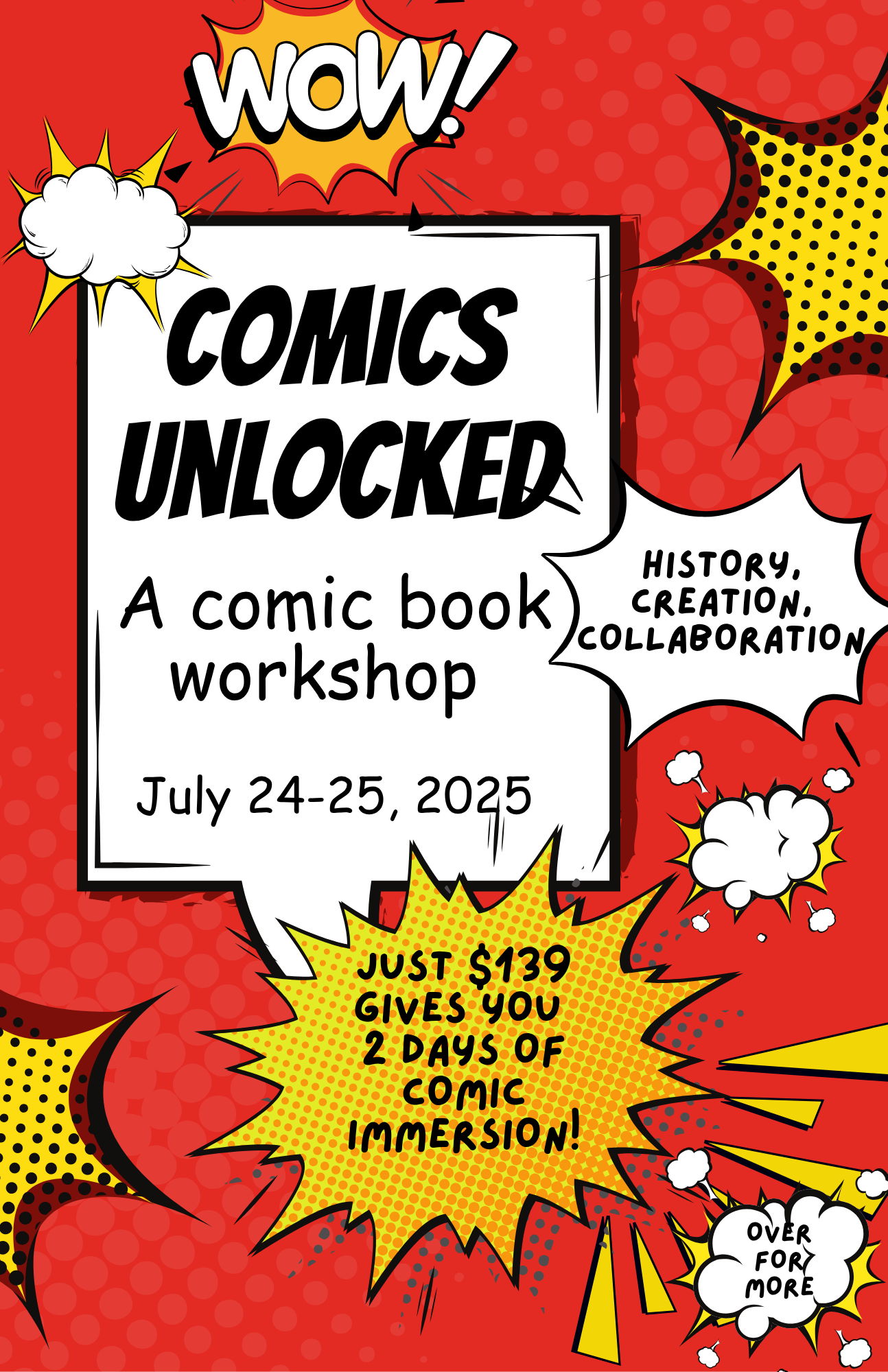
Option B: Comics Unlocked

​Your teachers (two Taylor U students) have been interested in comic books for their entire lives and are excited to share their knowledge with you. In their Comics Unlocked sessions, you’ll learn the history of comics, the craft of comic book creation (including formatting, script writing, pacing, and page layout), the artist/writer collaboration process, and possible paths to publication. You’ll also have the opportunity to work on your own comic book pitch and plan.

3. Do both a pre-conference track and the general conference for a reduced price.

If you choose one of the pre-conference tracks AND the general conference, you get both for $249. You’ll move seamlessly from having lunch on Friday after your pre-conference session to the general conference that begins at 1:00 p.m.

Some snapshots from our 2024 conference.

4. We’re great for all ages, types, and levels of writers.

Never been to a conference before? We’re ready to help you navigate with our friendly faculty and helpful staff (who just happen to be Taylor U Professional Writing students).

Just getting your feet wet in the writing world? We’re great for beginning writers to learn about what it takes and how to get started when it comes to being a writer.

Think you’re too old to start writing? You’re never too old. Lots of Bible characters have taught us that.

Think you’re too young? If you’re at least 16, we especially want to invite you to the conference. You’ll get to take part in all the sessions and networking, plus our college student staff will give you evening activities and a sense of what college life is all about.

Thinking you’re too advanced to need a conference? Maybe you’ve been around the industry a long time; maybe you’re a published author. Even so, there is never a time that you don’t need a refresher or some encouragement. And even better, you bring your expertise to those newer writers.

Check out the conference website at www.tupwc.com and register today!

A “Find Your Tribe” gathering of nonfiction writers at the 2024 conference.

Just write one . . .

Lunchtime was a big deal during my elementary school years. I recall spending much energy on exactly which lunchbox would provide my “ethos” for the upcoming year. After all, during every lunchtime, that lunchbox sat in front of me, open, back side available for all to see. Everyone at those long cafeteria tables would set up their boxes, pull out the thematically matched thermos and unscrew the cup and lid, take out the various foodstuffs, and spread it all out on the opened lid.

Yes. The lunchbox was ME. Who was I each year? Was I Holly Hobby? Peanuts? The simple butterfly design with flowers? Fairies?

The drama of the annual lunchbox choice still resides in my psyche.

So when I read Anne Lamott’s book Bird by Bird and her chapter about school lunches, I immediately resonated. As she describes, there’s so much going on when I consider my school lunches back in the mid-1960s. If I would try to write the scene, I might find myself overwhelmed. The lunchboxes, the long tables, the smell from the hot food line on pizza or taco day, the small square milk cartons, the cliques, the snack trading, the teachers walking around and monitoring, the noise and clatter before recess, the internal angst of walking across the cafeteria in a new outfit …

So much. Too much.

Lamott addresses this, giving advice to writers to not try to capture it all. Instead, to write the “one-inch picture frame.” To take a mental shot of the entire cafeteria scene, and then to Zoom in on one small piece of it — such as a lunchbox.

On her Instagram page beside a photo of a small picture frame, Lamott writes:

It sounds similar to Ernest Hemingway’s advice, in A Moveable Feast, to “write one true sentence”:

Sometimes when I was started on a new story and I could not get going, I would sit in front of the fire and squeeze the peel of the little oranges into the edge of the flame and watch the sputter of blue that they made. I would stand and look out over the roofs of Paris and think, “Do not worry. You have always written before and you will write now. All you have to do is write one true sentence. Write the truest sentence you know.”

One-inch frame . . . one true sentence.

The idea is to not get overwhelmed. To not give in to imposter syndrome. No matter how many chapters still to go, no matter how long the article, you can just write that one beautiful sentence. You can focus on that one small bit of the big picture, working word by word, sentence by sentence.

Eventually, yes, you’ll go back. You’ll edit. You’ll rearrange. You’ll cut. You’ll write more. But to get there, you need to start.

Break it down. Focus in. Take your time. A little bit every day.

One inch. One sentence.

What kinds of jobs can a writer get?

OR How can I turn my writing into a career?

Helping my students turn their love for words and ability to write into a career is exactly what I’ve been trying to do with my life for the past 15 years.

I’m planning a class for spring 2025 that will be the introductory class to my Professional Writing major here at Taylor U. But I’ve set my sights a bit bigger as I also want to invite into the class any student who might be sitting around considering their major and thinking, “But I’m also a pretty good writer.” I want to offer a class where they can explore how their ability with words (which, believe me, isn’t something everyone has) can be leveraged into many types of jobs in their chosen fields.

Here’s the deal: Even though I teach the students who major in Professional Writing about the ins and outs of writing well and book publishing, I don’t leave them with the unrealistic dream that they’ll be able to make a living off the royalties from their published books (if, indeed, they get published). My students who have had their books published often still have day jobs — or have spouses who have day jobs. (I know you writers, laboring in the evenings or early mornings on your manuscripts in between bouts of “real life,” understand this.)

Gif from plaidswan.com

Most of my alumni are using their ability with words in many fields. I currently have former students in the following jobs:

  • Copy writer
  • Magazine editor
  • Book editor
  • Freelance editor
  • Digital content strategist
  • Communications director
  • Marketing director
  • SEO specialist
  • Publicist
  • Acquisitions editor
  • Literary agent
  • Author
  • Technical writer
  • Social media director
  • Proofreader
  • Email marketing manager
  • Blog writer
  • Web writer
  • Content writer

And no, AI is not going to replace all of these people. In fact, I plan to teach ways to use AI strategically to help us (and it can). However, we’re going to learn what we humans still need to know to help AI do its thing, as well as to help it deliver what’s needed.

Thus, as I create my syllabus for the coming semester, I hope to expose my students to the many opportunities available to anyone who can string words together in a coherent, concise, and clear manner. Good writers are desperately needed because content is desperately needed almost literally everywhere. Even writing a good email has become a lost art.

What jobs are you aware of that need good writers? Even if you’re a novelist by night or hammering away at your opus, where else do you use your writing skills?

Help me give my students some encouragement!

Create a personal social media calendar

As I mentioned in a previous post (4 keys to your author social media strategy), you as a writer need to be on social media, you need to choose the platform(s) that most works for you, and you need to be posting consistently.

“Aye, there’s the rub” (to quote Shakespeare). It’s difficult to be consistent.

In that post, I suggested that you create a weekly schedule that you can keep up with (and because that weekly schedule can repeat, you easily have a monthly schedule). I said that perhaps on Monday you’ll share on Facebook about something you learned in research for your book. On Wednesday you’ll post on Pinterest some photos you found about the time period of your historical fiction. On Friday, you’ll share the link to an article you read that was pertinent to your book’s topic. On Saturday, maybe a Canva-created quote from your book.

But if you’re a visual person like me, perhaps putting this on a calendar (physical or electronic) will help this make sense. This will keep you from worrying about posting or getting behind and having lapses of days or weeks at a time.

As I was posting around the release of Pathway to Publication, I needed to create a visual plan to help me to both remember to post and not stress about remembering to post.

Below is a sample week that I created at the time. This one week provided a template for the rest of the month — which then created a habit that’s easy to remember. Each day I describe a post or two and which platform. Of course, when I feel inspired, I can post more often. I take Sundays off and breaks on Saturdays between blog posts. And I only blog once a month. I wish I could do more, I just don’t have it in me with my other responsibilities.

Sample One Week Social Media Calendar

MonTuesWedThurFriSat
Insta and X: Create a Canva with helpful line from book.
Post.
FB and X:
Post regular weekly Typo Tuesday pictures.
X: Share a link to an article of interest about writing or books.Insta and X: Post humor meme about writing, teaching, or books. X: Ask convo starter question. Insta: Photo “day in my life.”Website: Work on blog. Plan 1x or 2x month. Share on FB & X.

You may have other social media to post on, or you might set aside a day each month to work on a newsletter. The point is to decide what you need to do and then schedule time each week or month to get it done.

So much less stress when you just have to do what is scheduled on each day to do!

Beyond the weekly schedule, I try to be aware of annual holidays and special days throughout the year tied to my brand — writing, editing, books, communication, teaching. (The following are courtesy of the Days of the Year site.) These can help focus the quotes I use.

  • January: New year, resolutions, how you can set up for a successful writing year, setting goals; January 9 (National Clean Your Desk Day); January 23 (National Handwriting Day)
  • February: God’s love for us; February 7 (National Send a Card to a Friend Day); February 14 (International Book Giving Day); National Library Lovers Month; Freelance Writers Appreciation Week (second week)
  • March: March 2 (Dr. Seuss Day); March 2 (World Book Day); March 4 (National Grammar Day); Easter (March or April)
  • April: Easter (March or April); spring cleaning; April 6 (National Bookmobile Day); April 20–26 (National Stationery Week); April 23 (World Book Night); April 27 (World Stationery Day); April 30 (Independent Bookstore Day)
  • May: My college students graduating; May 3 (Write a Review Day); May 16 (National Biographers Day); May 19 (National Notebook Day); Memorial Day
  • June: my professional writing summer academy week; June 23 (National Typewriter Day)
  • July: Info about the upcoming Taylor University Professional Writers Conference (held end of July); July 1 (Write a Letter Appreciation Week); July 4 (Independence Day); July 30 (Paperback Book Day)
  • August: Prep for the teaching semester; August 5 (Blogger Day); August 9 (National Book Lovers Day); August 31 (We Love Memoirs Day)
  • September: Back to teaching; Read a New Book Month; Sept 1 (World Letter Writing Day); September 6 (National Read a Book Day)
  • October: October 1 (International Coffee Day); October 18 (National Chocolate Cupcake Day—I love cupcakes; sue me); October 29 (National Cat Day—I own way too many cats)
  • November: November 4 (Fountain Pen Day); November 15 (I Love to Write Day); Veterans Day (I’m an Air Force brat); Thanksgiving
  • December: December 21 (National Short Story Day); Christmas

Now if you check up on me, you’ll probably not see this continued activity because I know what I should do but am not very good at execution. I did fairly well around the release of my book but have not been consistent since. Writing this post is making me think I need to get myself back on track.

What about you? What do you do to stay motivated and consistent with your social media postings?

Gif courtesy of https://metricool.com/social-media-gifs/

How to spot (and avoid) publishing predators

I’ve seen it happen one too many times (and one time is too many) — well-meaning writers get caught in the net set by predatory “publishers.” The writers thought they were getting published, only to find themselves with an inferior product (if indeed they end up with any product at all) and out a whole lot of money.

In a writers Facebook group recently, someone posted that they had received a phone call from a publisher who wanted to publish her book. She had some red flags (how did they even get her number, she wondered), so she asked the group for advice. Thankfully, every response warned her that this is a scam. I so appreciate all those seasoned writers in the online world helping one more person to not be a victim.

It’s sad to say, but the world is full of folks who are ready to take money from us moony-eyed writers who simply want to get our words out there. So how do you spot a scam?

You can spot these “publishers” by how eager they are to publish your book. Their process is simple. They will target you, do a sales job, flatter you and your book, make big promises, and then ask for money.

The fact that they target you is the first red flag. That’s not how the publishing process works. Generally, literary agents and acquisitions editors are wading through piles of proposals. They are working with the folks who know the process, not out seeking newbie writers and calling them on the phone offering to publish for a fee.

Let’s say you wrote a post on Facebook about finally finishing the writing of your book and then, magically, you receive an email or phone call from a company that effuses about your book and says they want to publish it!

Wow, you think, I didn’t realize it could be so easy!

Well, my friend, it isn’t. These folks are simply preying on new authors who haven’t yet gained the knowledge and experience of what it takes to publish a quality book. In short, they will publish anything as long as they get their money from you up front. They have no editorial standards. Their goal is not to create a quality product or see your book do well.

They are going to approach you first, flatter you, do a sales job, ask you to send them your manuscript, and ask for a credit card number for a large chunk of money (we’re talking in the thousands: $4K, $5K, $12K) for a list of services that they say they will provide (some of which are virtually meaningless, others that may or may not be delivered or may not be up to industry standards — such as their editorial process). They will send you a contract but generally the terms are not standard in the industry.

Hear me say this: These publishers are not trying to work with you to create a book of high quality. They just want your money.

You see, with traditional or independent publishers, they invest in your book so they have an interest in it selling well. They vet your work before publishing by studying your book proposal and sample chapters. They edit and copyedit and proofread and lay it out and create a compelling cover design and help with marketing. Because they make an investment in your book, they want to see it do well. They want to make back their investment and make money on it so that you also can make money on it.

Not so with these scam publishers. You will pay money and have no say over anything. Most detrimental of all, they contractually often take away your rights to your book — meaning you actually no longer own your book. You’ll have paid out of pocket and lost control of everything — including your book. It’s a lose-lose. These predatory publishers can afford to publish anything (no matter how poorly written or how poorly someone they hire edits it) because they aren’t making money on the sale of quality books — they are making money off you, the client. You pay them up front, so they get their money regardless of what happens with your book sales.

There is absolutely no risk to them. Some may offer up a little bit of service, but very often you will find yourself with a poor quality product that only works against you. Again, it’s a lose-lose for you.

Note that I’m focusing on those places who contact you. These may fashion themselves as “publishers” or “hybrid publishers” or “self-publishers.” And unfortunately this puts a bad face on the legitimate self-publishing or hybrid companies that, while they do charge money for their services, are working on a business model that is trying to help you create a superior product. See the link in the bulleted list below of ratings of self-publishing companies.

The key is, if it sounds too easy and too good to be true, it probably is. So before you outlay a chunk of your life’s savings, do some thorough research.

  • Look for information about the company online, especially complaints.
  • Check out this list of ratings for self-publishing companies.
  • Insist on receiving a sample contract that you can review. (If they want money first, don’t give it to them.)
  • Ask for some names of books the company has published that you can review. (Even if the company is legit, you do want to see what other types of books they publish so you know if you want to be part of their catalog.) If you can get your hands on physical books, even better, so you can check the quality. Get in contact with those authors online to ask about their experience.
  • Check out this post with more information about what to look for in order to avoid publishing scams.
  • Check out Writer Beware for other advice.

Chances are, you do all of the above with that publisher who called and flattered you, and you’ll discover a scam. Steer clear. Ultimately, you may continue your quest to get traditionally published, or you may steer toward a hybrid or self-publishing route. But you’ll be in charge, you’ll research and contact legitimate companies, and you’ll be able to create a product you can be proud of.

Keeping me humble – adventures in typos

We writers know that, on the one hand, we need self-confidence to put our writing out there and dare to get published, but we also need humility. We don’t want to go out into the publishing world with an arrogant attitude.

I dare say we will be served up humility constantly — we probably don’t need to seek it. We just need to learn how to deal with those times when embarrassing things happen.

Here’s my latest dilemma. I’ve talked on this blog about my latest book, Pathway to Publication. I’m very proud of this book (seriously, in the best way; you know, that “humble proud” attitude). I feel very good about the book and what it can offer writers.

There’s a meme out in the world that says if you want to do a really good proofread, get your book published and then open to any random page.

I laughed and laughed.

Then yesterday, I opened my book to two random pages.

I found two (count ’em, TWO) typos in my brief foray. This does not bode well for the rest of the book. I promise, my book was proofread by me, by editors, by the publisher, and again by me. I have no one to blame but myself. Me. Professional editor. Me.

Original meme is from shencomix.com

Here they are, for your viewing pleasure.

First, on page 17, right away in the “How to Use This Book” section, I managed to say first that readers could download a “Microsoft Word or Excel” version of the worksheets on my website. Dear readers, I meant “Microsoft Word or PDF” (PDF appears later). In my proofread, I slid right right past it.

This second one, again, in my brief visit back into my printed book, appears on page 47, end of the first paragraph. Clearly I edited something in that sentence and left out the word “What” at the beginning (or I could have seen this and deleted the word “about”).

Seriously. Excuse me while I go away and eat some humble pie.

It’s just part of the process. I join a legion of professionally published books out there with typos.

https://en.wiktionary.org/wiki/ugh

Indeed, in her keynote presentation this past weekend at our Taylor University Professional Writers Conference, Maggie Rowe made clear to all of us that we need to “embrace humility.”

Well, humility and I are hugging it out right now!

Have you ever found a typo in your own work, after the fact?

Pathway to Your Dreams

She’s leaving today.

My sister, that is. Today she leaves to begin on a dream that she’s been holding in her heart for over thirty years. She begins her thru-hike on the Appalachian Trail.

She has been planning this trip for the past couple of years. I first heard about it during a quiet late December evening in 2021 as we sat together chatting, keeping vigil over our dying mom. We held her hands and whispered, and Carol told me of this plan.

And now, the day has come. She and her husband (who will be accompanying her on portions of the trail) have donned their well-prepared backpacks and taken the first steps toward a decades-old dream.

My sister and brother-in-law at the first white blaze that marks the southern start of the Appalachian Trail on Springer Mountain, GA. Only 2,190 miles to go!

It was in some of those quiet conversations with Carol that a thought came to me: The kind of preparations and patience and planning required for such a trek for her to reach that dream are comparable to the kind of preparations and patience and planning required to get a book published.

I was in the beginning stages of writing my book about the process of publication. I was struggling for a hook, plagued by imposter syndrome. But her words ignited something in me.

And Pathway to Publication — the title, the plan, the hook, and eventually the cover design were born. (Thank you, Bold Vision Books for this perfect cover. Read more about the book on this page here on my site.)

When you get ready for a long hike, you don’t just put on your gym shoes and start walking. You need preparation, plans, accurate maps, and appropriate equipment. Likewise, when you step onto the pathway to publication, you can’t rush the process. The publishing world has its own language, processes, and gatekeepers. You need to take the time to develop a plan, create the required pieces, and understand each step along the way.

I wrote this book for the dreamers. Those of you out there who so much want to get published. You have a manuscript but you don’t know what to do next. What are the steps on the pathway to that dream of publication?

My book will help you get there.

My sister is making her dream a reality. I’m hoping to help you make your publication dream a reality.

The book can be purchased on Amazon here.

And, incidentally, if you’d like to follow along my sister’s journey, you can read her blog updates here at “The Trek.”

I’m here to help be your guide on this pathway. Please feel free to contact me! In addition, I’d love to speak to your writers groups or conference. Helping writers is what I do.

Let’s grab our gear and get started!

That Elusive Perfect Word

Child, to say the very thing you really mean, the whole of it, nothing more or less or other than what you really mean; that’s the whole art and joy of words.

C. S. Lewis, Till We Have Faces

Finding that perfect word that says the thing I mean, what I really mean, is a struggle for the writer — and I know all writers experience it constantly.

But it’s not just a writing problem; it’s also an editing problem

As an editor, my job (especially at the copyediting phase) is to make a manuscript sing. If I read your story or essay or article or devotional, I’m looking closely at the sentences and the words — and I’m asking if the words I see are the best words. Sometimes something I read makes me stumble. I have to go back and understand the sentence, or visualize the scene, or simply try to comprehend what the author means to say. I stumble because something isn’t working.

And if it isn’t working for me — the editor — then it isn’t going to work for the readers either.

Maybe I need to replace a blah verb with a stronger verb — or better yet, an adverb and verb with a strong verb. “He slowly walked across the street.” Ugh. Adverb. Not helpful. Many strong verbs can picture a slow walker, but the verb needs to be the best verb for the scene. Does he amble? trudge? shuffle? Amble sounds like he’s carefree . . . trudge sounds like he’s sad . . . shuffle sounds like he’s elderly or injured perhaps . . . I have to study the scene and suggest a strong verb, the right strong verb.

Or maybe the descriptor isn’t quite there. A “shiny” item might better be described as shimmering or glittering or glistening or gleaming or glossy (wow, lots of “g” words there).

At times, I look for a word that will add some alliteration — if it works with the tone of the piece.

It takes a writer, a reader, a word lover to be a good copy editor, to massage the message, to tame the tome (see what I did there?).

the best

Some sentences just make me stop in wonder. Some words string together like the notes of a beautiful melody. They take my breath away. (I gave a few examples in this post called “Word Power.”)

It’s hard work, this writing, editing, and trying to say what we want to say or trying to help authors say what they want to say.

But when a sentence sings, when we “say the very thing [we] really mean, the whole of it, nothing more or less or other than what [we] really mean” as C. S. Lewis writes, it’s all worth it.

We live for those moments.

Ever have one of those times when it all came together?


The Joy of Coordinating a Writing Conference

This past weekend (August 4-5, 2017), we held the second annual Taylor University’s Professional Writing Conference at Taylor University.

Last year, 2016, we did our first conference. We started with zero dollars and hoped that we’d break even or perhaps have a little extra to have seed money to hold a second conference. We didn’t know if we’d make it or not … until about two weeks prior to the conference when a flurry of activity brought us above our minimum (100 attendees) and encouraged us that we were meeting a need and should hold another conference.

Which we just did.

And this time? We got to 120  … 130 … 140 registrants, plus 20 faculty and staff, and suddenly my behind-the-scenes self was worrying about having large enough rooms for breakout sessions. So I closed the conference registrations (and still let through about 10 more people who begged) and held my breath that we’d have enough space.

THEN, our main session room was determined to not be ready, so we scrambled for another room and another breakout room. Thanks to staff at Taylor U, we moved to another room (holds 190, so we were tight but had close fellowship), and located another large-enough breakout room.

Then our folks arrived. Sessions began, keynoters encouraged, faculty taught, one-on-one meetings went on in the Campus Center, books were bought, snacks were consumed, staff people ran around, and while I used the passive voice here nothing was passive at all. It was proactive, energized, encouraging, and … from my perspective … so much fun!

It’s always terrific to get to communicate and rub shoulders with authors and agents and acquisitions editors and editors in the industry — some I’ve known for years, some I’ve known of, and some I’m getting to meet for the first time. They prepare talks and handouts, they sit on panels, they talk individually to conferees in one-on-one appointments, they stay overnight in college dorm rooms — simply because they love writers. All of them are amazing professionals with a heart for helping and encouraging.

And conferees? We couldn’t do a conference without those amazing people who set aside the time and money to come to a two-day conference. These folks were appreciative, which makes it all worthwhile!

IMG_7298

In addition, I had wonderful staff (former Professional Writing students) who spent two days running (which, as writers know, is not part of our general activity). They helped me put together conference packets, they ran to the store to purchase 160-people-worth of snack items, they checked on technology in the breakout rooms prior to each session, they got water for speakers, they ran extra copies of handouts, they carried boxes … they basically did whatever I asked them to.

And they made me laugh.

I couldn’t have run this conference without them.

Thanks guys.

If you’ve never attended a writers conference, get thee to one! They’re a great place to be with like-minded folks, discuss the craft, be encouraged, and fill your tank for a few more months of lonely writing. Conferences happen all over the country (and world) at all times of the year. Look here and here and here for some listings of conferences.

And, of course, you can always consider the 2018 Taylor University Professional Writing Conference. We’ll be here!