When we moved from a city in Chicagoland that boasted a “Top Ten Library,” I somewhat despaired. That was the library where I diligently took my children a couple times a month. We routinely checked out and returned and checked out and returned piles of children’s books. This library did indeed have a stellar selection, the latest technologies, and wonderful ambiance.
We have since lived in two small towns in Indiana, both boasting libraries. I was thrilled to locate the first town’s library. I paid my twenty-dollar fee to be a member, only to look around and find rows and rows of romantic paperbacks. “We take donations,” the elderly volunteer behind the desk informed me.
Obviously.
This was not the “Top Ten” library I had made use of for the last 26 years of my life. This was a little town library with just enough money to keep going. That’s okay, I told myself. There were a few biographies and memoirs here I could read. I checked out Stephen King’s On Writing, returned it on time, went to check out another, and a new elderly volunteer asked me if I still had On Writing at home and would I please return it.
“I did, last week,” I told her. I had dropped it off across the street in the plastic box under the desk by the entrance to the video store—the after-hours drop box. “Look, it’s here, on the shelf.” I didn’t want her to exert herself, so I walked over, pulled the book from the shelf and brought it to her. “See? Returned and back on the shelf.”
“Oh, okay,” she said, as she clicked around with the mouse on the computer and tried to find the screen she needed. I didn’t want to start out my sojourn in this little town as the lady who didn’t return library books!
We’ve since moved to another small town that boasts a library as well. Again, mostly donations, but this one I could join for free — just needed to prove my town address. “Do I need a library card?” I asked naively.
“No, we’ll recognize you.”

The library is in a repurposed brick two-story building that appears to have once been a church. (The bricked-in arches above what are now square windows give me that impression.) The library has been serving this and the surrounding communities for almost a century.
My grandsons and I recently walked the two blocks from our home to visit on a chilly Saturday afternoon. They enjoyed the large Lego blocks and the plastic car track. I wandered the stacks, excited to find many actual readable books (sorry, paperback romances do not translate into my world as “readable”). There are enough current books, memoirs, and reference books to keep me busy.
“We’re not fully computerized yet, but we’re working on it,” one of the volunteers told me.
The library is a gathering place — offering a knitting and crocheting circle, activities for elementary children, and various and sundry lessons.
On a shelf beside the front door are “free” books. (Isn’t that sort of like offering candy to a baby?) The librarian told me they were mostly duplicates among donations. I found a memoir to add to my reading collection. My grandsons each found a book to take home as well.

I love this little library. It’s clean and bright, and the folks are friendly. People drop in to make use of the free WiFi, pick up and return videos, send a fax, or read a magazine. While I was readying my grandsons to leave at closing time, the librarian kindly told me to take my time. “Someone just called and needs to use the Internet. I’m waiting for him.”
Yes, I have access to three huge university libraries, and I use them diligently for research and the love of my life: “inter-library loan.” Yes, there are websites that show me the “most beautiful libraries in the world” (swoon!).
But I think when I want to simply wander smaller stacks to find a new book to read, or when I want to repeat my earlier process and now take grandchildren to check out piles of books, we’ll walk the two blocks to our little local library.



 Buzbee has spent a lifetime around books—working in small independent bookstores, visiting small stores as a sales rep, and, of course, as a reader. His love for bookstores is unabashed. Where else, he asks, can you go in and sample the merchandise in the way you can with books—sitting over your latté reading the first half of that novel before you decide to purchase? Where else can you purchase for a minimal price the wisdom of the ages (or, if you so desire, the wisdom of a Kardashian or two)? Where else can you be so alone as a shopper and yet so connected to the others in the store—simply because of your love for books? Where else is there absolutely something for everyone and someone for everything? Where else can you purchase something that doesn’t need any upkeep but promises hours of entertainment—and then willingly sits on a shelf for as long as you choose to keep it, easily accessible, ready with the same words in the same spot with, perhaps, the same effect as they had on you the first time?
 Reading: A Life in Books, Lynne Sharon Schwartz muses about why we are willing to spend hours of our lives with tales others have spun.
 I appreciate that Sale paid her dues—working her way up through the levels of editing as she moved to various publishing companies. Beginning as a secretary at Knopf, she moved on to Lippincott in 1959 where she was an editorial assistant, then moved up to assistant editor. In 1963, she moved over to Macmillan as associate editor. After living out of the country briefly, she did freelance work upon her return—working for publishing companies, literary agents, and authors. In 1977, she was named senior editor at E. P. Dutton, and then joined Putnam where she was vice president and senior executive editor.
 Stein on Writing:

 The Editor’s Companion: An Indispensable Guide to Editing Books, Magazines, Online Publications, and More.
 The Forest for the Trees: An Editor’s Advice to Writers
 On Writing Well: The Classic Guide to Writing Nonfiction

 I learned about Ursula Nordstrom by reading a book of her letters:
 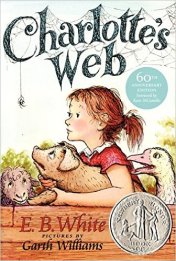 While I read Charlotte’s Web and Stuart Little and Where the Wild Things Are to my children, it never occurred to me that somewhere along the line an author had to get an editor to understand that—yes—a talking spider is a really great idea! A spider! And a kid spying on the neighbors and writing down everything they do—also a great idea!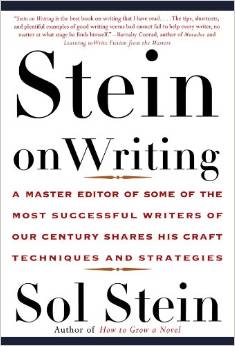


 Linda Taylor: Teacher, Editor, Publishing Professional