The first time I saw the Eiffel Tower, I stopped in my tracks, astounded. It’s so BIG! For some reason, in my mind, it stood much smaller over Paris. But walking toward it, seeing it close up, standing under it and looking up, the thing is massive. Thousands upon thousands of pieces of iron — each had been perfectly cut and angled, then riveted together in a lacy pattern. When it was completed in 1889, it was the tallest man-made structure in the world at the time. At 984 feet, it nearly doubled the up-until-then tallest structure, the 555-foot tall Washington Monument (which opened in 1888).

I’m currently reading a book titled Eiffel’s Tower (Jill Jonnes, Penguin, 2009) about the building of the tower, which went up iron piece by iron piece during 1887 through 1889 as the focal point for the Exposition Universelle, the World’s Fair in 1889.
But as it was ascending — the four legs at the base going up separately and slowly uniting at the first platform — Parisians were not too fond of it. They feared that it would draw lightning, change the weather, or fall over (indeed, without the intensive and minute calculations of Gustave Eiffel, it well may have). Many tried to stop it. A letter signed by several important Parisians said this (with a slight insult to America):
For the Eiffel Tower, which even commercial America would not have, is without a doubt the dishonor of Paris. Everyone feels it, everyone says it, everyone is profoundly saddened by it, and we are only a weak echo of public opinion so legitimately alarmed. When foreigners visit our Exposition, they will cry out in astonishment, “Is it this horror that the French have created to give us an idea of their vaunted taste?” . . . And for the next twenty years we will see cast over the entire city, still trembling with the genius of so many centuries, cast like a spot of ink, the odious shadow of the odious column of bolted metal. (27)
Ouch.
It was supposed to be temporary, the tower; then it was given a reprieve to stand for twenty years. And that was in 1889. Clearly, the tower has come to symbolize Paris itself and, if the plethora of Eiffel Towers on everything from lamps to stationery to jewelry is any indication, it has become a well-loved icon. (I have little Eiffel Towers everywhere. Ahem.)
The point is that Gustave Eiffel kept building. He believed in his structure; he saw the beauty when those watching its slow ascent across the Parisian skyline couldn’t see it.
Thinking of nay-sayers, I’m reminded of F. Scott Fitzgerald. When The Great Gatsby hit  the shelves in April 1925, a review of the book in the St. Louis Dispatch said, “Altogether it seems to us this book is a minor performance. At the moment, its author seems a bit bored and tired and cynical. There is no ebullience here, nor is there any mellowness or profundity. For our part, The Great Gatsby might just as well be called Ten Nights on Long Island” (Reach).
In June of 1925, the author Edith Wharton weighed in, fancying herself a better editor than Maxwell Perkins: “To make Gatsby really Great, you ought to have given us his early career (not from the cradle—but from his visit to the yacht, if not before) instead of a short resume of it. That would have situated him & made his final tragedy a tragedy instead of a fait divers for the morning papers” (Reach).
By the time Fitzgerald died in 1940, he had made a little over thirteen dollars in royalties on the book.
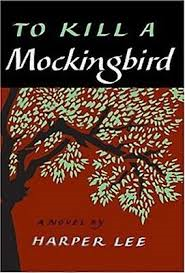
But like the Eiffel Tower, The Great Gatsby has become an icon to later generations.
The point? Don’t give up on what you’re doing — your book, that poem, the painting, whatever creation is before you. Don’t worry about the nay-sayers. If you believe in it, if you’re doing what you perceive is your best work, then just keep on doing it.
You just never know what will happen.
Jonnes, Jill. (2009.) Eiffel’s Tower. New York: Penguin.
Reach, Kirsten. “Ten Nights on Long Island: The Great Gatsby’s Early Reviews,” 9 May 2013, mhpbooks.com/ten-nights-on-long-island-the-great-gatsbys-early-reviews/. Accessed 24 Jan. 2017.
 Buzbee has spent a lifetime around books—working in small independent bookstores, visiting small stores as a sales rep, and, of course, as a reader. His love for bookstores is unabashed. Where else, he asks, can you go in and sample the merchandise in the way you can with books—sitting over your latté reading the first half of that novel before you decide to purchase? Where else can you purchase for a minimal price the wisdom of the ages (or, if you so desire, the wisdom of a Kardashian or two)? Where else can you be so alone as a shopper and yet so connected to the others in the store—simply because of your love for books? Where else is there absolutely something for everyone and someone for everything? Where else can you purchase something that doesn’t need any upkeep but promises hours of entertainment—and then willingly sits on a shelf for as long as you choose to keep it, easily accessible, ready with the same words in the same spot with, perhaps, the same effect as they had on you the first time?
 Tools: Photoshop” and “Digital Tools: InDesign.” This makes them quadruple threats for any job in publishing because they know what it means to work with the words, but they also know what goes on in the design and typesetting phase where the books are created from the manuscript.
 missed in the copyediting phase or showed up in typesetting. They first do a visual check of all the pages — looking that the margins are even, that the folios and running heads are placed correctly, that everything looks right. Only then do they go back and begin to read every letter on every page.
 Proofreaders need to enjoy the hunt – searching for and correcting errors. It takes a special “eye” to do this, one that can be trained with practice. (I recall many years ago when I was doing freelance proofreading on galleys, the editor at the publishing house would often say, “I can’t believe you found those errors!” I took this as a compliment.)