My Favorite Books about Editing

So I’m writing a book. Yes indeed. A couple actually. One is for my MFA program; the other is for a small publisher. Both are about editing–one more in a memoir-esque fashion, the other more like a textbook, something I want to use in my future editing classes.

In the process of putting together my proposal, I needed to check out books similar to mine. As I ordered books online and checked them out from the local library, I fell in love with some of them–the voice, the humor, the helps, the advice, the exercises. So I thought I’d pass along to you some of my favorites. If you want to learn about editing or want to work more on being your own self-editor, you might check into some of these excellent resources. The great thing about reading books about editing is that you really get a double-whammy–you are also studying how to be a better writer, the kind of writer editors dream about!


dumCopyediting & Proofreading for Dummies, Suzanne Gilad. Wiley Publishing, Inc., 2007.

I’ve used this book in my editing class since 2010 when I first began teaching. The book does an excellent job of being very introductory, has exercises for practice, and incorporates vocabulary. It’s also the only book I could find that gives a clear delineation between copyediting and proofreading. It includes practice exercises, proofreading marks, and publishing vocabulary.


Stein on WritingStein on Writing: A Master Editor of Some of the Most Successful Writers of Our Century Shares His Craft Techniques and Strategies, Sol Stein. St. Martin’s Press, 1995.

I wrote more about this book in this post, so you can check it out there. Suffice it to say that this is one of those books that really will help you ask the right questions as you work on your own writing. He also offers advice to both fiction and nonfiction writers.


artfulThe Artful Edit: On the Practice of Editing Yourself, Susan Bell. W. W. Norton & Company, 2007.

Bell takes on the topic of editing yourself (and, by extension, others). She covers what she calls Macro-Editing and Micro-Editing. I love that she uses several pages working from information in Scott Berg’s book about Maxwell Perkins to discuss the editing process—and how Fitzgerald edited The Great Gatsby from Perkins’s advice. In between are testimonies from various authors about their editors. She discusses the history of editing–which is quite fascinating.


thanksThanks, But This Isn’t for Us: A (Sort of) Compassionate Guide to Why Your Writing is Being RejectedJessica Page Morrell. Jeremy P. Tarcher/Penguin, 2009. 

Morrell talks about her experience as a developmental editor, includes chapters that focus on the various elements of good writing (plot, suspense, characterization, stories, etc.), and teaches with anecdotes and examples. Her focus is on helping writers write better so that they can avoid getting rejected for the most common reasons that manuscripts get rejected.


companionThe Editor’s Companion: An Indispensable Guide to Editing Books, Magazines, Online Publications, and More. Steve Dunham. Writer’s Digest Books, 2014.

If you’re interested in more than just book editing, this one is a great resource. Dunham includes a level of content editing, copyediting, and proofreading. There are chapters on “Editing for Content,” “Editing for Focus,” “Editing for Precise Language,” “Editing for Grammar,” “Typography,” and some tips about word usage, words that are often misused, etc. He includes some checklists and examples. There is information about magazines, online publications, “and more.”


forestThe Forest for the Trees: An Editor’s Advice to Writers, Betsy Lerner, Putnam, 2010.

I also wrote about this one in a blog post. Lerner describes some general types of writers and then peeks behind the editor’s desk and into the publishing world. If you want an idea of what goes on in the editing world at a publishing house, this is a great book.


on writing wellOn Writing Well: The Classic Guide to Writing Nonfiction, William Zinsser, Harper Perennial, 2016.

No list of books would be complete without this little gem. If you often write nonfiction, this little guide offers everything you need to “write well.” We lost Zinsser in 2015, but his legacy lives on. I wrote more about this book in this post.


Of course, every copy editor should have style manuals (Chicago Manual of Style or an AP Style Guide). I’m sure I’m missing a few. If you’re an editor or interested in editing, what books have you read that you’ve found most helpful?

From Manuscript to Book: As It Happened (Typesetting and Proofreading Phase)

One thing (among many) that I love about our Professional Writing program at Taylor University is that the students get such a thorough and well-rounded education in the world of publishing.

Here’s what I mean: After the students in my “Manuscript to Book: How It Happens” class finished their copyediting passes on their manuscripts (which included style tags, along with general language and punctuation cleanup), they then took those manuscripts to the layout and design lab.

As part of the Professional Writing major, students are required to take classes in “Digital IMG-20160426-00896Tools: Photoshop” and “Digital Tools: InDesign.” This makes them quadruple threats for any job in publishing because they know what it means to work with the words, but they also know what goes on in the design and typesetting phase where the books are created from the manuscript.
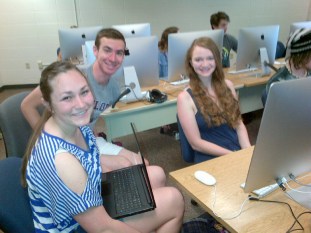
So each took one of the styled manuscripts, flowed it onto a template, and typeset a book. For three class periods we met in the layout and design lab and they worked on the manuscripts–deciding on fonts, chapter starts (recto only or recto/verso), leading, kerning, watching for widows and orphans (those random single words or lines at the top or bottom of a page), placing folios and running heads, and generally working to lay out a pleasing book within the page count target.

After they completed laying out the typeset pages, the teams chose one to turn into a PDF, and the PDF then moved on to the next team to do the proofreading pass.

In proofreading, the students work with the PDF tools to mark errors that either were IMG-20160426-00895missed in the copyediting phase or showed up in typesetting. They first do a visual check of all the pages — looking that the margins are even, that the folios and running heads are placed correctly, that everything looks right. Only then do they go back and begin to read every letter on every page.

After a few days of this proofreading practice, we met together, looked at the PDFs on the screen, and talked about what they had noted as errors.

Again, this is one of the phases that takes a different kind of skill. At this point, no one wants the proofreader’s opinion of the book or the arc of the story. And really the proofreader should not be revising sentences. Instead, he or she should really only fix true errors (which can, indeed, happen at the sentence level; for instance, if there’s a dangling modifier, the proofreader should fix it).

IMG-20160426-00898Proofreaders need to enjoy the hunt – searching for and correcting errors. It takes a special “eye” to do this, one that can be trained with practice. (I recall many years ago when I was doing freelance proofreading on galleys, the editor at the publishing house would often say, “I can’t believe you found those errors!” I took this as a compliment.)

As our “final exam,” the students went back to the styletagged manuscripts and learned how to create ebooks.

So there we have it. My students took manuscripts and turned them into books. Now they know how it happens! They felt that actually working through the steps as would happen in a real publishing house had been extremely valuable in the learning process.

I think so, too!


Great Editors – Ursula Nordstrom and Harriet the Spy

Louise Fitzhugh’s brilliant story of Harriet the Spy drew cheers from some critics and groans from others. But the children took Harriet right to their hearts, and this book is now a best seller which seems destined for literary immortality.

So says the back flap cover of the dust jacket of my copy of Harriet the Spy. I impulse purchased it on Amazon a couple years ago remembering how much I had loved the book when I read it somewhere around age eleven.

harriet

I’m not sure where I first came across Harriet. Perhaps she arrived through a kids’ book club. Maybe I checked her out from the bookmobile that arrived in our subdivision every Saturday morning. But I recall being entranced by her. Harriet wore rolled up jeans and glasses and ran a spy route and wrote in her notebook her observations about the comings and goings and private discussions of the people she spied on. Outside under an open window, she listened to the Robinson family; from a rooftop skylight she peered down at Harrison Withers; sneaking into a dumbwaiter and pulling the ropes, she listened outside old Mrs. Plumber’s bedroom. I found it all fascinating. I wanted to be Harriet. I didn’t want to spy necessarily, but I did want to observe my world and I wanted to write.

“What are you writing?” Sport asked.

“I’m taking note on all those people who are sitting over there.”

“Why?”

“Aw, Sport”—Harriet was exasperated—“because I’ve seen them and I want to remember them.”

After the book arrived from Amazon, I reread Harriet’s adventures. Looking through my adult eyes, the story came across as a bit weird. Really? Sneaking into someone’s dumbwaiter in order to listen to private conversations in the bedroom (well, yeah, the woman was an elderly woman alone and on her phone, but still!). Climbing onto a roof? Writing unkind things about your closest friends?

Looking at the book through an adult’s eyes, I suffered from what Ursula Nordstrom understood all too well—adults too often plastering children’s books with their own adult concerns and thus totally losing the beauty of imagination.

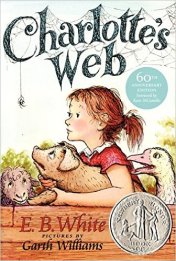
geniusI learned about Ursula Nordstrom by reading a book of her letters: Dear Genius: The Letters of Ursula Nordstrom (New York: Harper Collins Publishers, 1998). She was publisher and editor-in-chief of juvenile books at Harper & Row from 1940 to 1973. She is considered the Maxwell Perkins of children’s publishing; in other words, as Perkins was willing to take a risk with an author, spot talent, and then coddle that author along by way of encouraging letters, Nordstrom did the same but with children’s books. If not for Nordstrom, we might never have seen books such as Maurice Sendak’s Where the Wild Things Are, E. B. White’s Stuart Little and Charlotte’s Web, Margaret Wise Brown’s Goodnight Moon, Syd Hoff’s Danny and the Dinosaur, and Shel Silverstein’s Where the Sidewalk Ends.
Nordstrom believed in children. She believed that if she could get the books past the adults who buy them into the hands of children, the adults could learn from the children how to enjoy and understand what was being done in a truly creative work.

Harriet the Spy was published in 1964. When Louise Fitzhugh arrived at the Harper & Row offices, she had a manuscript that was originally no more than the scribblings in Harriet’s notebook. Nordstrom’s senior editor, Charlotte Zolotow, wrote a report on the sample pages noting that they needed to bring Fitzhugh in to talk. Zolotow saw that it wasn’t yet a book, but it could be. Nordstrom wrote to her senior editor later, thankful that the two of them had “drawn Harriet the Spy out of Louise” (304).

The book managed to garner accolades as well as criticism. Nordstrom is credited with answering mail and constantly being willing to stand up for her authors. Regarding a complaint letter about Harriet, she wrote:

I still wonder what put you off so about Harriet the Spy. Was it the fact that she spied that disturbed you? I think most of us have forgotten the awful things we did or wanted to do when we were 10 or 11 or 12. I was brought up with the most stern drilling of what was right and wrong, kind or mean, thoughtful or inconsiderate, etc. etc., and never tell a lie no matter what. And to this day I would love to read other people’s mail and listen to their telephone conversations if it were not for this hideous conscience, well . . . But you are all for vigor in children’s books and Harriet seems to have such vigor and life. (229)

Nordstrom realized that it would sometimes take the force of her strong personality to help the publisher and the authors and then the librarians and teachers and parents read the books with a child’s eyes. To get rid of their “adult” concerns, open their imaginations, and enjoy what she called “vigorous” books. As she considered the sorry state of 1960s teen novels, she wrote, “The ‘rigid world of good and bad’ is infinitely easier to write about than the real world. Because the writer of books about the real world has to dig deep and tell the truth.”

As I reread Harriet the Spy, I fell into the trap. I found myself wondering if I’d have wanted my kids to read it. I saw the danger Harriet was putting herself in writing true observations, hurting her friends. But that was the very genius of Nordstrom—she realized that children liked books about kids who did bad things sometimes, who had to go to bed without supper, who weren’t perfect little angels.

charlotteWhile I read Charlotte’s Web and Stuart Little and Where the Wild Things Are to my children, it never occurred to me that somewhere along the line an author had to get an editor to understand that—yes—a talking spider is a really great idea! A spider! And a kid spying on the neighbors and writing down everything they do—also a great idea!

Somehow Nordstrom and her team got it.

I’m thankful that Nordstrom and Zolotow did indeed help Fitzhugh create Harriet. Harriet became my friend. She got herself into scrapes but learned how to deal with them. She was herself—willing to be different from everyone else. I think that’s what I saw in her as I sat reading this book on a quiet evening baby-sitting my sleeping baby sister. Harriet made it okay to be alone, to be observant, to want to write.

Children’s literature is a special breed that takes special people to navigate it. It needs adult writers and editors who have enough of a child’s mind to be able to see the possibilities. To know that a talking spider can save a pig’s life. To know that a talking mouse can be born to human parents. To know that a little bespeckled girl with a notebook might just inspire another little bespeckled girl to become a writer.

From Manuscript to Book: As It Happens (Copyediting Phase)

So here we go! Manuscripts have come back from our authors. A few of them worked on some of the suggested changes and sent us revised manuscripts. A couple of others are taking our revision suggestions to heart but going to hold off until they have more time to dig in and make the editorial changes. In either case, we’re moving on with unrevised or revised manuscripts, sending them to a new group to copyedit.

What exactly happens at this phase?

Generally the big questions have been answered, the big problems have been solved. Issues of plot arc or plot lines or characterization or dialog or setting have been queried and revised. The manuscript comes back to the editors for a final check and then moves on to this next phase. So right now, my intrepid editors need to put on their copyediting hats and think differently. They have received the manuscripts from the editing groups and have uploaded them to Google docs so they can copyedit as a team, making and seeing one another’s comments.

The copyeditors now dive in and read carefully. They move in closer, looking at paragraphs and sentences and words choices and punctuation. They look for general readability. They fact check where necessary. They look for consistency issues. They smooth out rough sentences.

They have a little over two weeks for this process, and this morning they did the math (yes, math!) to figure out how many hours this will take them (number of pages x how many minutes it takes to copyedit each page divided by sixty to give them the number of hours). They then also created some benchmark dates for working through the pages and meeting the deadline.

It’s a different level of work. Some people find that they like the big picture editing more than copyediting. Others find that they really like being able to dig in and work at the sentence and readability level. Some had difficulty keeping themselves from doing that in the editing phase! But we have to separate these out because the processes are different, ask different questions, and take different ways of looking at the manuscript at hand.

It’s a lot of reading, a lot of work. But they’re on it! And I couldn’t be prouder!

From Manuscript to Book: As It Happens

At the end of last month I posted about a class that I created here in our Professional Writing department called “From Manuscript to Book: How It Happens.” I explained that my hardy group of thirteen students would be working their way through five manuscripts — first as editors, then as copyeditors, finally as proofreaders.

So we’re about a month into the class and they are nearing their deadline for the content editing portion of the project. At the beginning of class, each group took their manuscripts, divided them up across the class periods, and figured out how much they needed to read before each class to be ready to discuss. They have a lot of steps to perform, but getting on schedule for reading and editing (and staying on schedule) is one of the first and most important parts of the process. Here’s how the entire flow looks for us for this semester:

We have deadlines throughout the semester to ensure that all five books make it through the entire process.

The second week of classes, the authors came to class and talked with their editors. It was very helpful for the editors to understand the background of the projects, what the author is trying to accomplish, and just to even put a face behind the writing.

The students come to class and, for the first half hour, talk about the next section of material they read. They’re looking at plot pacing and characterization and dialog and flow and asking questions of one another. I hear snippets such as, “Does anyone understand why the character did that?” “Yeah, I’m not sure that this makes sense.” “This character is supposed to act one way but seems to act another way in some spots. Is she supposed to be bipolar?” “This was so good I couldn’t stop reading! I had to force myself to put it down and do my other homework!”

And sometimes, they end up in laughing fits because, well, it’s difficult and tiring work and they need to relax. (I totally get that.)

Last week, a wonderful fiction editor from Tyndale House, Sarah Mason Rische, skyped with us about her process in fiction editing. The students were able to ask her questions about how to handle certain issues that they came across in their manuscripts. She was a great encouragement to them. So wonderful to hear from a true professional who lives this process every day.

Here are my students wrapping up the editing phase (and feeling darn proud of themselves, as I am of them!):

These guys had two separate manuscripts from separate authors, so they've had to change gears halfway through.
These guys had two separate manuscripts from separate authors, so they’ve had to change gears halfway through.


The group in front had a 500-page beast that they've been taming. The ladies in the back had two books by the same author.
The group in front had a 500-page beast that they’ve been taming. The ladies in the back had two books by the same author.


So here we are now preparing to write our letters to our authors with our editorial feedback. It’s a lot of work to condense the advice into a readable and encouraging letter while still helping the author clearly see areas that can make the manuscript stronger. The letters and manuscripts with comments will go back to our intrepid authors and we’ll give them a few weeks to make revisions.

In the meantime, the next phase is understanding book budgeting, how the numbers work, and what the publishing board needs to consider in order to make sure that the book can make money. We’ve got an Excel doc to run our numbers, and we’ve got a template of information to fill out. Each group is creating a presentation for their book (in the cases of where they have two books they’ve been editing, they’re choosing one) and will put together a proposal for the pub board with information about the project, the author, the budget, the competition, and the start of a marketing plan.

In preparing a document for the designers (the layout and design class is going to work with us on creating some book covers), they will need to give information such as the title, subtitle, tagline, author’s name, back cover copy, and author bio. Those are the words that need to go on the cover. Then the designer needs specs such as trim size and page count (so the spine can be the right size). Then, of course, beyond that, they need a synopsis of the story, the genre (a romance will have a different look than a fantasy than a thriller), the audience (a kids’ book will have a different look than an adult book), and they need to know the time period, the setting, and some idea of what the main character looks like in case they decide to put a person on the cover — needs to look like how the character is described.

The templates my students will use to create a pub board presentation and a book cover designer presentation.

So a big portion is nearing completion, but there’s still so much more to do! So many more steps. So much to learn! Of course, that’s why we have this class! I think these guys are getting a great understanding of what it really takes to make a book. It’s tough, it’s tiring. But it’s also rewarding.

From Manuscript to Book: How It Happens

I’ve been intensely creating syllabi for the last month. Spring semester begins February 1 and I have three classes to prep. (I never appreciated my class syllabi for my classes in college. But now that I’ve had to be creating them, wow. What a lot of work and planning!)

One class I’m particularly excited about is a new one I’m creating called “From Manuscript to Book: How It Happens.” I did a version of it during a May term at Houghton College back in 2009, but I’m refashioning it to fill a full semester. Five local authors have entrusted us with their complete manuscripts (all fiction), and my class will become a publishing company (name to be determined) that will walk these manuscripts through the entire publishing process.

My students will work in groups. Each group will receive a manuscript and they’ll first work as content editors. They’ll consider all the things fiction editors have to — pacing and characterization and plot and dialog. We’ll Skype with a fiction editor who will talk us through her process. At the end of the first few weeks, they’ll prepare a detailed letter back to their author with advice for the manuscript. In the meantime, class periods will include a behind-the-scenes look at how a publishing company works. We’ll create schedules and budgets and P&Ls and sales projections. From this information, they’ll also begin a title information sheet.

From the title sheet and their P&Ls, they’ll prepare a sales presentation for their book to bring to the publishing board (us) that will determine if we’ll publish these books (which, of course, we will). We’ll Skype with a fiction agent who will clue us in on the types of proposals that sell. This will give my students practice in understanding the how and why of decisions in a publishing house. We’ll hear from publishing professionals currently working in the field.

When the manuscripts come back from the authors, each will go to a new group who will become the copyeditors. They’ll put the manuscript on a template, create style tags, and add front matter. Then I’ll probably have them transfer the work to a Google doc to make the copyediting process easier for group work. They’ll copyedit the manuscript and create a style sheet before preparing the manuscript for typesetting.

We’ve got a plan to meet with a layout and design class. I’ve worked it out with the instructor to include an assignment for his class that involves creating book covers for our books. My students will fill out design acquisition forms and then present the stories of their manuscripts, audience, and other information to these designers so they have the information they need to create the covers.

They will then work as teams to typeset the books and prepare final pdfs. The pdfs will then come back to our class and move to the next group that will then proofread.

Final exam? We’ll learn how to take the manuscript and create an e-book.

Will it work? I don’t know — my class will need to offer me some grace as we move through the process. The bottom line is that I hope they learn about the book publishing process, start to finish.

I will keep you posted.

Great Editors–Tay Hohoff and To Kill a Mockingbird

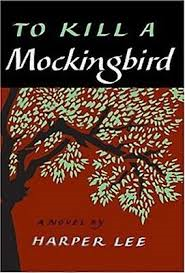
to killYou’ve probably never heard her name–I hadn’t until last night when watching a TV special about Harper Lee, To Kill a Mockingbird, and her unknown and previously unpublished second book titled Go Set a Watchman.

The editor’s name was mentioned in passing, and I asked my husband to pause, replay, and help me catch it. Tay Hohoff is described in a blog post by Clarissa Atkinson, a fellow employee at J. B. Lippincott, as a “respected editor” and a “challenging presence.”

Ms. Atkinson goes on in another post to describe the To Kill a Mockingbird years at the publishing house:

J.B. Lippincott . . . was a family-owned Philadelphia firm, old-fashioned even in the 1950s.  I worked in the branch office at Fifth Avenue and 43rd Street – an editorial office, in which the New York tail wagged the Philadelphia dog. My tenure at Lippincott coincided with a few of the many years during which Harper Lee was working on To Kill a Mockingbird. According to office legend (more or less substantiated by Wikipedia), Lee had arrived from Alabama with a trunk full of mixed-up parts and pages of an enormous manuscript, she lived in a garret on macaroni while she transformed the pages into a stunningly successful book, and this was accomplished through the faithful support and encouragement of her Lippincott editor.

Is anyone surprised by this “faithful support and encouragement” from an editor? Not me.

We’ve all heard the story by now. How friends of Harper Lee’s gave her a year’s worth of pay and told her to just go write for that year. The result was this astounding book published in 1960 that was an instant classic and won a Pulitzer Prize in 1961. 

And those of us who write wonder how in the world this writer crafted one book (well, now we know of two) that had this kind of success. We can only dream of that.

I think it has much to do with her upbringing–her father was a well-respected lawyer in her small hometown of Monroeville, Alabama, in the deep South in the days before the Civil Rights movement. She touched a nerve by taking on the topic of racism and showing what it takes to stand up for what’s right.

Still, she also had a good editor who helped to shape the book into something readable. In 2010, celebrating the fiftieth anniversary of the book’s publication, Newsweek ran an article titled, “Who Helped Harper Lee with Mockingbird?” that discusses Tay Hohoff’s role in the book:

Lee had dropped out of college during her senior year to move to New York to become a writerto the dismay of her father, who wanted her to be a lawyer. She spent nearly a decade doing odd jobs and scraping by before she submitted five stories to a Maurice Crain, an agent who, frankly, wasn’t overly impressed. But he and his wife liked Lee, and he encouraged her to try a novel. The result, then called Atticus, was a mess. “There were dangling threads of plot, there was a lack of unity—a beginning, a middle, an end that was inherent in the beginning,” said Tay Hohoff, an editor at J. B. Lippencott, who described the submission to Lee’s biographer, Charles Shields. Still, Hohoff and the others at Lippencott saw something promising in it and took a chance. Lee clearly needed guidance—but she would get it. Lee rewrote the novel three times over the next two and a half years. At one point, she threw the manuscript out the window and called Hohoff. Her editor persuaded her to go outside and gather the floating pages.

It’s a good thing, wouldn’t you say?

That’s the role of a great editor. Sending a writer back to keep rewriting. Being there when the writer is facing a brick wall and muddled pages. Making sure the pages tossed out the window get gathered up and worked on because the editor sees something that maybe even the author can’t yet see.

ADDENDUM 7/14/15: Reviews of Go Set a Watchman are popping up online, and most of them are not kind. This one, in particular, gives credit to Tay Hohoff for the work she did in shaping To Kill a Mockingbird, a touch clearly missing from this most recent publication. But I disagree with the sentiment that there aren’t editors like that around anymore–there are, and they work very hard to bring diamonds out of the rough.

7/25/15: Excellent commentary from The New York Times. Unfortunately, I do feel that this may have been far more about money than about the writing or the writer.

Committing Acts of Literature, Thanks to William Zinsser (RIP)

On May 12, 2015, the writing world lost a great encourager, teacher, and mentor. At age 92, William Zinsser passed away. Author of the book that is (or should be) on the shelf of every writer and editor, On Writing Well, Zinsser left a legacy of helping people learn how to put words together. On Writing Well was first published in 1976 and has gone through seven editions as Zinsser updated it to take into account new technologies.

on writing well

The focus of the book is writing nonfiction, but the principles of good writing span all genres. Simplicity, economy of words, style, usage, voice, and understanding one’s audience are important for every type of writing–from the business email to the fantasy novel.

Zinsser spent his career writing and teaching writing. During the 1950s, he wrote editorials and features for the New York Herald Tribune. In the 1960s, he was a freelancer, writing for the likes of Saturday Evening Post, Life, Look, and Sports Illustrated. The 1970s saw him at Yale University teaching nonfiction writing and humor writing. In the 1980s, he worked as editor of the Book-of-the-Month club, a mail-order book sales club that operated from 1926-2014. The remainder of his life he continued freelancing, writing eighteen books, and (of all things) playing jazz piano!

But he’ll be most remembered and loved for what he did for helping writers understand their craft.

Referring to writing, Zinsser wrote:

There isn’t any “right” way to do such personal work. There are all kinds of writers and all kinds of methods, and any method that helps you to say what you want to say to the right method for you. . . . All [writers] are vulnerable and all of them are tense. They are driven by a compulsion to put some part of themselves on paper, and yet they don’t just write about what comes naturally. They sit down to commit an act of literature, and the self who emerges on paper is far stiffer than the person who sat down to write.

So Zinsser set out to help writers not be stiff, but instead to be able to truly commit acts of literature. I love that! But he also encourages:

Writing is hard work. A clear sentence is no accident. Very few sentences come out right the first time, or even the third time. Remember this in moments of despair. If you find that writing is hard, it’s because it is hard. . . .  Writing well means believing in your writing and believing in yourself, taking risks, daring to be different, pushing yourself to excel. You will write only as well as you make yourself write.

It’s not an easy life–this writing life. Those of you who have chosen to live your life with words–reading them, studying them, marveling at them, talking about them, writing them–you know this all too well.

But it’s that moment when it all comes together, when we have written well, when we have committed an act of literature–it’s that moment that makes it all worthwhile.

Thank you, William Zinsser, for your encouragement.


Great Editors: Betsy Lerner Helps Writers Understand Editors

I love this book and was so excited when I found it a few years ago. I go to it often and read excerpts to my editing class. Betsy Lerner created a product that helps writers understand editors and vice versa. Titled The Forest for the Trees: An Editor’s Advice to Writers (Putnam, 2000, updated 2010), the first section of this book describes some general types of writers, and the second section peeks behind the editor’s desk and into the publishing world. Lerner knows wherof she speaks having been an editor for fifteen years before becoming an agent. forest She says, “This book is about what I’ve seen and what I know. I wrote it to help writers achieve or get closer to their goals. At the very least, I hope that in contemplating your life as a writer you may get some perspective on your work and in gaining that perspective, see the forest for the trees” (9).

I teach my students that, as editors, they are working in tandem with authors–Betsy describes it as an intricate dance.  The manuscript arrives on the editor’s desk. The editor will close the office door (or bring the manuscript home where she won’t be interrupted, she hopes) and sit back to read through the entire manuscript–either electronically or on hard copy. The scary red pen may be wielded–perhaps on the manuscript itself but certainly on a nearby notepad. She’s taking notes about first impressions–what’s working and what isn’t, what’s clear and what isn’t, when the pacing seems slow or a character seems out of place. She’s not correcting grammar or sentences; she’s seeing if the book in its entirety works.

The best editor is a sensitive reader who is thinking with a pencil in her hand, questioning word choice, syntax, and tense. An editor is someone who probes the writer with insightful questions, who smooths transitions or suggests them where none exist. A good editor knows when the three pages at the beginning of a chapter are throat-clearing. Start here, she’ll mark in the margin, this is where your book begins. And she’ll know when you should stop, spare you from hitting your reader over the head as if your point were a two-by-four. (194)

A good editor is careful. She needs to explain her point clearly and she needs to be respectful of the author. She knows that it’s never easy for an author to finally turn in a completed manuscript only to have it come back covered in comments and suggestions.

Editing is a science and an art. There is a basic architecture to every book, and if the author has a wobbly narrative leg or an insufficient thesis to stand on, the editor must find the blueprint or create one. What an editor learns as she gains experience is that while no two manuscripts are exactly alike, certain predictable patterns crop up, and as with math problems, the more experience you have, the more readily the solutions appear. (196)

I tell my students that, while they may see the problem in the manuscript clearly, they need to be careful and kind when making the suggestions. The best editors build trust with their authors by giving positive as well as negative feedback. They need to be respectful of the words (most of my students, writers themselves, understand that). In short, they need to be good dance partners. But then, so does the author. If you’re fortunate enough to be working with an editor, trust that person. Yes, it’s still your book, but the editor is going to be your very best reader. No one else is going to read your book with the same attention and care. Let your editor help you, as Betsy Lerner so aptly explains, “see the forest for the trees.”

Tell me about your experiences with editors. How have they helped your manuscript improve?

What Martin Eden (aka Jack London) Teaches about Writing and Editing

As I continue to write about editors and editing, I came across some very interesting insights in Jack London‘s masterful work, Martin Eden. Written as a thinly veiled autobiography, the story follows a low-class man and his desire for self-improvement in order to impress a high-class woman with whom he has fallen in love. He reads voraciously; learns language, grammar, and syntax; and teaches himself manners, politics, and philosophy. Eventually, he decides to become a writer–after all, he has many stories to tell from his travels around the world as a sailor.

Alas, every story he sends in is rejected and returned in what we would call the SASE (self-addressed stamped envelope). For years, he toils. He goes back and rereads the magazines to which he’s submitting to discover the “secret formula” for getting accepted. He spends hours and hours working at his craft, steadfastly refusing to bow to pressure from the woman he loves (and everyone else in his world) to just “get a job.”

He knows he’s a writer. He can feel it in his bones. He knows he has stories to tell, and he knows his stories are better than anything he’s reading in the magazines.

His money runs out. He barely survives. And the rejections keep coming. Martin begins to wonder:

He began to doubt that editors were real men. They seemed cogs in a machine. That was what it was, a machine. He poured his soul into stories, articles, and poems, and entrusted them to the machine. . . . There was no human editor at the other end, but a mere cunning arrangement of cogs that change the manuscript from one envelope to another and stuck on the stamps. (160-61)martin eden

The chief qualification of ninety-nine percent of all editors is failure. They have failed as writers. Don’t think they prefer the drudgery of the desk and the slavery to their circulation and to the business manager to the joy of writing. They have tried to write, and they have failed. And right there is the cursed paradox of it. Every portal to success in literature is guarded by those watch-dogs, the failures in literature. The editors, sub-editors, associate editors, most of them, and the manuscript-readers for the magazines and book-publishers, most of them, nearly all of them, are men who wanted to write and who have failed. And yet they, of all creatures under the sun the most unfit, are the very creatures who decide what shall and what shall not find its way into print–they, who have proved themselves not original, who have demonstrated that they lack the divine fire, sit in judgment upon originality and genius. (322-23)

Ever felt that way as a writer? Ever felt like the editors either don’t exist or are simply cogs in machines that send out nothing but rejections?

As an editor, I do have to take a bit of offense that Martin sees me as “unfit.” But as a writer, yes, I have at times wondered if anyone with any taste receives–and rejects–my queries, my articles, my blood-and-guts pieces of creative nonfiction.

I’m sure many writers feel the same.

But let me put in a little bit of a plug on behalf of myself and my editor friends.

  • We truly do want the very best writing. But, you need to understand how subjective that is. It’s a gut reaction to a piece of writing. And if you get rejected one place and you really believe in your piece, keep trying.
  • Everything needs to be edited–everything. Trust us. We will work with you to make your writing the best it can be.
  • Editors are human, and each one of us is different. No two editors will edit a piece the same way. Take the advice, but also understand that we are in a conversation with you when we edit.
  • We are busy. Sure, no one wants to wait months for a response, but we’re reading hundreds (sometimes thousands) of pieces. Hence, the form letters that get returned in your SASE. We simply don’t have time to give personal responses to everything. (That said, if you get any kind of response–such as a quick hand-written note on that rejection letter–take that as a huge compliment and keep on trying with that editor.)
  • And generally we aren’t failed writers who defaulted to editing. Many of us write on the side (and get the same treatment from fellow editors). There’s no club. Our work has to stand on its own, just as with everyone else. Many of us have no desire to write at all–editing is our calling and we’re committed to that.
  • Rejection doesn’t mean failure. A piece can be rejected for any number of reasons. It may be that your writing isn’t good–but if you’re in a critique group and you’re taking advice, that probably isn’t the case. It could be things you have no way of knowing–maybe a story like yours has already been accepted and now yours isn’t needed. It could be that gut thing I wrote of above.
  • We really do care about the submission guidelines, the formatting advice we give you, etc. Read these guidelines and follow them. Because we receive hundreds of manuscripts, if it’s apparent you can’t follow the simplest guidelines, then we won’t take the time to read what you sent.

Eventually, Martin Eden does find the success he so long sought, but it comes at a price. He discovers the down side of fame and some of the hypocrisy in publishing, which begins his undoing.

Bottom line, Martin Eden teaches us that it takes persistence, faith in yourself, and hard hard hard work to be a writer.

Don’t give up. Don’t let the editors get you down. Realize that they aren’t “rejection machines.”

Nothing’s perfect, but work with us. Your great writing will find its home.

Quotations taken from Jack London’s Martin Eden: The Annotated Edition by Dennis E. Hensley, Ph.D. Upland, IN: Taylor University Press, 2006. This edition is pictured above.