Addicted to Reading

I hyperventilate when I go into used bookstores. For thirty years my husband has dragged me to antique stores and the only saving grace to these excursions (where eventually every antique begins to look the same) is that sometimes the booths will have books. I zero in on these, turning my head sideways to read along the spines. I don’t feel the same way in my local Books-a-Million, although if I have to go shopping that’s where I want to go.

There’s just something about the smell of used bookstores and the possibility of treasures to be found. If I’m going to by one of the classics or a book on my list, I don’t want one of those repackaged recent releases or (God forbid) the ones that put on the cover not the person but the movie star playing that person (seriously, a book about Julia Child with Meryl Streep on the cover?). And I’m not all worried about getting first editions or signed copies. Instead, I just want to pick it up and know that I’m giving it new life. It was written (by hand, in the case of those classics), edited, typeset (when typesetting was really setting type), printed bound, and sent out into the world. Someone bought it and put it on a shelf. Sometimes that person’s name will appear handwritten inside the cover. Chances are, that person read it. I love it when evidence of that shows up with underlines or marginal comments.

I love the feel of those books. I will often buy it if it feels right in my hands. I look forward to reading it just so I can hold it and turn the pages. The last time the book felt that was when that person decades ago did the same as I am doing now. It’s a kinship. We read the same words, get engrossed in the same story, get pulled away into the world that writer created.

What is it that pulls us into books? Why do we read, anyway? In her book, Ruined by ruined by readingReading: A Life in Books, Lynne Sharon Schwartz muses about why we are willing to spend hours of our lives with tales others have spun.

I have read for so many years but, like Schwartz, I wonder at why it is I cannot recall so much of what I’ve read. Thus I’m glad to know that others have been in the same boat. Schwartz writes, “I don’t remember much of what I’ve read. My lifelong capacity for forgetting distresses me. I glance at a book on the shelf that I once read with avid interest . . . and while I struggle for the details, all I recall is the excitement of the reading. . . . What do I have, then, after years of indulgence? A feel, a texture, an aura.”

Precisely for this reason of forgetting what I’ve read (and the accompanying distress), a few years ago I gathered up some of those lists of “must read” classic books. I began to work my way through it, hoping to recapture the wonder. As I began pursuing an advanced degree in English, I realized that I had to be able to actually discuss the classic works, not just pretend that I had read them or, even if I had, pretend that I remembered them. So the past few years I dove into Moby Dick and This Side of Paradise and The Old Man and the Sea and Portrait of a Lady among many others of the great classics. Some I enjoyed. Some I wanted to pull my eyes out (hello, Moby Dick. I’m sorry. I probably need to turn in my credentials to speak such blasphemy). But I felt accomplished reading them and saying I’ve read them and being able to, while perhaps not remembering all the details (a problem I wish I could overcome, but maybe no one remembers every detail), at least remember the basic story.

And that makes me feel something.

What is that feeling? And why do I feel it? When I finish a classic work, I join a club—a club of readers across months or years or decades or centuries who also have gently opened the cover, absorbed the words, turned the pages, finished and imbibed the story. No matter what I do, it’s there forever. Of course, not all the details (as I’ve already established) but the story. I am forever changed, I have a new view on the world, I learned something.

That tends to be my “divining rod” (as Schwartz calls it) helping me work my way through the morass of books stacked in teetering piles in used bookstores. I go straight to the reference section to find books about writing that I can use in my teaching. Then I’m over in the classics, then memoir, then the books of essays. I have never been a reader of romance or popular fiction. (On a visit, I once picked up a copy of a Danielle Steele at my mother-in-law’s house. By the fourth page I was so appalled by the terrible writing I laughed out loud.)

When I read, I want to learn something. And if a book isn’t pulling me along with its lyrical writing or keeping me turning pages or giving me info that helps me see the world in a new way, then I’m not interested and am not above putting it back on the shelf unfinished.

Life is too short to read a bad book.

But I feel like I came late to the reading game. I wasn’t precocious. In fact, I remember being mortified that many of my fellow fifth graders were reading from the advanced areas of the reading box when I was down in the “average.” I stunk at math and hated science, but reading? I loved reading. I felt like I should have tested right into those higher levels. It didn’t make sense.

I didn’t go to grad school until I was in my fifties and felt the sting of both not having read the classics and not being “up” on even recent authors. So I made my list of the must-reads and began to work my way through it.

Now I read voraciously, as if trying to make up for lost time. Which I am. But, again, why? It gets back to that feeling of knowing¸ of learning. Is my life better for understanding the whaling culture explained to me (ad nauseum) in Moby Dick? Actually, yes, I think so. Do I have a better understanding of writing from studying The Old Man and the Sea and The Great Gatsby? I do indeed. Is my writing life inspired by the writing of Flannery O’Connor and  Ernest Hemingway and Anton Chekov? Yes.

In short, I read because it inspires me. Sometimes it is the grace of the writing. Sometimes it is the very encouragement I get to live better and be better and write better.

So tell me, what is it about reading that enthralls you?

Great Editors: Faith Sale Works with Amy Tan

She went shopping with Amy Tan and Amy’s mother in Manhattan. She loved bargains, just as Amy does. When it came to finding the cheap deal, she and Amy were joined at the hip.

Her name was Faith Sale and she was Amy’s editor—the one who first saw the potential in a young business writer who began to write novels as a creative release from the doldrums of writing for corporate executives. Sale said in an interview that finding the novel about Chinese mothers and American-raised Chinese daughters was “the biggest thrill an editor can have.” Before she passed away in 1999, Sale had an editing career that spanned four decades, working with, in addition to Amy Tan, authors such as Donald Barthelme, Kurt Vonnegut, Alice Hoffman, and Joseph Heller.

In her autobiography, The Opposite of FateAmy described her relationship with Faith this way:

Whenever I gave Faith something to read, she’d ask me what I wanted from her as an editor. “Keep me from embarrassing myself in public,” was my usual answer. And she did keep me from exposing the glitches in my prose, but she also prodded me to go deeper, to be more generous in the story I had to tell, to not hold back, to show what was most important in my life and on the page. She had an unerring sense of what mattered—to me. She could help me find it, though there were many ways in which we differed in taste and opinions. (63)

Amy Tan’s first novel, The Joy Luck Club, published in 1989, hit The New York Times bestseller list and remained there for several months, winning both the National Book Award and the L.A. Times Book Award.

joy luckI appreciate that Sale paid her dues—working her way up through the levels of editing as she moved to various publishing companies. Beginning as a secretary at Knopf, she moved on to Lippincott in 1959 where she was an editorial assistant, then moved up to assistant editor. In 1963, she moved over to Macmillan as associate editor. After living out of the country briefly, she did freelance work upon her return—working for publishing companies, literary agents, and authors. In 1977, she was named senior editor at E. P. Dutton, and then joined Putnam where she was vice president and senior executive editor.

In an essay she wrote for Editors on EditingSale emoted about her love of being an editor. She saw good writing as “the highest form of art” (268), and she knew that she wasn’t someone who could accomplish it. Like Maxwell Perkins, she had no visions of being a writer; she was an editor through and through. She saw herself in service of the art by helping the writers.

What I try to be for an author is the smartest, most sympathetic reader of the manuscript. . . . This means I must earn the author’s trust, make the author feel comfortable with me and my perceptions. . . .

When I’m hooked, I’m unshakably committed for the long haul, regardless of obstacles. But I can’t fake it: my devotion to fiction is born more out of instinct than intellect, based more on emotional response than calculated judgment. The moment of connection is the moment I become a book’s (or an author’s) advocate—its nurturer, defender, supporter, mouthpiece, bodyguard. . . .

Having made the decision to take a book on, I must figure out how to convey to the author what I think could or should be done to make the book the best it can be. It never is—because I think it never should be—making the book into anything other than what the author has envisioned. In my role of the author’s best reader . . . what I mean to do is help the author to realize the author’s intention. (269)

She saw the editorial process as organic, working back and forth with the author, with both trying to take the raw manuscript, deepen and enrich what exists, sharpening the book and the plot arc and the characters. Then she shepherded the manuscript through copyediting, answering questions the copy editor may have that she knew she could answer on behalf of the author, discussing with the author if she didn’t. She wanted to “make sure that nothing is being done to harm the work in any way. I also look over the proofreader’s markings to ensure that the author’s style has not fallen victim to a by-the-book grammarian. And I follow along through the further stages of production so that neither the author nor I will discover any surprises in the printed book” (271-72).

A good editor doesn’t stop when the book gets sent to copyediting and then to proofreading. There has been so much communication with the author that the editor knows the book through and through. Authors may want particular things that go against the rules of grammar—and a copyeditor may make changes that the author would not want. The editor will know this . . . and keep it from happening.

Great editors know that the book belongs to the author, and they fight for it every step of the way. Faith Sale understood that. In The Opposite of Fate, Amy adds this:

[Sale] was . . . wrong in one thing about me as a writer. She believed for some reason that writing came easily to me, that words poured onto the page with the ease of turning on a faucet, and that her role was mostly to help me adjust the outpouring toward the right balance. That belief had so much to do with her confidence in me. And I guess that is the role of both an editor and a friend—to have that confidence in another person, that the person’s best is natural and always possible, forthcoming after an occasional kick in the butt. (64)

Confidence and a kick in the butt. And bargain shopping. Sounds like a perfect match.

My Favorite Books about Editing

So I’m writing a book. Yes indeed. A couple actually. One is for my MFA program; the other is for a small publisher. Both are about editing–one more in a memoir-esque fashion, the other more like a textbook, something I want to use in my future editing classes.

In the process of putting together my proposal, I needed to check out books similar to mine. As I ordered books online and checked them out from the local library, I fell in love with some of them–the voice, the humor, the helps, the advice, the exercises. So I thought I’d pass along to you some of my favorites. If you want to learn about editing or want to work more on being your own self-editor, you might check into some of these excellent resources. The great thing about reading books about editing is that you really get a double-whammy–you are also studying how to be a better writer, the kind of writer editors dream about!


dumCopyediting & Proofreading for Dummies, Suzanne Gilad. Wiley Publishing, Inc., 2007.

I’ve used this book in my editing class since 2010 when I first began teaching. The book does an excellent job of being very introductory, has exercises for practice, and incorporates vocabulary. It’s also the only book I could find that gives a clear delineation between copyediting and proofreading. It includes practice exercises, proofreading marks, and publishing vocabulary.


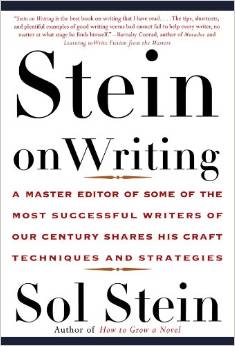
Stein on WritingStein on Writing: A Master Editor of Some of the Most Successful Writers of Our Century Shares His Craft Techniques and Strategies, Sol Stein. St. Martin’s Press, 1995.

I wrote more about this book in this post, so you can check it out there. Suffice it to say that this is one of those books that really will help you ask the right questions as you work on your own writing. He also offers advice to both fiction and nonfiction writers.


artfulThe Artful Edit: On the Practice of Editing Yourself, Susan Bell. W. W. Norton & Company, 2007.

Bell takes on the topic of editing yourself (and, by extension, others). She covers what she calls Macro-Editing and Micro-Editing. I love that she uses several pages working from information in Scott Berg’s book about Maxwell Perkins to discuss the editing process—and how Fitzgerald edited The Great Gatsby from Perkins’s advice. In between are testimonies from various authors about their editors. She discusses the history of editing–which is quite fascinating.


thanksThanks, But This Isn’t for Us: A (Sort of) Compassionate Guide to Why Your Writing is Being RejectedJessica Page Morrell. Jeremy P. Tarcher/Penguin, 2009. 

Morrell talks about her experience as a developmental editor, includes chapters that focus on the various elements of good writing (plot, suspense, characterization, stories, etc.), and teaches with anecdotes and examples. Her focus is on helping writers write better so that they can avoid getting rejected for the most common reasons that manuscripts get rejected.


companionThe Editor’s Companion: An Indispensable Guide to Editing Books, Magazines, Online Publications, and More. Steve Dunham. Writer’s Digest Books, 2014.

If you’re interested in more than just book editing, this one is a great resource. Dunham includes a level of content editing, copyediting, and proofreading. There are chapters on “Editing for Content,” “Editing for Focus,” “Editing for Precise Language,” “Editing for Grammar,” “Typography,” and some tips about word usage, words that are often misused, etc. He includes some checklists and examples. There is information about magazines, online publications, “and more.”


forestThe Forest for the Trees: An Editor’s Advice to Writers, Betsy Lerner, Putnam, 2010.

I also wrote about this one in a blog post. Lerner describes some general types of writers and then peeks behind the editor’s desk and into the publishing world. If you want an idea of what goes on in the editing world at a publishing house, this is a great book.


on writing wellOn Writing Well: The Classic Guide to Writing Nonfiction, William Zinsser, Harper Perennial, 2016.

No list of books would be complete without this little gem. If you often write nonfiction, this little guide offers everything you need to “write well.” We lost Zinsser in 2015, but his legacy lives on. I wrote more about this book in this post.


Of course, every copy editor should have style manuals (Chicago Manual of Style or an AP Style Guide). I’m sure I’m missing a few. If you’re an editor or interested in editing, what books have you read that you’ve found most helpful?

Great Editors – Ursula Nordstrom and Harriet the Spy

Louise Fitzhugh’s brilliant story of Harriet the Spy drew cheers from some critics and groans from others. But the children took Harriet right to their hearts, and this book is now a best seller which seems destined for literary immortality.

So says the back flap cover of the dust jacket of my copy of Harriet the Spy. I impulse purchased it on Amazon a couple years ago remembering how much I had loved the book when I read it somewhere around age eleven.

harriet

I’m not sure where I first came across Harriet. Perhaps she arrived through a kids’ book club. Maybe I checked her out from the bookmobile that arrived in our subdivision every Saturday morning. But I recall being entranced by her. Harriet wore rolled up jeans and glasses and ran a spy route and wrote in her notebook her observations about the comings and goings and private discussions of the people she spied on. Outside under an open window, she listened to the Robinson family; from a rooftop skylight she peered down at Harrison Withers; sneaking into a dumbwaiter and pulling the ropes, she listened outside old Mrs. Plumber’s bedroom. I found it all fascinating. I wanted to be Harriet. I didn’t want to spy necessarily, but I did want to observe my world and I wanted to write.

“What are you writing?” Sport asked.

“I’m taking note on all those people who are sitting over there.”

“Why?”

“Aw, Sport”—Harriet was exasperated—“because I’ve seen them and I want to remember them.”

After the book arrived from Amazon, I reread Harriet’s adventures. Looking through my adult eyes, the story came across as a bit weird. Really? Sneaking into someone’s dumbwaiter in order to listen to private conversations in the bedroom (well, yeah, the woman was an elderly woman alone and on her phone, but still!). Climbing onto a roof? Writing unkind things about your closest friends?

Looking at the book through an adult’s eyes, I suffered from what Ursula Nordstrom understood all too well—adults too often plastering children’s books with their own adult concerns and thus totally losing the beauty of imagination.

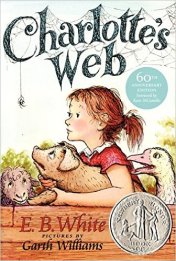
geniusI learned about Ursula Nordstrom by reading a book of her letters: Dear Genius: The Letters of Ursula Nordstrom (New York: Harper Collins Publishers, 1998). She was publisher and editor-in-chief of juvenile books at Harper & Row from 1940 to 1973. She is considered the Maxwell Perkins of children’s publishing; in other words, as Perkins was willing to take a risk with an author, spot talent, and then coddle that author along by way of encouraging letters, Nordstrom did the same but with children’s books. If not for Nordstrom, we might never have seen books such as Maurice Sendak’s Where the Wild Things Are, E. B. White’s Stuart Little and Charlotte’s Web, Margaret Wise Brown’s Goodnight Moon, Syd Hoff’s Danny and the Dinosaur, and Shel Silverstein’s Where the Sidewalk Ends.
Nordstrom believed in children. She believed that if she could get the books past the adults who buy them into the hands of children, the adults could learn from the children how to enjoy and understand what was being done in a truly creative work.

Harriet the Spy was published in 1964. When Louise Fitzhugh arrived at the Harper & Row offices, she had a manuscript that was originally no more than the scribblings in Harriet’s notebook. Nordstrom’s senior editor, Charlotte Zolotow, wrote a report on the sample pages noting that they needed to bring Fitzhugh in to talk. Zolotow saw that it wasn’t yet a book, but it could be. Nordstrom wrote to her senior editor later, thankful that the two of them had “drawn Harriet the Spy out of Louise” (304).

The book managed to garner accolades as well as criticism. Nordstrom is credited with answering mail and constantly being willing to stand up for her authors. Regarding a complaint letter about Harriet, she wrote:

I still wonder what put you off so about Harriet the Spy. Was it the fact that she spied that disturbed you? I think most of us have forgotten the awful things we did or wanted to do when we were 10 or 11 or 12. I was brought up with the most stern drilling of what was right and wrong, kind or mean, thoughtful or inconsiderate, etc. etc., and never tell a lie no matter what. And to this day I would love to read other people’s mail and listen to their telephone conversations if it were not for this hideous conscience, well . . . But you are all for vigor in children’s books and Harriet seems to have such vigor and life. (229)

Nordstrom realized that it would sometimes take the force of her strong personality to help the publisher and the authors and then the librarians and teachers and parents read the books with a child’s eyes. To get rid of their “adult” concerns, open their imaginations, and enjoy what she called “vigorous” books. As she considered the sorry state of 1960s teen novels, she wrote, “The ‘rigid world of good and bad’ is infinitely easier to write about than the real world. Because the writer of books about the real world has to dig deep and tell the truth.”

As I reread Harriet the Spy, I fell into the trap. I found myself wondering if I’d have wanted my kids to read it. I saw the danger Harriet was putting herself in writing true observations, hurting her friends. But that was the very genius of Nordstrom—she realized that children liked books about kids who did bad things sometimes, who had to go to bed without supper, who weren’t perfect little angels.

charlotteWhile I read Charlotte’s Web and Stuart Little and Where the Wild Things Are to my children, it never occurred to me that somewhere along the line an author had to get an editor to understand that—yes—a talking spider is a really great idea! A spider! And a kid spying on the neighbors and writing down everything they do—also a great idea!

Somehow Nordstrom and her team got it.

I’m thankful that Nordstrom and Zolotow did indeed help Fitzhugh create Harriet. Harriet became my friend. She got herself into scrapes but learned how to deal with them. She was herself—willing to be different from everyone else. I think that’s what I saw in her as I sat reading this book on a quiet evening baby-sitting my sleeping baby sister. Harriet made it okay to be alone, to be observant, to want to write.

Children’s literature is a special breed that takes special people to navigate it. It needs adult writers and editors who have enough of a child’s mind to be able to see the possibilities. To know that a talking spider can save a pig’s life. To know that a talking mouse can be born to human parents. To know that a little bespeckled girl with a notebook might just inspire another little bespeckled girl to become a writer.

The Writer’s Craft–Learning from the Best

That’s it–The Writer’s Craft. That’s the name of a required class in our Professional Writing department at Taylor University–a required class that I will be teaching for the first time this fall. I’m so excited to teach this class because we’re going to read great writing, unpack it, understand what makes it great, and learn what we can use to improve our own writing.

ProseThe class has traditionally used Francine Prose’s book, Reading Like a Writer: A Guide for People Who Love Books and for Those Who Want to Write Them (New York: Harper Perennial, 2007).

I love this book because it gives examples of great writing in areas of words, sentences, paragraphs, narration, character, dialogue, details, and gesture. All of this is studied by way of what she calls “close reading,” taking the time to annotate a chosen text and study it carefully.

So I’m excited to bring to the students stories from John Steinbeck and Ernest Hemingway and Flannery O’Connor and John Updike and Tim O’Brien and Edgar Allan Poe and James Joyce and Anton Chekov, among others. I can’t wait to have my students do close reading of amazing writing, discuss it, learn from it, be inspired by it, use it.

I’m just a little thrilled to teach this class.

It is important that writers read “textbooks” about writing–and those textbooks are the great works that have stood the test of time. Prose (don’t you just love that the author’s name is “Prose”?) writes that these great works are “textbooks, private lessons in the art of fiction” (3). What is it about this piece of writing that makes it great? that has stood the test of time? that makes it classic? She continues, “A masterpiece can inspire us by showing us how a writer does something brilliantly” (11).

We’re not going to look at the big picture–the why of the writing. Instead, we’re going to focus on the mechanics, the how. What words does the writer use? How are those words making this piece sing? What about sentence structure? Paragraphing? How is this dialogue telling us the story without telling us the story? (For the last one we’ll read Hemingway’s “Hills Like White Elephants.”)

In his wonderful little book Steal Like An Artist, Austin Kleon talks about making sure we artists surround ourselves with other great artists (I talked about this book more in this post). He advises us to be collectors, collecting the things we love.

You’re only going to be as good as the stuff you surround yourself with. My mom used to say to me, “Garbage in, garbage out.” It used to drive me nuts. But now I know what she meant. Your job is to collect good ideas. The more good ideas you collect, the more you can choose from to be influenced by. (13-14)

Seeing yourself as part of a creative lineage will help you feel less alone as you start making your own stuff. I hang pictures of my favorite artists in my studio. They’re like friendly ghosts. I can almost feel them pushing me forward as I’m hunched over my desk.

The great thing about dead or remote masters is that they can’t refuse you as an apprentice. You can learn whatever you want from them. They left their lesson plans in their work. (17)

So we’ve got our readings, our lesson plans, our pens, and our desire to collect and learn from the greats.

Can’t wait!

What great writers or particular pieces of writing have inspired you?

The Tax Man Cometh . . . and He’s Here to Help

If you’re like me and you’re a word lover, the IRS tax forms with all their lines and numbers send you into a panic attack. I get it. No matter what political persuasion you are or whether taxes bring you joyous refunds or difficult fees, filling out the dang forms can be a stressful endeavor.

If only you could get help—good help, help who knows what they’re talking about. If only there was a website that would answer your questions about your life as a writer and whether or not all of those expenses count on your tax returns (even if that long-sought-after royalty check has yet to arrive . . . or be promised).

Today, my friends, “if only” is here. I offer a helper whose passion is Tax Solutions for Writers (which also happens to be the name of his website). Gary Hensley was an accountant for his entire life, an IRS agent and auditor for part of it, and one of the guys who answered the phone for TurboTax if someone needed help.

He knows whereof he speaks. [Update: Gary Hensley passed away in 2018.]

Every year, our Professional Writing department at Taylor University invites Gary to talk to our students about acting like writers and filing their taxes as such. (In addition, you can catch Gary every year at numerous locations, including Midwest Writers Workshop where he is always one of our most popular speakers.) Or you can go to his website that has every question you can think of, and many you probably haven’t.

Here are just a few things I have learned from Gary about handling my tax returns.

(1) You don’t need to be an official “business” to be in business as a writer and to file a Schedule C for deductions. If you are busy writing (sending out articles, researching that novel, attending conferences to improve your skills), you are a writer and should treat yourself as a professional on your tax return.

(2) Purchase a $5 planner that you can carry with you. In it, document every single activity that you do that shows your activity as a writer. Write down what you did at your desk (your home office area) each day. Track the time you spent writing and what you did. This separates you as an active writer (even if you’re not published) from someone who is sitting around thinking he’d like to write a book someday. You are actively writing. That makes you a writer.

(3) Then use those daily slots to document writer expenses. Maybe you subscribed to a particular magazine or website to help you with information for an article or book. Maybe you attended a conference. Maybe you purchased books about the topic you’re writing about or simply to improve your writing skills. Then, of course, find a place to keep those matching receipts.

(4) In that diary, also keep track of mileage for writerly activities (not just miles, but write in the actual odometer readings to and from anything that had to do with your work—and write next to it the business/writerly purpose for your trip). Perhaps you drove to the library to do research. Maybe you drove to interview someone and purchased lunch for you both. Track the mileage to that writers conference.

(5) Get a separate bank account for your business that has a debit card attached. Again, you don’t need to be an official DBA or LLC or Ltd. or anything. But this particular bank account holds only the money that you earn as a writer (yes, even that $35 for the column you wrote), and it tracks anything you purchase for your business (printer paper, stamps, books, conferences). Maybe you don’t have income, or nothing really worthy to call that. Doesn’t matter. Get in the habit of separating out your writer life from the rest of your life. I know, you may need to lend yourself money back and forth in order to cover a business expense (like a conference—the $35 article won’t cover that), and Gary explains how to do that on his website. The point is to keep your writerly income and out-go separate from the rest of your household.

All of this documentation will make it easier both when you go to fill out next year’s form and if you ever get audited. These expenses are deductible on the Schedule C, so you want to take advantage of them and you want them to be accurate.

I know. The forms are difficult, but it’s time to take hold of your writer self and claim your professional status. Check out Gary’s website for answers to other questions.

And go purchase that journal to track this year’s activities! (Oh, and write down the odometer reading before you go and when you get back!)

Great Editors: Betsy Lerner Helps Writers Understand Editors

I love this book and was so excited when I found it a few years ago. I go to it often and read excerpts to my editing class. Betsy Lerner created a product that helps writers understand editors and vice versa. Titled The Forest for the Trees: An Editor’s Advice to Writers (Putnam, 2000, updated 2010), the first section of this book describes some general types of writers, and the second section peeks behind the editor’s desk and into the publishing world. Lerner knows wherof she speaks having been an editor for fifteen years before becoming an agent. forest She says, “This book is about what I’ve seen and what I know. I wrote it to help writers achieve or get closer to their goals. At the very least, I hope that in contemplating your life as a writer you may get some perspective on your work and in gaining that perspective, see the forest for the trees” (9).

I teach my students that, as editors, they are working in tandem with authors–Betsy describes it as an intricate dance.  The manuscript arrives on the editor’s desk. The editor will close the office door (or bring the manuscript home where she won’t be interrupted, she hopes) and sit back to read through the entire manuscript–either electronically or on hard copy. The scary red pen may be wielded–perhaps on the manuscript itself but certainly on a nearby notepad. She’s taking notes about first impressions–what’s working and what isn’t, what’s clear and what isn’t, when the pacing seems slow or a character seems out of place. She’s not correcting grammar or sentences; she’s seeing if the book in its entirety works.

The best editor is a sensitive reader who is thinking with a pencil in her hand, questioning word choice, syntax, and tense. An editor is someone who probes the writer with insightful questions, who smooths transitions or suggests them where none exist. A good editor knows when the three pages at the beginning of a chapter are throat-clearing. Start here, she’ll mark in the margin, this is where your book begins. And she’ll know when you should stop, spare you from hitting your reader over the head as if your point were a two-by-four. (194)

A good editor is careful. She needs to explain her point clearly and she needs to be respectful of the author. She knows that it’s never easy for an author to finally turn in a completed manuscript only to have it come back covered in comments and suggestions.

Editing is a science and an art. There is a basic architecture to every book, and if the author has a wobbly narrative leg or an insufficient thesis to stand on, the editor must find the blueprint or create one. What an editor learns as she gains experience is that while no two manuscripts are exactly alike, certain predictable patterns crop up, and as with math problems, the more experience you have, the more readily the solutions appear. (196)

I tell my students that, while they may see the problem in the manuscript clearly, they need to be careful and kind when making the suggestions. The best editors build trust with their authors by giving positive as well as negative feedback. They need to be respectful of the words (most of my students, writers themselves, understand that). In short, they need to be good dance partners. But then, so does the author. If you’re fortunate enough to be working with an editor, trust that person. Yes, it’s still your book, but the editor is going to be your very best reader. No one else is going to read your book with the same attention and care. Let your editor help you, as Betsy Lerner so aptly explains, “see the forest for the trees.”

Tell me about your experiences with editors. How have they helped your manuscript improve?

Great Editors–Sol Stein Helps Us Learn to Edit Ourselves

I just finished reading Sol Stein’s excellent book, Stein on Writing–A Master Editor of Some of the Most Successful Writers of Our Century Shares His Craft Techniques and StrategiesI found myself marking passage after passage, “This will be great to teach my students in my feature article writing class,” or “Wow, that’s a real encouragement to me,” or “I never thought of it that way before.”

Born in 1926 and now 88 years old, Sol Stein founded the book publishing firm of Stein and Day in 1962 which operated until 1989. During his tenure there, according to his website, Stein “edited and published some of the outstanding writers of the 20th century, including James Baldwin, David Frost, Jack Higgins, Elia Kazan, Dylan Thomas, Lionel Trilling, W. H. Auden, Jacques Barzun, and three heads of state.”

Describing his editing of Elia Kazan, Stein says,

The author I have spent more time editing than any other is Elia Kazan, winner of two Academy Awards and director of five Pulitzer Prize Stein on Writingplays who turned to fiction and became a number-one bestselling novelist. In his autobiography Kazan said, “I was now in a new profession. My publisher Sol Stein was my producer, and my editor Sol Stein was my director. . . . He saw quickly . . . that I delighted in saying the same thing over and over, thereby minimizing its impact (‘One plus one equals a half,” Sol would say’).” (205)

Throughout this book, Stein offers advice to writers of both fiction and nonfiction on the basics of plot, pacing, dialog, characterization, and just plain how to be a better writer and get noticed by editors. To flesh out the concepts he teaches, Stein uses anecdotes from his editing of great writers and from working with students in his classrooms. Speaking of his advice to Kazan:

Eliminating redundance was an important factor in [Kazan’s] novel The Arrangement remaining number one on the bestseller charts for thirty-seven consecutive weeks. . . . Catching “one-plus-ones” is a function of what is called “line editing.” Shouldn’t writers rely on editors to catch things like that? The hard fact is that editors do a lot less line editing than they used to. If a novel requires a lot of line editing, it is less likely to be taken on by a publisher, who has to consider the cost of editing. Which is why it is incumbent upon writers to become, in effect, their own editors. (205-206)

I know, I know. You want to be a writer. And I do know how difficult it is to see the forest for the trees. And, yes, you do indeed need readers in a critique group, you need editors and copyeditors who will see things that completely escape you. But here’s the deal. Write that article or essay or book and then let it simmer for awhile. Go away from it. Let others read it. Reread it yourself–slowly, carefully, out loud. If you’re fortunate enough to get published, editors and copyeditors will still bleed red ink all over it (or at least Microsoft Word comments), but it won’t be because you didn’t do your job.

Stein continues:

The biggest difference between a writer and a would-be writer is their attitude toward rewriting. The writer, professional or not, looks forward to the opportunity of excising words, sentences, paragraphs, chapters that do not work and to improving those that do. Many a would-be writer thinks whatever he puts down on paper is by that act somehow indelible. . . .

Judith Applebaum quotes Hemingway as saying to an interviewer, “I rewrote the ending of A Farewell to Arms thirty-nine times before I was satisfied.” Asked what stumped him, Hemingway said, “Getting the words right.”

Of the most successful authors I have worked with, I can think of only one who fiercely resisted revising. . . .Unwillingness to revise usually signals an amateur. (277)

Sure, we all want to be published. Sure, we’re in a hurry to get our words out into the world. But let’s make that writing, when published, something of which we can be proud.

Like Hemingway, let’s take our time getting the words right.


What Martin Eden (aka Jack London) Teaches about Writing and Editing

As I continue to write about editors and editing, I came across some very interesting insights in Jack London‘s masterful work, Martin Eden. Written as a thinly veiled autobiography, the story follows a low-class man and his desire for self-improvement in order to impress a high-class woman with whom he has fallen in love. He reads voraciously; learns language, grammar, and syntax; and teaches himself manners, politics, and philosophy. Eventually, he decides to become a writer–after all, he has many stories to tell from his travels around the world as a sailor.

Alas, every story he sends in is rejected and returned in what we would call the SASE (self-addressed stamped envelope). For years, he toils. He goes back and rereads the magazines to which he’s submitting to discover the “secret formula” for getting accepted. He spends hours and hours working at his craft, steadfastly refusing to bow to pressure from the woman he loves (and everyone else in his world) to just “get a job.”

He knows he’s a writer. He can feel it in his bones. He knows he has stories to tell, and he knows his stories are better than anything he’s reading in the magazines.

His money runs out. He barely survives. And the rejections keep coming. Martin begins to wonder:

He began to doubt that editors were real men. They seemed cogs in a machine. That was what it was, a machine. He poured his soul into stories, articles, and poems, and entrusted them to the machine. . . . There was no human editor at the other end, but a mere cunning arrangement of cogs that change the manuscript from one envelope to another and stuck on the stamps. (160-61)martin eden

The chief qualification of ninety-nine percent of all editors is failure. They have failed as writers. Don’t think they prefer the drudgery of the desk and the slavery to their circulation and to the business manager to the joy of writing. They have tried to write, and they have failed. And right there is the cursed paradox of it. Every portal to success in literature is guarded by those watch-dogs, the failures in literature. The editors, sub-editors, associate editors, most of them, and the manuscript-readers for the magazines and book-publishers, most of them, nearly all of them, are men who wanted to write and who have failed. And yet they, of all creatures under the sun the most unfit, are the very creatures who decide what shall and what shall not find its way into print–they, who have proved themselves not original, who have demonstrated that they lack the divine fire, sit in judgment upon originality and genius. (322-23)

Ever felt that way as a writer? Ever felt like the editors either don’t exist or are simply cogs in machines that send out nothing but rejections?

As an editor, I do have to take a bit of offense that Martin sees me as “unfit.” But as a writer, yes, I have at times wondered if anyone with any taste receives–and rejects–my queries, my articles, my blood-and-guts pieces of creative nonfiction.

I’m sure many writers feel the same.

But let me put in a little bit of a plug on behalf of myself and my editor friends.

  • We truly do want the very best writing. But, you need to understand how subjective that is. It’s a gut reaction to a piece of writing. And if you get rejected one place and you really believe in your piece, keep trying.
  • Everything needs to be edited–everything. Trust us. We will work with you to make your writing the best it can be.
  • Editors are human, and each one of us is different. No two editors will edit a piece the same way. Take the advice, but also understand that we are in a conversation with you when we edit.
  • We are busy. Sure, no one wants to wait months for a response, but we’re reading hundreds (sometimes thousands) of pieces. Hence, the form letters that get returned in your SASE. We simply don’t have time to give personal responses to everything. (That said, if you get any kind of response–such as a quick hand-written note on that rejection letter–take that as a huge compliment and keep on trying with that editor.)
  • And generally we aren’t failed writers who defaulted to editing. Many of us write on the side (and get the same treatment from fellow editors). There’s no club. Our work has to stand on its own, just as with everyone else. Many of us have no desire to write at all–editing is our calling and we’re committed to that.
  • Rejection doesn’t mean failure. A piece can be rejected for any number of reasons. It may be that your writing isn’t good–but if you’re in a critique group and you’re taking advice, that probably isn’t the case. It could be things you have no way of knowing–maybe a story like yours has already been accepted and now yours isn’t needed. It could be that gut thing I wrote of above.
  • We really do care about the submission guidelines, the formatting advice we give you, etc. Read these guidelines and follow them. Because we receive hundreds of manuscripts, if it’s apparent you can’t follow the simplest guidelines, then we won’t take the time to read what you sent.

Eventually, Martin Eden does find the success he so long sought, but it comes at a price. He discovers the down side of fame and some of the hypocrisy in publishing, which begins his undoing.

Bottom line, Martin Eden teaches us that it takes persistence, faith in yourself, and hard hard hard work to be a writer.

Don’t give up. Don’t let the editors get you down. Realize that they aren’t “rejection machines.”

Nothing’s perfect, but work with us. Your great writing will find its home.

Quotations taken from Jack London’s Martin Eden: The Annotated Edition by Dennis E. Hensley, Ph.D. Upland, IN: Taylor University Press, 2006. This edition is pictured above.

Great Editors–Arthur Levine (and Harry Potter)

potterOne thing I’m discovering in my quest to sing the praises of the unsung heroes of publishing is that, too often, the unsung heroes like it that way. They’re quiet. They stay in the background. They enjoy the vicarious experience of watching their authors bask in the fame of a book that becomes a phenomenon.

Chances are, you’ll know the name of the author, but the editor of said book? Not so much.

So you know the author of the Harry Pottter series. (Who doesn’t?)

But do you know the name of her editor? (I’m guessing you don’t.)

Today meet Arthur Levine, the man behind the magic.

He actually has his own imprint (Arthur A. Levine Books founded in 1996) within Scholastic.  I just finished reading an interview with him in The Washington Post, published in July 2007 just prior to the release of the seventh and final book in the Harry Potter series, Harry Potter and the Deathly Hallows. Of course he, as editor, knew how the saga ended before the rest of us anxious readers. But he didn’t get caught up in the hype (well, he was thrilled, but he kept his focus in the right place).

“I’m responsible for the books,” he says.

I’m going to mention a couple of his great quotes from that article here, but I encourage you to read the entire interview by Bob Thompson: “The Wizardly Editor Who Caught the Golden Snitch.”

As I wrote about with Maxwell Perkins and F. Scott Fitzgerald, we might not have had J. K. Rowling and Harry Potter if not for Arthur Levine. The Harry Potter series was first published in Great Britain by Bloomsbury Children’s Books, but . . .

It wasn’t Bloomsbury’s responsibility to sell the U.S. rights to Harry. The company didn’t even own them. But when Levine showed up in Bologna seeking future classics for his new Scholastic imprint, Bloomsbury’s rights director gave him a set of Potter galleys. He read them on the plane home. When the book came up for auction, he kept bidding until, at $105,000, his last competitor dropped out. “I would have been willing to go further than that if I had to,” he says.

Levine must have told this story a thousand times by now. But there’s still excitement in his voice as he describes how he got instantly hooked — “first chapter, first pages” — on Harry.

I recall having the same feeling. I knew from the first page of the first book that I was in for an extraordinary ride–it was Rowling’s incredible writing that blew me away. Not just the extensive plotlines and characters and pacing and all of those things an editor looks for; it was her use of words. I remember how, when the first movie came out, and the camera pans into the great hall, I thought to myself, Yep, that’s it. That’s how I saw it when I read it. Her writing and descriptions absolutely astounded me.

Imagine being her editor! Levine lets us in on a little bit of the process:

He [Levine] was as surprised as any ordinary fan, he says, by plot and character developments as they arose. Which is exactly how he and Rowling wanted it. . . .

Sometimes, he would say, “I do not know what’s going on here,” and Rowling would say, “I didn’t want you to have that reaction at this point, so I think I’m going to move some information.”

At other times, when he asked about something in one of the earlier volumes, she would say, “That’s a good question. I’m okay with your wondering that here. I will answer that in Book 5.”

Blown away!

But Levine understands that aside from the hype and the merchandising and the trinkets and the Disney World theme park, it all comes back to where it started. With the books.

For a while, he’d felt as though he were living his own version of the Harry Potter story: Mild-mannered editor becomes publishing wizard. “I can still remember thinking: ‘Wow — even more people have discovered Harry Potter,’ ” he says. But eventually he decided “to be happy whenever something great happened” and then to bring “my focus back to where it needed to be.”

On the books.

Which, he maintains, are what’s driving the phenomenon in the first place.

And that’s where all great editors land. No, they aren’t at the book signings. No one is chanting their name. No one is standing in line awaiting a copy of their book at the worldwide midnight release date . . .

But for the great editors, that’s just fine. Great books are being put out into the world.

And that’s what matters.