Why I Love Literary Citizenship

Much is being written lately on the topic of literary citizenship. Since this was the topic of my Master’s final research paper, I thought I’d go ahead and weigh in with my two cents. (I could write 50 pages, but I already did that. Let’s see if I can condense my thoughts here into a readable blog post!)

I just happened upon this term in the last couple of years–but it’s something I’ve been thinking about for a long time. You see, I’ve worked in publishing for thirty years and went back to school with the hopes of teaching at the college level. As I sat under Cathy Day, she (thankfully) talked to her students about what’s out there in the real world–how to join the literary world, how to get published, how to organize submissions, how to handle rejection, and how to find their “tribes” once they leave the cocoon of a university writing program–everything I already knew was extremely important for writers to understand.

I was thrilled that she talked about this because too often (I feel) creative writing programs focus only on craft without giving students the tools to know what to do with their writing. Yes, I get it. You have to first be a good writer, no, an excellent writer. That’s a given. Roxane Gay puts it this way:

You’re not going to become a better writer by focusing more on getting your writing published than writing work that merits publication. You won’t become a better writer by resenting the success of others or spending most of your time indulging in conspiracy theories about publishing. Yes, sometimes the game is rigged, but mostly it is not. It’s easy to get wrapped up in the wrong things when so much information about writers and what they’re doing or could be doing is readily available via social networks, blogs, and the like.

So of course, being great writers is step one, and I don’t advise that writers let themselves get distracted by the marketing side at the expense of their product. But, after thirty years in publishing, I come at this with a different perspective, and so I maintain that students should be taught what to do with their writing. How to research the literary magazines or the online sites or the commercial magazines or the book publishers that might be interested in their kind of writing. How to write query letters. How to approach an agent. How to create a book proposal. That’s all part of learning to write.

Because, in the end, while writing can indeed be an end in itself, most of us write because we want people to read what we wrote. We want to share it.

And I’m sure it’s my years in publishing talking, but I’ve sat on the other side of the table, needing to help authors understand the importance of marketing their own books.

I know, what a pain after doing all the work of actually writing the book to have to be burdened with actually doing the marketing, too. Isn’t the publisher supposed to do that? That’s the question Becky Tuch asks and precisely why she detests literary citizenship.

But I understand the business side of publishing; it is a business after all and, if it doesn’t make money, none of us gets published. And yes, all those big-name authors get all of the marketing dollars and the rest of us are left pretty much to fend for ourselves, but there’s a reason for that as well. There’s a statistic in Christian publishing that says 9 percent of the authors sell 80 percent of the books. That means that 9 percent of writers are pretty much carrying their publishing houses. So let them have the marketing dollars! In secular publishing, the number may be similar–and we can be sure that it is indeed the big names who get taken care of. Those authors help keep their companies open, which then allows them to take a chance on little ol’ me.

But here’s the deal–literary citizenship is not to be entered into because you want to sell your books. Instead, it’s about joining Renaissance Fairethe literary world because that’s who you are. Just as you might identify with those who join the worlds of ComiCon or Renaissance Faires because you have an affinity for comics and superheroes or feathered caps and falconry, so you join the world of Words and Books as a literary citizen because that’s who you are. You join with like-minded people to talk about what you love best.

The side effect of being “neighborly” in that world (by doing what many lit cit blog posts have discussed regarding ways to be literary citizens) is that when your article or book is published, you can naturally talk about it with those who care–and who will, in turn, talk about it with others. That’s where the “marketing” part actually begins to happen.

But literary citizenship doesn’t start there. It doesn’t start with “marketing” or “selling.” It’s not all about us. It’s not all about “gimme” as in “gimme your attention–me me me” as David Ebenbach describes in his article, Literary Citizenship Does Not Mean Gimme. Instead, it’s about joining a world of word lovers–reading, appreciating, talking about, and sharing one another’s work.

So let’s not hate literary citizenship, let’s embrace it because, in essence, it’s who we are. Let’s come together in this world of Words and Books enjoying what we love most and making sure it continues for all of us for a long, long time.


The Process of Publishing: An Exercise

When I teach my editing class, I always like to begin early with an exercise. The entire class becomes a publishing company, and we walk a manuscript through the process. Since I teach my students about content editing, copyediting, and proofreading, I want them to understand where those steps fall in the process of a book going from the author to the shelves.

I usually have about 15 students in my class and I print different jobs onto index cards. They each draw a card, and we then move all the desks and sit in a circle.

First order of business, we decide on a name for our company. We usually end up with something like “Sleepy Sloth Publishing” or “Little Turtles Publishing”–for some reason the name often has an animal theme.

Then we talk through each step, and the person holding the card is to play that role and ask the questions he/she thinks would be asked in this part of the book process.

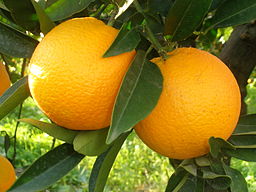
(1) Author–Whoever gets this card needs to determine what his or her book is about and give it a title. One time I had “The History of the Orange”–a nonfiction book about . . . oranges. That’s what we’ll go with for the purposes of this post. A young man gets the author card and wants to write about oranges.


orange


(2) Acquisitions Editor–As luck would have it, this author went to a writers conference where an AE (hold up your card) was looking for nonfiction books about fruit. She is thrilled that this author has come with this book proposal about the history of oranges. What does the AE ask? My AE with the card thinks a little bit–maybe an AE wants to know who the target audience is (men? women? age range?), the book’s tone (humor? tongue in cheek? reference?), and approximately how long it is (word count helps the AE consider placement and cost calculation). Let’s say this is a book targeted to adults that will be about 128 pages with a humorous tone. The AE wants to know why this author is such an expert and has such interest in oranges. The author explains that he grew up in an orange grove and has been making OJ all his life. (Sometimes an agent is in this role–I put that person at the end of my exercise, but he/she could very well be right at the start.)

I explain that all of this information is important for the AE to take back to the publishing house. Just because the AE likes it only means the book has passed the first hurdle. The AE now needs to sell the idea to the pub board (publishing board).

(3) CEO (as part of pub board)–In many houses (especially smaller ones), the CEO may be on the pub board as the keeper of the ethos of the publishing house. Does the book fit with the mission statement? Does it fit into the kind of books they do? (In Christian publishing, theological bent matters heavily when considering manuscripts.)

(4) CFO (as part of pub board)–Numbers guy. What does he ask? Will the book need any special treatments (is it going to have color pictures throughout–that will affect the cost of the printing and paper). What is the advance to the author? How many books will be in the first print run? What should be the selling price? A pro forma helps to then determine if and how the book can make money for the publishing house.

(5) Salesman (as part of pub board)–There actually may be several–the Amazon person, the big box store person, the independent bookstore person. But they all have the same question–especially with unknown authors. What kind of platform does the author have? (Author answers that he has 10,000 followers on Twitter and a blog and newsletter all about oranges with 20,000 subscribers.) The salespeople are impressed since they know that this author can get the word out about his book and get a following.

So I tell the group to assume that the book has passed this hurdle and is cleared to be published. Next will come the AE calling the author, the author rejoicing (little dance), the arrival of the contract and hopefully the advance check. Next, the author must finish the book by a particular due date.

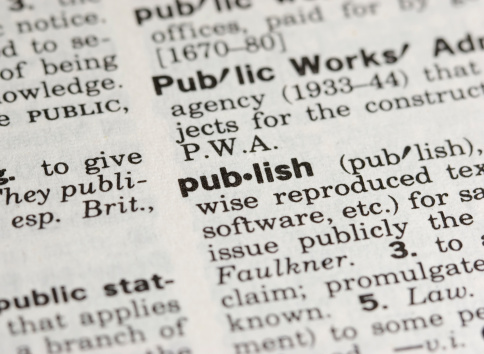
Publish

(6) Editorial director–Once the manuscript arrives, an editorial director will set the schedule for all of the following steps in order to keep the project moving through the system in order to meet the to-printer date. (In large houses, there may be several different people doing these roles with varying titles. In small houses, there might be one person who then uses several freelancers.)

(7) Designer–The editorial director will get the designer started on interior and cover designs. These take time (and the designer has other projects as well), so getting him started now is important. What does the designer need to know? My student with the “Designer” card wonders about how big the book is (trim size and page count), whether or not there are photos and are they black/white or color, and the target audience and tone. The designer creates a template (often in InDesign) into which the typesetter will flow the Word document manuscript.

(8) Content editor–This person looks at the big picture and helps to shape the book (perhaps the author’s chapter 3 should really be chapter 1 as it is a better beginning). I discuss more about the three different types of editing in this post. After back and forth with the author, the manuscript is finalized and sent on to …

(9) Copyeditor–Again, I discuss what this means in above linked post. The copyeditor fact checks, reads for clarity, queries as needed, makes the manuscript follow house style guidelines, and generally tries to make the manuscript readable and clean.

(10) Editorial assistant–This may even be an intern–or this person may not exist at all in a small house. But the copyeditor needs someone to help with taking the copyedited manuscript and creating the front matter (title page, copyright page, Table of Contents, dedication page, etc.) and making sure the back matter pieces are in place (appendix, index, endnotes).

(11) Typesetter/Compositor–The typesetter receives the manuscript from editorial and the book’s design template from the designer and puts them together. What does he need to know? He needs to know the page count, whether all of the chapters have to start on recto (right) pages or if they can also start verso (left), what is to be in the running heads, does the book start at page 1 or are there roman numerals in the front matter? If there are photos, he’ll need to have those (in separate files such as gif or bmp) and know where to place them. He lays out the pages to avoid widows and orphans (single words or short lines standing alone at the top or bottom of a page).

(12) Proofreader–Again, I discuss this further here. The proofreader takes the pdf of the typeset pages–meaning this is exactly how the book will appear. My proofreader checks the Table of Contents and adds page numbers as they appear in the book, and then he reads every word carefully.

(13) Printer–The final completed pdf is uploaded to the printer. Hopefully the date it arrives is the same date the editorial director put on the calendar months earlier. The printer sets press time for each book, and that’s why it is so important to never be late. The printer is given the poundage of the paper (for instance, much higher weight if this book is full of color photos so the pages can handle the ink, as opposed to a straight text book).

(14) Bookstore owner–This person needs to know why she should purchase the book to sell in her store. Fortunately, she loves this publishing company, the salesman has made a compelling case, and so she orders several to sell.

(15) Agent–Because the book has become a best-seller, this agent comes knocking hoping to represent the author in his next great work–and the cycle begins again.

My students come away from this little exercise with more understanding of how what they learn to do as editors fits in to the entire process of creating a book.


Orange photo: By Figiu (Own work) [CC-BY-SA-3.0 (http://creativecommons.org/licenses/by-sa/3.0)%5D, via Wikimedia Commons

6 Quick Proofreading Tips

AND . . . . today is National Proofreading Day. I will celebrate by . . . proofreading! Today I am also reposting a blog I wrote last year on March 8.

What a busy week! We had National Grammar Day on March 4, and today, March 8, is National Proofreading Day. For someone like me who lives this stuff on a daily basis, it’s downright exciting!

The day is devoted to “mistake-free writing” and projecting “a professional image with well-written documents that are 100 percent accurate.” Started by Judy Beaver at The Office Pro, this day is designated because it was her mother’s birthday—and her mother loved to correct errors.

As I noted earlier this week in my post about National Grammar Day, I’m not a total grammar geek but I do care about the correct usage of our language, and I’ve made a living for many years honing this skill. Lots of times I still CMShave to look things up in a dictionary or my Chicago Manual of Style (the style manual for much of the book publishing industry). All manuscripts go through several phases of editing, and I’ve done them all. Generally, if I do one phase on a particular manuscript, I make sure that other people do the other two phases–there’s a different focus that has to take place at each phase.

Editing—I call this the 10,000-foot view. I look at the big picture. I’m reading the fiction story and checking the plot, the pacing and flow, the characterization. In a non-fiction manuscript, I’m seeing if the organization works and makes sense. Any changes I suggest at this point are on the macro level—moving chapter 3 to become chapter 1, for instance. Or looking for that loose end in the mystery that the writer forgot to tie up (“What happened to so-and-so?”). The author makes changes (or not) based on my suggestions, and then the manuscript goes to a copyeditor.

Copyediting—This is more like the 1,000-foot view. Now that the editor has put the manuscript in good shape, if I’m in this role, I’m reading closely for sentence construction—dangling modifiers, run-ons, and inconsistencies. I fact check. I query if something doesn’t make sense, if a transition is needed, if a character’s way of speaking doesn’t sound real based on how he or she has been described by the author (“Would he really say this in this way?”).

Proofreading—This is the 10-foot view. If I’m in this role, sometimes I’m working on a manuscript, but often at this phase I’m looking at a pdf of typeset pages—which means I have to check the table of contents to make sure the titles and page numbers are correct, I check all the folios and running heads, I check the look of each page—marking widows and orphans (those random one or two words at the top of a page, or the lone line at the bottom—these just look awkward). Then I read every word. Even a clean manuscript can have random errors show up when the document is flowed into the typesetting program (a hidden tab in a Word document can suddenly rear its ugly head and space words far apart when typeset).

I love it.

Proofreading is probably my favorite. It’s that red pen mentality. I’m looking for errors only because I want the book, the author, and the publisher to put their best foot (feet?) forward.

The three types of editing take different skills. In my Editing class, I give my students practice in all of these areas, telling them that they will probably find an affinity for one and not like the others so much. But I also tell those who want to become editors that they should hone their grammar and punctuation knowledge anyway, because the copyediting and proofreading jobs are often the entry level positions in publishing companies. From there, they can move up, since often editors and acquisitions editors are hired from within, from people who have been with the company and understand the ethos there.

As I noted in my post earlier this week, proofreading skills are vitally important, especially on the job market. To have a clean paper, I suggest the following:

(1) Don’t trust the spell check program on your computer. (Judy has some tips on her blog about this.)

(2) If you’re not absolutely sure of the spelling of a word, don’t guess. Look it up. Dictionary.com is your best friend.

(3) Go back and read your letter, paper, email, memo, whatever, aloud slowly to yourself. This will help you notice if words are missing or if a sentence runs on and on. (It’s best to do this on hard copy. Trust me, you’ll see things differently than on screen. A friend of one of my students writes about that on his blog.)

(4) Then, read it again starting from the bottom paragraph backward, a paragraph at a time. This helps you get outside your own flow and see errors you might skip over otherwise.

(5) Electronically, go back and do a search for an open parenthesis (to make sure that you always have a matching close parenthesis), an open quotation mark (to make sure you always have the appropriate closing quotation mark and to make sure any inner quotation marks are single and that they are both there). And get rid of those double spaces between sentences!

(6) Be aware of your own weaknesses. If you know you tend to write run-on sentences, watch for that in particular. If you know that possessives always mess you up, do a search for apostrophes and check each one for correct usage.

This will clear up a good number of your errors. It never hurts, however, to have someone else look over an especially important document—like a cover letter or resume or manuscript submission.

Let’s put our best foot forward—both of them!

Sniffles, Snorkels, and Shakespeare

I plopped down in the middle of the Shakespeare aisle in the library.

And I burst into tears.

Mind you, I kept my sobs silent, my mouth covered. No one could see me. This was in Range 107 and 108 on Third Floor East in the BSU library. The hundreds of floor-to-ceiling shelves of books are spaced just far enough apart to sit with legs crossed. I love this place, getting lost amongst the stacks. I love the smell and feel of real books, old books. I love that so many people at one time or another were able to hold a work in their hands and be proud to have had their words published–in this particular aisle, so many many words about the bard, Shakespeare.

The criticisms and handbooks and guides on his tragedies and comedies mocked me from the shelves. “You’ll never have time to learn everything you need to know. Just look how much has been written! Ha ha! And you think you have something to say?”

It was a tragedy that I, a grown woman, sat amongst the stacks bawling.

It was a comedy for exactly the same reason.

Please, no one come by.

I can just imagine: “There’s someone up there crying,” a concerned student reports to the circulation desk. “And she’s, like, really old. Maybe she’s, like, having a breakdown?”

I can imagine the words over the intercom system. “Clean up on Third Floor East, Range 107.” And someone will come looking for me with tissues and a concerned face and maybe a straitjacket.

“I’m all right. Really. Just a bad day. And I’m just really tired.”

I glance North and South from my spot on 3 East. Aside from the occasional student passing by, no one even seems to know I’m here having my little meltdown. I wipe my nose on my shirtsleeve (gross) and lean against the stacks. A few deep breaths.

“You can do this. Just finish this semester. You can do this.”

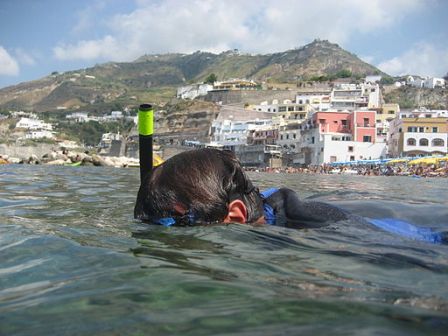
Snorkeling
By Nemoischia (Own work)

But it’s that little voice from college days that pushed me so hard to be perfect. Why do it if it can’t be perfect?

The doubts creep in. What am I doing here? Why am I doing this? What is the point?

A few more deep breaths. A prayer sob to the heavens.

“God, I know you want me doing this. I know beyond any doubt that you’ve walked me through this so far these last three years. I know that this is good for me in more ways than I can imagine. But I’m in over my snorkel . . .”

So God simply and quietly calms my heart and reminds me that he isn’t going to give me shallower waters; he’s instead going to provide a longer snorkel.

And maybe some swim fins.

(Photo from Wikimedia Commons [CC-BY-SA-3.0 (http://creativecommons.org/licenses/by-sa/3.0)], via Wikimedia Commons)

The Melody of Our Manuscripts

He always arrived in a rumpled brown suit and a wide, striped 1970s-style tie. He would bustle in the door of our apartment in Germany, run his stubby fingers through his mop of gray hair, say “guten Abend,” and sit down in the chair beside the piano bench.

And I duly took my place beside him on the bench.

We opened the book.

I had one piano book when I studied under Herr Mueller. Not a book for scales or a separate book to write in and draw the little notes on the staff and practice making the G-clef. I was way more advanced than that. I’d been taking piano since I could remember.

My piano book
My piano book

So when we arrived in Bonn, Germany, in my freshman year of high school, my parents set about finding a piano teacher.

And they found Herr Mueller.

I wish I knew his whole story. He had been the pianist for the some big orchestra in the United States. Thus, in his younger days, he had played in large concert halls to crowds of appreciative symphony goers. I’m sure he’d worn a tux and, when he approached the piano bench, had deftly tossed the tails behind him. He had been applauded.

And now, he sat beside a high school girl who didn’t appreciate that she was learning piano from a genius.

I ache to think of it.

We practiced from this one book–a big red book filled with music from the great composers. The cover and spine and title page are all missing, so I can’t even give the title. But when I sit down at the piano thirty years later and open the book to page 44, I can still play Beethoven’s “Adagio ‘Moonlight’ Sonata.” I can still play parts of “Fur Elise” (page 48) from memory.

When we opened to a new song that came from an opera, Herr Muller told me the story and where, in the opera, this song appeared. He told me how to play Edward Grieg’s, “Anitra’s Dance” (from Peer Gynt) based on the action at that point in the story, and he could hum every melody from the entire opera.

I think of those days now. I remember how I’d hold my breath when he leaned in close to scribble on the piano page and his bad breath floated into my nostrils. I remember how his stubby fingers flew across the keys. I remember how he loved, loved, loved the piano.

Herr Mueller's fingering notes on my piano page
Herr Mueller’s fingering notes on my piano page

If I could just take lessons from him now. These thirty years later I would cherish every word. I’d have a notebook beside me where I would write down the context of every melody he assigned just as he told it to me.

And I’d just offer him a breath mint and be done with it.

I worked hard for him. I practiced hard. I loved the piano too, for a time, even accompanying my high school chorus for a few programs.

Herr Mueller, I wish I could thank you. I’m sure you’re long gone from this world, but I thank you for your love of the piano and great music. I’m sure that some of my love for great literature comes from hearing Herr Muller tell me the great stories of the operas with unmatched passion. And the fact that I could accompany my high school chorus as they sang Bob Dylan’s, “The Times They Are A-Changin’,” was because I had pounded away at Bach and Verdi and Grieg and Tschaikowsky and Wagner.

The same is true for writers. We’re readers first for good reason. We read great literature (past and present) because it helps us with our craft. We read because we love love love the words on the pages–and we’re amazed when, like the music notes floating on the staffs, the words come together in a way that gives us goosebumps. We want to learn to make that happen in our own writing.

We’re creating a melody in our manuscripts.

I wish I had appreciated the privilege of studying under Herr Mueller. Likewise, I wish I had appreciated the time I spent reading the classics in my literature classes both in high school and college (this summer I’m rereading many of those classics that any self-respecting English major should be conversant about!).

Because now, I understand. Now I appreciate them.

Thank you, Herr Mueller.

Me at the piano with appreciative baby sister as my audience (ca. 1970).

Midwest Writers Workshop–Day 2

It’s the middle of day two of the Midwest Writers Workshop here in beautiful Muncie, Indiana.

Writers are scurrying from pitching an agent to a social media tutoring appointment to their next session from one of our amazing faculty to a manuscript makeover appointment to finding a bathroom to grabbing a snack to checking out the book table to heading to yet another session.

And that’s what it’s all about. Learning more about the craft that we all love.

We’re all here supporting one another as writers. Some with published books. Some with dreams of publishing. All with a passion for words.

That’s why I love it.

This place reeks with people who love words and writing. We’re all geeks sort of geeking out over words and how to put them together. This place reeks of geeks.

And it’s awesome.

There are lots of writers conferences, and I’m a strong proponent of all writers attending a conference for the continued training, support, and encouragement from other writers. I’m new on the planning committee for the Midwest Writers Workshop (we’re celebrating 40 years with this conference), and I’m amazed at how this team pulls together to make a great conference happen.

This year, Cathy Day and I worked together with some savvy Ball State students. Several of the students are acting as assistants for the five agents who are taking pitches, and the others are working in the social media lab giving one-on-one tutoring advice in the art of social media (websites, Twitter, Facebook pages, etc., etc.). Here’s a photo of our social media lab:

The social media lab with one-on-one tutoring about social media for writers

I’m sitting in the social media lab listening to the students talk about how great the attendees are, how they feel like they’ve both been able to teach something to their clients as well as learn something from them, and how they’re enjoying connecting with other writers. We’ve built in time for the students to attend a couple of workshop sessions as well.

We’re all in this writing life together.

And we’re having a perfectly awesome time.

You ought to think about attending next year!

10 Grammar Saves in 10 Years

I have a guest post today from a fellow laborer in the salt mines of proofreading. Good thing she made these saves before the books went to print! It’s people like Stephanie who help keep me from getting angry, because she keeps those horrendous errors from ending up in the final product. Enjoy!

Stephanie Rische's avatarStephanie Rische

I’m not quite sure how I blinked and 10 years passed, but last month I woke up and realized it had been a whole decade since I jumped into the world of editing and publishing. It has been a good decade, and in honor of the mile marker, I thought I’d share with you 10 of the errors I’ve stopped from going into print over the past 10 years.


{Note: I have omitted the authors and titles of these books to protect the relevant parties, but rest assured, these are all real quotes from real books.}

grammar3


10. My daddy was a steal worker, and my granddaddy was a steal worker.

[Sounds like a kind of shady business to me.]


9. Gelatins 2:16 clearly states that human deeds can never save us.

[Shockingly, the book of Gelatins made it through spell-check but not canonization.]


8…

View original post 280 more words

Pages in the Hands of an Angry Editor

Thanks Nathan Sturgis for the title of this week’s blog, and thanks Jonathan Edwards for the sermon that inspired it.

Let me clarify, however. I’m not angry. I tend to be on a pretty even keel most of the time. Frustration is more the word than anger. Part of it is my own obsessive compulsive desire to get things right. A printed book should not have errors. That’s a given. So forgive me for a little anger when a document gets sent to the printer who then prints a book with blatant errors.

I just spent the last week proofreading two books for a publisher. One was printed with such blatant errors that I was hired to do a full proofread quickly so they can do a reprint and send new books to everyone who got the old error-ridden books. Somewhere along the line, someone dropped the ball. The other book was a revision with updated chapters replacing old chapters. Problem is, the new author didn’t take into account any kind of style issues from the old book. While the former book had endnotes in the standard superscripted numbers, the new chapters incorporated the notations within the text. Then there were the capitalization and other stylistic issues (Oxford commas, anyone?). Someone (that would be me) had to go through and make it all consistent.

Don’t get me wrong. I get kind of gleeful when I’m catching and cleaning up errors. I’m thrilled to standardize a book that’s in process. But when a book has been published and went “out there” for all the world to see (with, among other sins, a running header that had only one word from the title instead of the full title) . . . well, that just makes me angry.

Someone should have known better. But then I remember that I’ve had my share of times when I let something slip on by.

So much can go wrong. A Word document or pdf can get lost or corrupted. Changes don’t get saved. Someone picks up the wrong version and then the dominoes just keep falling. A lack of a clean template wreaks havoc  (oh my goodness, I wish everyone knew style tags). Edits get misplaced. A single page change gets forgotten. A change randomly requested by email gets waylaid.

It’s difficult to keep everything straight as files fly back and forth. Even with Dropbox and Google docs, the possibility of error remains high.

And if a busy editor gets the bluelines (the set of pages, in blue ink, sent from the printer to show exactly how the book will look when printed–it’s the last last last chance to make a change, and if you do, it’ll probably cost money) at a time when harried by another deadline, it’s tempting to do a quick scan and send it on its way.

And miss the fact that a word from the title that is supposed to appear on every verso running head is not there.

Arrgh!

It comes down to having a good project management system in place. It comes down to being organized. There are so many steps a manuscript goes through:

  1. The manuscript comes in as a Word doc from the author.
  2. The editor saves a new version and does an edit filled with queries for the author.
  3. The editor and author go back and forth with the electronic document, new versions made and saved each time.
  4. Once the manuscript is the way the author and editor want it, it goes to a copyeditor.
  5. The copyeditor makes a new electronic version and reads for clarity, consistency, correctness, and readability. Style tags are added at this point.
  6. That manuscript goes back and forth with queries to the author and/or the editor, and the copyeditor has to collate those changes (here’s a nice place for Google docs!).
  7. A final clean manuscript goes to the typesetter.
  8. The typesetter flows the manuscript into the designer’s template and creates a pdf.
  9. The pdf goes to the proofreader who marks corrections.
  10. The typesetter makes the corrections, but, not being an editorial person, often notoriously misinterprets the proofreader’s corrections (proofreaders need to be extremely clear!).
  11. The proofreader checks all of the corrections, sends another version of the pdf for corrections still to be made, and this goes back and forth.
  12. The typesetter then creates the final pdf that gets uploaded to the printer.

See how many places things can go wrong?

It comes down to being careful, being organized, being watchful. Even a little obsessive compulsive in order to get it right.

And then, after all that organization and care and watching, the printed book comes out.

And there’s always an error somewhere.

We do our best. That’s all we can do.

Words Matter (and So Do Fish)

Thought you’d like to see a glimpse of my fan club.

My fishy fan club.
My fishy fan club.

Seriously, these little guys totally love me. They’re like groupies (not group-ers, group-ies). Whenever I walk outside my back door into the garden, they all come as one and follow me as I walk by. They dog-paddle (fish-paddle?) at the edge of the pond and watch my every move.

They totally love me.

Or, more likely, they totally think I’m going to feed them.

But still . . .

I like the fact that they notice me. I think it’s funny how they come as an entire group with their little mouths up out of the water looking at me so longingly.

When we moved into this house a few years ago, the little pond was already there with all of these fish (a neighbor recently ‘fessed up that she had taken some of the overflow from her pond and dumped them here during the year that the house was vacant). We had moved in at the end of October and didn’t have a clue what to do to winterize a pond. We figured that the house had sat vacant the winter before and no one had done anything, so we’d just let it go and see what would happen. Sure enough, the little pond froze over and got covered with a layer of snow. We figured we’d have to skim out the dead fish and start over come spring.

Then, as the water thawed, so, apparently, did the fish. By the time the Indiana air turned warm, the fish were back to their usual selves.

The moment I drop some fish food in the pond, I’ve got myself a fan club.

Wouldn’t the writing life be nice if we just dropped a few of our choice words into the world’s pond and we suddenly had such loyal fans? Fans who waited on our every word? Fans who knew we posted on our blog every week and sat by their computer, eyes wide, mouth agape, waiting for us to toss the morsels their way?

Eh, maybe not. fishies2

I just reach into the bag of fish food and toss the same morsels to those fishies every day. And they love me for it.

I can’t do that with my writing. I’m not looking to recycle a formula or take the easy route. In my blog post a couple weeks ago, I talked about the hard work of writing. Our words matter. That’s why even though only a few people may read something we write, we still agonize over what we want to say. We want to represent ourselves well, say what we mean, write something that will be enjoyable or helpful or compelling or inspiring to those folks who take a few minutes of their day to read our musings.

We do that because our writing matters so much to us.

We do that because we instinctively know that the words we put out there can have a life of their own.

Back before everyone was blogging, before Facebook and Twitter, I had a couple little books published. They’re long out of print, so imagine my surprise when a couple of years ago I found one of those books at a garage sale. (You know you’ve arrived when you find your book at a garage sale.) Then, a few years after that, when everyone was blogging and Facebooking and Tweeting, my son sent me a link to a YouTube video a woman had done to recommend another of my books.

Our words live on.

So I guess that’s my encouragement to my writing friends. You never know when a piece of your writing will rise again. Even if a book you wrote years ago went out of print causing you untold despair, it still lives on.

I tell students in Writing classes that they never know how or when a piece of writing will inspire someone. That’s why it matters so much. That’s why we do that hard work of writing. We put ourselves out there because we have something to share and we want to join our friends in digital conversation.

I’ll never know the paths my words have taken. I only know that they’re still out there with little lives of their own.

Our words matter. They live on.

Just like my fishy fan club.

A Classic Summer (#tweettheclassics)

I have plenty to do to keep myself out of trouble this summer, what with fish to feed and gardens to weed and cats who keep having kittens and a research project to finish and a syllabus to write, not to mention the great time to be had at the Midwest Writers Workshop at the end of July.

But what is summertime about if not reading? I’ve been focused on the books I’m reading for my classes, and in the fall I’ll be up to my ears in Shakespeare and the English Romantics, so I’m enjoying this little window to choose my own reading. I got inspired by my summer intensive class where I read:

The Great Gatsby
The Great Gatsby

The Blithedale Romance–Nathanael Hawthorne
Their Eyes Were Watching God–Zora Neale Hurston
The Great Gatsby–F. Scott Fitzgerald
Frankenstein–Mary Shelley
The Awakening–Kate Chopin
The Adventures of Huckleberry Finn–Mark Twain

I also reread Crime and Punishment (just for fun) by Fyodor Dostoyevsky.

Now I have decided to devote this summer to revisiting some classics. Here’s what’s on my reading list for the remainder of the summer (so far):

Moby Dick
Moby Dick

Moby Dick–Herman Melville
The Adventures of Tom Sawyer–Mark Twain
The Scarlet Letter–Nathanael Hawthorne
The House of the Seven Gables–Nathanael Hawthorne
A Portrait of the Artist as a Young Man–James Joyce
Uncle Tom’s Cabin–Harriet Beecher Stowe
Walden–Henry David Thoreau

So what are some of your favorite classic books?

And how about a little challenge. . . . What if I asked you to tweet the classics?

Join me at #tweettheclassics on Twitter (@LindaEdits) and see if you can condense a classic work into about 100 characters (you need to save enough room to add the hashtag and at least some of the book title).

Here’s what I have so far:

In class, we talked about how Dr. Frankenstein (remember the creator is Frankenstein; the monster is not named) is so narcissistic, so self-absorbed, that he willingly lets the monster dash about the countryside killing people because he’s unwilling to deal with the consequences of his actions. In the end, Dr. Frankenstein is more like a monster than the monster himself.

Here’s another one:

Everyone was so willing to party for free at Gatsby’s house, but, despite Nick’s Carraway’s best efforts, “nobody came” to his funeral. Not even Daisy, the object of Gatsby’s obsession. You’d think she could have torn herself away for a few moments? You’d think that the obvious fact that Jay Gatsby took the bullet (literally) for her killing a woman might have softened her narcissistic little heart? But no.

Speaking of narcissists:

I had never read The Awakening before. Edna Pontellier is such a complex character, but I have to say I’m glad she isn’t in my circle of friends or family. Sure, she’s trying to be empowered. Sure, she’s trying to find herself. Sure, this was the timeframe when women didn’t have the opportunities that we take for granted (they couldn’t yet vote, for pete’s sake). But her self-centeredness grates on me.

So here’s my challenge to you. Can you tweet the classics? Either sum up the book in those few characters or tweet a favorite (short) line. Put the title of the book with a hashtag and “tweettheclassics” with a hashtag. I have a column on my Tweetdeck so I can see what we get! I’ll feature some in future blog posts. I’ll be adding more of my own as well.