Great Editors–Maxwell Perkins, My New Hero (Part 1)

So as it turns out, if it weren’t for an editor, there might not have been The Great Gatsby.

Yay for editors!

I have decided that–while it’s terrific to review books and interview authors–I’m going to go a slightly different direction in my blog in the coming weeks. I’m going to study up on some great editors from the past, and I’m going to interview some great editors of the present.

Because, well, I’m an editor. I know what it takes to work in the salt mines of editing manuscripts to make the good–the great–that much better. I know what it means to study typeset pages until your eyes cross, making sure no typos slip through because I want the author to look good. I know what it means to be in the background and let the author have the credit (as it should be).

I just want to bring some of these people out of the shadows and learn from them and, in so doing, pass along some info to you, my readers, and to the students in my editing classes.

After my last post about teaching editing, Rich Adin (who writes the blog “An American Editor“) commented, “We can teach people to be editors like me; we cannot teach people to be an editor like Maxwell Perkins. Perkins had that rare gift that made him the Michelangelo of editing.” Thanks so much for that comment, Rich, because that sent me on a quest to learn from the best.

perkinsAnd that sent me to A. Scott Berg’s book, Max Perkins: Editor of Genius (New York: E. P. Dutton, 1978).

Seriously, I’m so excited about what I’m reading I can barely stand it.

Maxwell Perkins (1884-1947) was the editor at Charles Scribner’s and Sons for the likes of F. Scott Fitzgerald, Ernest Hemingway, and Thomas Wolfe. The book is filled with quotes from correspondence between Perkins and these writers and anecdotes of how he worked with them–cajoling them, encouraging them, offering insight and advice on the big picture of each manuscript, and advocating for them at the meetings of the editorial board.

Mind officially blown.

No, I will never be Max Perkins–and, no, I cannot teach anyone to be Max Perkins. The next Max Perkinses will arise from folks with that internal “gift” that is, simply put, God-given.

But I want to learn from the best and pass along to my students what they, too, can learn from the best.

And for my students out there–I tell you this all the time–you probably won’t start out as full-fledged editors. Max didn’t even study literature or writing in college (Harvard); instead, he studied economics. But his real love was words, and it was a freshman English instructor who, as Berg puts it, “certainly . . . developed Max’s editorial instincts” (32). After graduation, Max went to work writing for The New York Times as the writer who hung around all night and picked up the “suicides, fires, and other nocturnal catastrophes” (33).

His first job at Charles Scribner’s and Sons was in the advertising department where he spent four and a half years before ascending to the hallowed fifth floor–the editorial floor.

And, students, guess what he did there . . .

He was a proofreader!

For the most part, Maxwell Perkins’s duties as an editor were limited to proofreading galleys–long printed sheets, each containing the equivalent of three book pages–and to other perfunctory chores. Occasionally he was called upon to correct the grammar in a gardening book or arrange the selections in school anthologies of classic short stories and translations of Chekhov. The work demanded little creativity. (12)

But then here’s what happened. A regular Scribner author named Shane Leslie became friends with a young author from Minnesota. Leslie sent this young author’s manuscript to the editors at Scribner. It got passed from editor to editor (no one liked it) until it ended up on Perkins’s desk. While he liked it, he was forced to write to the author and decline it (the lowly proofreading editor didn’t have much sway at first). But Perkins saw something in the young man’s writing, and the rejection letter held out some hope and encouragement to the young man who went to work revising and revising and revising.

The manuscript came back much improved, and Perkins went to work doing everything he could (and it was a lot) to get Scribner’s to publish it. At one tense editorial meeting, he said, “My feeling is that a publisher’s first allegiance is to talent. And if we aren’t going to publish talent like this, it is a very serious thing” (15-16).

The young author was F. Scott Fitzgerald. The book was This Side of Paradise (Scribner’s 1920).

What about The Great Gatsby? More on that next week.

Suffice it to say, Maxwell Perkins is my new editorial hero. And I’m his newest student.


How to Support an Author’s New Book: 11 Ideas For You

So last week I talked about Literary Citizenship and why I love it. A key, of course, is supporting our fellow authors. In fact, that’s what it’s all about. Chuck Sambuchino offers 11 ideas for how we can support new books.

writersinthestorm's avatarWriters In The Storm Blog

By Chuck Sambuchino

large_5595133805My Writer’s Digest coworker, Brian A. Klems, recently geared up for the release of his first book — a humorous guide for fathers called OH BOY, YOU’RE HAVING A GIRL: A DAD’S SURVIVAL GUIDE TO RAISING DAUGHTERS (Adams Media). On top of that, my coworker Robert Brewer (editor of Writer’s Market) recently got a publishing deal for a book of his poetry.

So I find myself as a cheerleader for my writing buddies — trying to do what I can to help as their 2013 release dates approach. I help in two ways: 1) I use my own experience of writing & publishing books to share advice on what they can expect and plan for; and 2) I simply do whatever little things I can that help in any way.

This last part brings up an important point: Anyone can support an author’s…

View original post 1,450 more words

Why I Love Literary Citizenship

Much is being written lately on the topic of literary citizenship. Since this was the topic of my Master’s final research paper, I thought I’d go ahead and weigh in with my two cents. (I could write 50 pages, but I already did that. Let’s see if I can condense my thoughts here into a readable blog post!)

I just happened upon this term in the last couple of years–but it’s something I’ve been thinking about for a long time. You see, I’ve worked in publishing for thirty years and went back to school with the hopes of teaching at the college level. As I sat under Cathy Day, she (thankfully) talked to her students about what’s out there in the real world–how to join the literary world, how to get published, how to organize submissions, how to handle rejection, and how to find their “tribes” once they leave the cocoon of a university writing program–everything I already knew was extremely important for writers to understand.

I was thrilled that she talked about this because too often (I feel) creative writing programs focus only on craft without giving students the tools to know what to do with their writing. Yes, I get it. You have to first be a good writer, no, an excellent writer. That’s a given. Roxane Gay puts it this way:

You’re not going to become a better writer by focusing more on getting your writing published than writing work that merits publication. You won’t become a better writer by resenting the success of others or spending most of your time indulging in conspiracy theories about publishing. Yes, sometimes the game is rigged, but mostly it is not. It’s easy to get wrapped up in the wrong things when so much information about writers and what they’re doing or could be doing is readily available via social networks, blogs, and the like.

So of course, being great writers is step one, and I don’t advise that writers let themselves get distracted by the marketing side at the expense of their product. But, after thirty years in publishing, I come at this with a different perspective, and so I maintain that students should be taught what to do with their writing. How to research the literary magazines or the online sites or the commercial magazines or the book publishers that might be interested in their kind of writing. How to write query letters. How to approach an agent. How to create a book proposal. That’s all part of learning to write.

Because, in the end, while writing can indeed be an end in itself, most of us write because we want people to read what we wrote. We want to share it.

And I’m sure it’s my years in publishing talking, but I’ve sat on the other side of the table, needing to help authors understand the importance of marketing their own books.

I know, what a pain after doing all the work of actually writing the book to have to be burdened with actually doing the marketing, too. Isn’t the publisher supposed to do that? That’s the question Becky Tuch asks and precisely why she detests literary citizenship.

But I understand the business side of publishing; it is a business after all and, if it doesn’t make money, none of us gets published. And yes, all those big-name authors get all of the marketing dollars and the rest of us are left pretty much to fend for ourselves, but there’s a reason for that as well. There’s a statistic in Christian publishing that says 9 percent of the authors sell 80 percent of the books. That means that 9 percent of writers are pretty much carrying their publishing houses. So let them have the marketing dollars! In secular publishing, the number may be similar–and we can be sure that it is indeed the big names who get taken care of. Those authors help keep their companies open, which then allows them to take a chance on little ol’ me.

But here’s the deal–literary citizenship is not to be entered into because you want to sell your books. Instead, it’s about joining Renaissance Fairethe literary world because that’s who you are. Just as you might identify with those who join the worlds of ComiCon or Renaissance Faires because you have an affinity for comics and superheroes or feathered caps and falconry, so you join the world of Words and Books as a literary citizen because that’s who you are. You join with like-minded people to talk about what you love best.

The side effect of being “neighborly” in that world (by doing what many lit cit blog posts have discussed regarding ways to be literary citizens) is that when your article or book is published, you can naturally talk about it with those who care–and who will, in turn, talk about it with others. That’s where the “marketing” part actually begins to happen.

But literary citizenship doesn’t start there. It doesn’t start with “marketing” or “selling.” It’s not all about us. It’s not all about “gimme” as in “gimme your attention–me me me” as David Ebenbach describes in his article, Literary Citizenship Does Not Mean Gimme. Instead, it’s about joining a world of word lovers–reading, appreciating, talking about, and sharing one another’s work.

So let’s not hate literary citizenship, let’s embrace it because, in essence, it’s who we are. Let’s come together in this world of Words and Books enjoying what we love most and making sure it continues for all of us for a long, long time.


6 Quick Proofreading Tips

AND . . . . today is National Proofreading Day. I will celebrate by . . . proofreading! Today I am also reposting a blog I wrote last year on March 8.

What a busy week! We had National Grammar Day on March 4, and today, March 8, is National Proofreading Day. For someone like me who lives this stuff on a daily basis, it’s downright exciting!

The day is devoted to “mistake-free writing” and projecting “a professional image with well-written documents that are 100 percent accurate.” Started by Judy Beaver at The Office Pro, this day is designated because it was her mother’s birthday—and her mother loved to correct errors.

As I noted earlier this week in my post about National Grammar Day, I’m not a total grammar geek but I do care about the correct usage of our language, and I’ve made a living for many years honing this skill. Lots of times I still CMShave to look things up in a dictionary or my Chicago Manual of Style (the style manual for much of the book publishing industry). All manuscripts go through several phases of editing, and I’ve done them all. Generally, if I do one phase on a particular manuscript, I make sure that other people do the other two phases–there’s a different focus that has to take place at each phase.

Editing—I call this the 10,000-foot view. I look at the big picture. I’m reading the fiction story and checking the plot, the pacing and flow, the characterization. In a non-fiction manuscript, I’m seeing if the organization works and makes sense. Any changes I suggest at this point are on the macro level—moving chapter 3 to become chapter 1, for instance. Or looking for that loose end in the mystery that the writer forgot to tie up (“What happened to so-and-so?”). The author makes changes (or not) based on my suggestions, and then the manuscript goes to a copyeditor.

Copyediting—This is more like the 1,000-foot view. Now that the editor has put the manuscript in good shape, if I’m in this role, I’m reading closely for sentence construction—dangling modifiers, run-ons, and inconsistencies. I fact check. I query if something doesn’t make sense, if a transition is needed, if a character’s way of speaking doesn’t sound real based on how he or she has been described by the author (“Would he really say this in this way?”).

Proofreading—This is the 10-foot view. If I’m in this role, sometimes I’m working on a manuscript, but often at this phase I’m looking at a pdf of typeset pages—which means I have to check the table of contents to make sure the titles and page numbers are correct, I check all the folios and running heads, I check the look of each page—marking widows and orphans (those random one or two words at the top of a page, or the lone line at the bottom—these just look awkward). Then I read every word. Even a clean manuscript can have random errors show up when the document is flowed into the typesetting program (a hidden tab in a Word document can suddenly rear its ugly head and space words far apart when typeset).

I love it.

Proofreading is probably my favorite. It’s that red pen mentality. I’m looking for errors only because I want the book, the author, and the publisher to put their best foot (feet?) forward.

The three types of editing take different skills. In my Editing class, I give my students practice in all of these areas, telling them that they will probably find an affinity for one and not like the others so much. But I also tell those who want to become editors that they should hone their grammar and punctuation knowledge anyway, because the copyediting and proofreading jobs are often the entry level positions in publishing companies. From there, they can move up, since often editors and acquisitions editors are hired from within, from people who have been with the company and understand the ethos there.

As I noted in my post earlier this week, proofreading skills are vitally important, especially on the job market. To have a clean paper, I suggest the following:

(1) Don’t trust the spell check program on your computer. (Judy has some tips on her blog about this.)

(2) If you’re not absolutely sure of the spelling of a word, don’t guess. Look it up. Dictionary.com is your best friend.

(3) Go back and read your letter, paper, email, memo, whatever, aloud slowly to yourself. This will help you notice if words are missing or if a sentence runs on and on. (It’s best to do this on hard copy. Trust me, you’ll see things differently than on screen. A friend of one of my students writes about that on his blog.)

(4) Then, read it again starting from the bottom paragraph backward, a paragraph at a time. This helps you get outside your own flow and see errors you might skip over otherwise.

(5) Electronically, go back and do a search for an open parenthesis (to make sure that you always have a matching close parenthesis), an open quotation mark (to make sure you always have the appropriate closing quotation mark and to make sure any inner quotation marks are single and that they are both there). And get rid of those double spaces between sentences!

(6) Be aware of your own weaknesses. If you know you tend to write run-on sentences, watch for that in particular. If you know that possessives always mess you up, do a search for apostrophes and check each one for correct usage.

This will clear up a good number of your errors. It never hurts, however, to have someone else look over an especially important document—like a cover letter or resume or manuscript submission.

Let’s put our best foot forward—both of them!

It’s National Grammar Day!

In honor of National Grammar Day, I am reposting my blog on this date from last year. Why? Because I’m busy grading papers for correct grammar–that’s why!

Today, March 4, is National Grammar Day.

Are you celebrating? Well, are you?

I am celebrating by finding other celebrants–people I want to add to my tribe because they care about this stuff as much as I do.

I have to confess to being a bit of a grammar geek–although not nearly at the level of Mignon Fogarty aka Grammar Girl. I know some things, but I may not know why I know them or the rule behind them. That comes from thirty years of proofreading, following publisher style sheets, painstakingly reading typeset pages and marking pdfs until my eyes blur.

I love my red pen.

You see, I value perfection. (Oh my, I sure hope there aren’t any errors in this post when I’m finished . . . ). I’ve started grad school to learn more about teaching writing and discovered in my theory classes, much to my chagrin, that teaching grammar works against creativity and that college instructors try to steer clear in favor of the big picture, the creativity, the thought processes. I believe all of that is vital, of course. What’s the point of writing if you can’t make a clear argument or create a document that flows? But I also believe that the best argument in the world will get ignored if the writing is fraught with errors. Why do I want to take the time to read your article and consider your opinion if you can’t take the time to make sure to spell correctly and use proper punctuation?

It matters.

So I love National Grammar Day. (It’s on March 4th because apparently that’s the only date that forms a sentence, “March forth.”) I love when I find others in my tribe who care as much as I do about grammar and punctuation and a well-written sentence (they won’t be dangling any modifers in front of me, no sir!).

For one of my classes, I did a little research project. I hypothesized that writing instructors need to teach their students to proofread. We help them a lot at the contextual and sentence level in their writing, but we probably say, “And be sure to proofread your paper before turning it in,” without explaining what proofreading really involves. I think we do them a disservice. There is indeed a place for focusing on perfection. (More about this on Friday, March 8, National Proofreading Day . . . oh my, busy week!)

Take, for example, business writing. I start filling in for the instructor of a Writing for Business class this week for the rest of the semester (the regular instructor is out for shoulder surgery and rehab). I’m reading the textbooks and finding constant statements about the importance of perfection. In fact, one book quotes a website that keeps a collection of “cover letters from hell“–cringe-worthy letters sent to them by folks hoping for a job, like the person who wrote that he/she was an English major good at grammar–and then misspelled it as “grammer.” The website then states,

Elements of Style

A word to the wise: An error-free letter is now so freakin’ rare that the minimal care required to send a letter with zero defects, combined with a few crisply written simple declarative sentences, will, alone, guarantee a respectful reading of a resume. Maybe even secure an interview. Doesn’t anybody read Strunk and White in school any more? If you haven’t, get a copy of The Elements of Style, so you can follow it all your days.

Exactly.

Now all those theorists have a point. Do your writing and don’t worry a bit about your grammar. Get your ideas down. Tell your story. Make your point. Do the best writing you can do.

But before you send the query letter, turn in that article, or send in that manuscript, do me a favor.

Make sure it’s perfect.

Now realize that if you have your own little stylistic “tics” (you want to Capitalize Certain Words for Emphasis, or do random italics), then just let your proofreader know. You can be “incorrect” if it’s part of your style. Create a style sheet that tells your proofreader this is how you want it–then he/she will make sure that you’re consistent, along with looking for any errors you may have missed.

As citizens of the literary world, let’s protect our craft, always doing our best to deliver the best quality.

And if you feel that your proofreading skills leave something to be desired, hire a professional proofreader (or get someone you trust who really knows the craft) to go over everything before you submit the story or mail the letter. Believe it or not, there are people who thrive on helping your writing be perfect. In fact, even if you are good at it, it’s difficult to proofread your own work. It’s that whole “seeing the forest for the trees” thing.

(One little additional note: I’m talking at the professional level here. Please don’t refuse to drop me a note for fear of making errors. I truly do want to keep my friends. My point is that when we’re doing professional writing, we need to be professionals. The rest of the time, my red pen is safely in the drawer.)

So celebrate National Grammar Day with me! Grammar is the toolbox of our trade. Let’s keep those tools sharp!

Getting Published–and Not Even Knowing It!

It’s an odd experience to get published and not know it.

I suppose I should be glad, but it wasn’t something I ever submitted, nor did I write it for publication.

Let me explain.

Over Christmas I was visiting with family in Corry, a small town in western Pennsylvania. My sister happens to be quite the photographer and recently had two of her large photographs on display at the Painted Finch Gallery in Corry (displayed, that is, until both sold at a juried art show!). Anyway, several of us made a stop in at the gallery on Christmas eve. The gallery is an eclectic mix of wildlife oil paintings, flowers and scenery in watercolors, color and black-and-white photography, pottery, jewelry, and work in other types of mediums that I, as a non-artsy person, can’t name but can appreciate.

While the others chatted with the proprietors, I wandered. In the back, near a glass case holding jewelry and pens, was a small holder with some greeting cards and a couple of paperback books.

Of course, I picked up the books.

One was a little paperback history of the town of Wattsburg, Pennsylvania. The little borough of Wattsburg, nestled about fourteen miles northwest of Corry, happens to have been my dad’s hometown. My grandfather had lived there most of his life–even was the mail carrier for many years (I talked about that in this post). We visited nearly every summer with him and cousins who lived nearby.

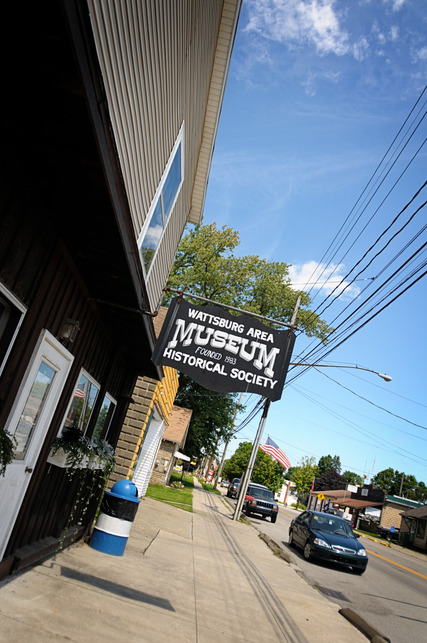
The Wattsburg Historical Society

Some of my fondest memories have to do with the Erie County Fair held annually at the Wattsburg fairgrounds. Gramps was in charge of the concessions at the fair for many years. As a young child, walking through the midway with gramps was magical. Everyone knew him. I remember him motioning to one concessioner after I had spotted among his prizes a Barbie-type doll in a beautiful lace wedding gown. Next thing I knew, the doll was in my hands. (I’m sure he settled up later.)

Many years passed and, either in high school or college, I wrote an essay about the fair and grandpa. Later, I mailed it to him, thinking he would enjoy my reflections. He passed away not many years later.

So at the art gallery, I thumbed through the book about Wattsburg’s history filled with quirky stories, anecdotes, and people’s memories. I went to the spine and copyright page (hey, I’m in publishing–it’s a habit) and saw that it was self-published. The introduction stated that the material in the book had been gleaned from the Wattsburg Historical Society. Flipping pages revealed an index in the back. I wonder if gramps is in here, I thought. Chaffee, Chaffee–there he was!

And, to my surprise, so was I.

Wait. What?

Page 49. What’s on page 49?

And there, to my astonishment, was my little essay about gramps and the Wattsburg fair.

I’m guessing that gramps received my essay in the mail and stored it among his fair papers, most of which apparently ended up in the historical society. The editors of this collection must have discovered the typewritten pages (or maybe they were handwritten, I can’t remember) among the papers and decided to publish it in this collection.

It’s a little embarrassing to read the musings of my early life (not to mention my immature writing style) from so many years ago. In the midst of my article, the editors had put a black-and-white photo of the fair committee, and among them is my dear grandfather.

So as odd as it is to be published without knowing it, I suppose for the audience of this particular book (one being my dad, who received that book the next day as a Christmas present), my little essay might bring back some good memories.

If my writing can do that, I suppose that’s all I can ask.


Photo courtesy of http://www.city-data.com/picfilesc/picc64500.php


The Melody of Our Manuscripts

He always arrived in a rumpled brown suit and a wide, striped 1970s-style tie. He would bustle in the door of our apartment in Germany, run his stubby fingers through his mop of gray hair, say “guten Abend,” and sit down in the chair beside the piano bench.

And I duly took my place beside him on the bench.

We opened the book.

I had one piano book when I studied under Herr Mueller. Not a book for scales or a separate book to write in and draw the little notes on the staff and practice making the G-clef. I was way more advanced than that. I’d been taking piano since I could remember.

My piano book
My piano book

So when we arrived in Bonn, Germany, in my freshman year of high school, my parents set about finding a piano teacher.

And they found Herr Mueller.

I wish I knew his whole story. He had been the pianist for the some big orchestra in the United States. Thus, in his younger days, he had played in large concert halls to crowds of appreciative symphony goers. I’m sure he’d worn a tux and, when he approached the piano bench, had deftly tossed the tails behind him. He had been applauded.

And now, he sat beside a high school girl who didn’t appreciate that she was learning piano from a genius.

I ache to think of it.

We practiced from this one book–a big red book filled with music from the great composers. The cover and spine and title page are all missing, so I can’t even give the title. But when I sit down at the piano thirty years later and open the book to page 44, I can still play Beethoven’s “Adagio ‘Moonlight’ Sonata.” I can still play parts of “Fur Elise” (page 48) from memory.

When we opened to a new song that came from an opera, Herr Muller told me the story and where, in the opera, this song appeared. He told me how to play Edward Grieg’s, “Anitra’s Dance” (from Peer Gynt) based on the action at that point in the story, and he could hum every melody from the entire opera.

I think of those days now. I remember how I’d hold my breath when he leaned in close to scribble on the piano page and his bad breath floated into my nostrils. I remember how his stubby fingers flew across the keys. I remember how he loved, loved, loved the piano.

Herr Mueller's fingering notes on my piano page
Herr Mueller’s fingering notes on my piano page

If I could just take lessons from him now. These thirty years later I would cherish every word. I’d have a notebook beside me where I would write down the context of every melody he assigned just as he told it to me.

And I’d just offer him a breath mint and be done with it.

I worked hard for him. I practiced hard. I loved the piano too, for a time, even accompanying my high school chorus for a few programs.

Herr Mueller, I wish I could thank you. I’m sure you’re long gone from this world, but I thank you for your love of the piano and great music. I’m sure that some of my love for great literature comes from hearing Herr Muller tell me the great stories of the operas with unmatched passion. And the fact that I could accompany my high school chorus as they sang Bob Dylan’s, “The Times They Are A-Changin’,” was because I had pounded away at Bach and Verdi and Grieg and Tschaikowsky and Wagner.

The same is true for writers. We’re readers first for good reason. We read great literature (past and present) because it helps us with our craft. We read because we love love love the words on the pages–and we’re amazed when, like the music notes floating on the staffs, the words come together in a way that gives us goosebumps. We want to learn to make that happen in our own writing.

We’re creating a melody in our manuscripts.

I wish I had appreciated the privilege of studying under Herr Mueller. Likewise, I wish I had appreciated the time I spent reading the classics in my literature classes both in high school and college (this summer I’m rereading many of those classics that any self-respecting English major should be conversant about!).

Because now, I understand. Now I appreciate them.

Thank you, Herr Mueller.

Me at the piano with appreciative baby sister as my audience (ca. 1970).

Words Matter (and So Do Fish)

Thought you’d like to see a glimpse of my fan club.

My fishy fan club.
My fishy fan club.

Seriously, these little guys totally love me. They’re like groupies (not group-ers, group-ies). Whenever I walk outside my back door into the garden, they all come as one and follow me as I walk by. They dog-paddle (fish-paddle?) at the edge of the pond and watch my every move.

They totally love me.

Or, more likely, they totally think I’m going to feed them.

But still . . .

I like the fact that they notice me. I think it’s funny how they come as an entire group with their little mouths up out of the water looking at me so longingly.

When we moved into this house a few years ago, the little pond was already there with all of these fish (a neighbor recently ‘fessed up that she had taken some of the overflow from her pond and dumped them here during the year that the house was vacant). We had moved in at the end of October and didn’t have a clue what to do to winterize a pond. We figured that the house had sat vacant the winter before and no one had done anything, so we’d just let it go and see what would happen. Sure enough, the little pond froze over and got covered with a layer of snow. We figured we’d have to skim out the dead fish and start over come spring.

Then, as the water thawed, so, apparently, did the fish. By the time the Indiana air turned warm, the fish were back to their usual selves.

The moment I drop some fish food in the pond, I’ve got myself a fan club.

Wouldn’t the writing life be nice if we just dropped a few of our choice words into the world’s pond and we suddenly had such loyal fans? Fans who waited on our every word? Fans who knew we posted on our blog every week and sat by their computer, eyes wide, mouth agape, waiting for us to toss the morsels their way?

Eh, maybe not. fishies2

I just reach into the bag of fish food and toss the same morsels to those fishies every day. And they love me for it.

I can’t do that with my writing. I’m not looking to recycle a formula or take the easy route. In my blog post a couple weeks ago, I talked about the hard work of writing. Our words matter. That’s why even though only a few people may read something we write, we still agonize over what we want to say. We want to represent ourselves well, say what we mean, write something that will be enjoyable or helpful or compelling or inspiring to those folks who take a few minutes of their day to read our musings.

We do that because our writing matters so much to us.

We do that because we instinctively know that the words we put out there can have a life of their own.

Back before everyone was blogging, before Facebook and Twitter, I had a couple little books published. They’re long out of print, so imagine my surprise when a couple of years ago I found one of those books at a garage sale. (You know you’ve arrived when you find your book at a garage sale.) Then, a few years after that, when everyone was blogging and Facebooking and Tweeting, my son sent me a link to a YouTube video a woman had done to recommend another of my books.

Our words live on.

So I guess that’s my encouragement to my writing friends. You never know when a piece of your writing will rise again. Even if a book you wrote years ago went out of print causing you untold despair, it still lives on.

I tell students in Writing classes that they never know how or when a piece of writing will inspire someone. That’s why it matters so much. That’s why we do that hard work of writing. We put ourselves out there because we have something to share and we want to join our friends in digital conversation.

I’ll never know the paths my words have taken. I only know that they’re still out there with little lives of their own.

Our words matter. They live on.

Just like my fishy fan club.

The Hard Work of Writing

“Do what you love and you’ll never work a day in your life.” I’ve been guilty of saying just that to students in my Editing class. And while it’s true that I get to do what I love (and that, in itself, is a blessing), it’s not true that I’ve never worked. Many many days have been “head-down-plod-through-get-it-done-keep-going-don’t-give-up-the-manuscript-is-soon-ending” kind of days.

Editing is hard work.

And so is writing.

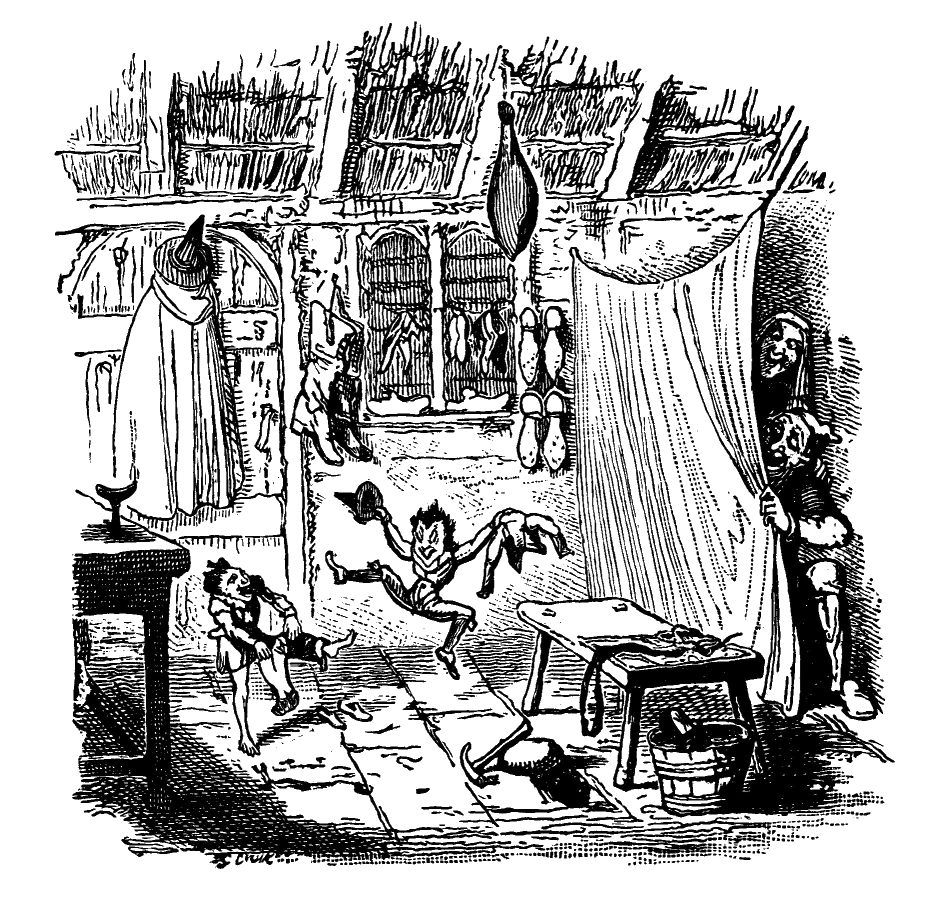
So my friend Kameron McBride (a BSU student and Midwest Writers social media intern) writes in his blog and makes the point that, indeed, writing doesn’t just happen like the cobbler going to sleep while the elves make the shoes. It’s sweaty, difficult, and painstaking work. We don’t (ever) wake up to a manuscript magically completed.

An illustration for the Brother's Grimm story "The Elves and the Shoemaker"
An illustration for the Brother’s Grimm story “The Elves and the Shoemaker”

So it’s a good thing we love it!

To be good at writing takes constant practice. Another BSU student and MWW social media intern John Carter discusses the importance of trying to create a schedule to keep him writing regularly over the summer. Then, of course, once “real life” is in place and summer vacation is a thing of the past (at least if you aren’t in academia), then that schedule and routine will be invaluable.

My friend L. Marie has been posting lots of writing process interviews. We writers must juggle life and overcome fear and discouragement. I love her post about this. (And, if you want more, read her whole lineup–especially if you’re into YA.)

Yep, this writing life is hard work–discouraging at times, frustrating, often unrewarded (except when we’re outstanding in our own minds).

And, like any skill, we need to work to improve. Sure, maybe some of us were born with an innate ability to put words together, but that doesn’t mean we shouldn’t continue to learn or to hone our craft. As Barbara Shoup (director of Indiana Writers Center and, incidentally MWW faculty this year) points out in this blog post, the craft can be learned if you’re patient and willing to work at it.

Work at it.

Here’s what my friend and mentor Cathy Day says about it:

Convincing yourself each day to keep going, this means that you are a writer. The world will be sure to declare, “You matter, but you don’t. Wow, your work is exciting, but yours is old fashioned and dull.” What do you do when someone says, “Eh, you’re okay, I guess.” Do you stop? Or do you keep going? That’s the moment when you know whether or not you’re a writer.

Cathy says, “You must do it simply because you want to.”

Kind of like what Mo Smith (yet another MWW social media intern) describes here.

And it’s hard work.

But therein lies the glory. We want to do it so much that we’re willing to work at it. To stare at the screen on the tough days. To get up early and write when that’s the only time available. To keep on plugging when it fights against us.

That’s the hard part for so many. I hate to sound like an old fuddy-duddy (even if I am one), but in a culture where crimes are solved in a TV hour and purchases are made immediately online and we get upset if someone doesn’t answer our text within 60 seconds–well, have we lost what it means to work at something tirelessly?

We each have to answer that for ourselves.

“May” I Say Good-bye to Short Story Month?

May, Short Story Month, is almost over.

A couple of weeks ago, I mentioned in my blog about my love for the short story and my personal aesthetic that constantly leads me that direction. I asked for some ideas from readers about favorite short story writers and got some great advice (thank you!). L. Marie (my great friend who writes YA Fantasy) mentioned Flannery O’Connor, Poe (I’m reading him right now in my Romantics class), and the Grimms (and not the guy on the TV show). Cathy Day directed me to a post on her blog titled “Toolbox Stories” where she rounds up a terrific list of the stories she has in her writing toolbox.

toolbox

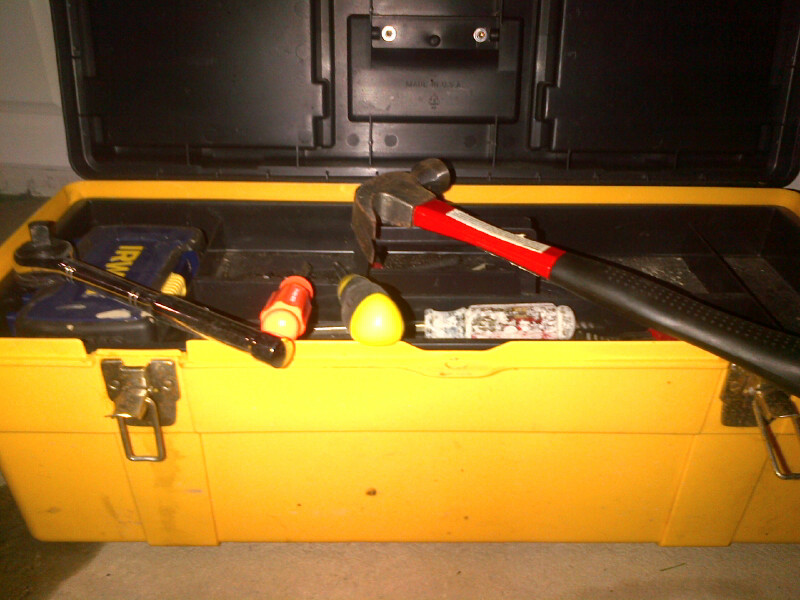
We all should have such a toolbox–those go-to stories that just do it for us. Maybe they inspire. Maybe they give us a new way to handle our plot line. Or maybe, as Cathy uses them, a specific story will help a writing student understand how to make his or her own story work better.

I’m working on my toolbox.

Some of my favorites? Ernest Hemingway (“Hills Like White Elephants”), Guy de Maupassant (“The String” is included in the anthology noted here, but my favorite will always be “The Necklace”), James Joyce (“Eveline”), William Falkner (“A Rose for Emily”), John Updike (“A&P”), John Steinbeck (“The Chrysanthemums”), and indeed Tobias Wolff’s amazing “Bullet in the Brain” . . . all included in On Writing Short Stories (Tom Bailey, editor). short stories

So as a roundup this week, I want to also thank The Missouri Review lit magazine which, this past month, has celebrated Short Story Month by writing a daily blog post about their favorite short stories. (If you want to start at May 1 and work your way through the posts, start here.) I’m intrigued by Angela Carter (Day 5), T. Corahessen Boyle (Day 9), Alice Munro (Day 22), and, of course, James Baldwin (Day 23).

There is so much to read, so much to learn. Some of my other favorite literary magazines have great short stories and essays that deserve further attention.

I’ll do my best to bring my favorites to you, some interviews, and even some advice as I learn as well. I’m working on filling my toolbox.

Short story month may be over, but my work is just beginning. I have a lot of learning–and writing–to do.

What about you? How’s your writing coming this summer?