Building an Author Platform – One Board at a Time

The students in my “Building Your Author Platform” class have been busy. We spent the first couple weeks of this class figuring out who we are as writers and who we need to be out there online. They thought about what they write, their interests in both reading and writing, where they want to take their writing, and who they want to meet out there and add to their “tribes.” I have a couple of students who write psychological horror/thrillers, several who write fantasy/sci-fi, a Star Wars fanatic, some YA writers, a student who doesn’t want to write but wants to promote books (bless her!), a scientific writer (she even has a moth of the month you can learn about!), and a couple who are also just multi-talented and still figuring it all out.

They then built their websites to go along with the sort of “brand” they’re creating of themselves. Then, following principles of literary citizenship, we’ve talked about how the best way to “network” is not to “network” per se but to simply to be interested in what other people are doing. They’re writing charming notes each week to someone they admire. They’re following and commenting on one another’s blogs and blogs of writers they admire and want to add to their tribe. They’re tweeting (and tweeting and tweeting and tweeting . . .).

I love it when a student stops by my office to say, “My tweet just got ‘favorited’ by my favorite author!” and they begin to realize that reaching out simply means a tweet, a retweet, or a kind comment on a blog. I want them to understand that, once they leave this college cocoon where they’re surrounded by likeminded writers who understand them, they will be out in the bigger world where, chances are, fewer people “get” them as writers. They will need that online “tribe” that continues to discuss the various virtues of the new Star Wars trailer or the plot line of the latest Brandon Sanderson book or whether their own character in the latest story is speaking in a believable way (“Let me just read you this . . .”). The tribe is a place where they can continue to join the conversation about things that matter to them.

Your platform--where is it taking you? How's the view?
Your platform–where is it taking you? How’s the view?

I tell them that they will need to attend a writers conference — hopefully once a year — to get recharged and reinvigorated. They will need to continue to buy and read books (that doesn’t seem to be an issue with this group).

This past week we also listened to the pitches of those students who have books in the works. I wanted them to both practice writing proposals and pitching those proposals to agents. Half the class is in that position, so the other half acted as agents and I gave the authors five minutes to sit down in front of an agent, give their book’s synopsis, and be calm and professional all at the same time. It was great practice for that opportunity they will have sooner or later to actually pitch that finished book.

Platform building isn’t all about me, myself, and I — which I think is why many people are scared of it. No, platform building is about building a network of likeminded folks both in your physical world and online — caring about them, sharing their work and their words, joining the conversation, and rejoicing with the successes that happen in the group. Then, one day, when success comes knocking on my students’ doors (as I have no doubt it will), they have a group ready to celebrate with them.

One board at a time. Reach out to your favorite authors in your genre. Thank them for something. Comment on their blog posts. Share your work and your thoughts on your own blog. Take your time, because it will take time. But the time to start is now–even if you don’t have a book to sell. Just go out there and join the conversation. You have something important to say.

Word Power

I tried an experiment in one of my writing classes this past week. We’re talking about the power of words and learning to, as Francine Prose writes in her book Reading Like a Writer, “put every word on trial for its life.”

We looked at the words used (and not used) in Cynthia Ozick’s ‘The Shawl.” (They were amazed to realize that the word “Nazi” is nowhere in the story, even though that’s what it’s about and they knew that’s what it’s about, even without that word and many others one might expect.) We studied the descriptions of place and people in Guy de Maupassant’s, “The Piece of String.” We watched how Flannery O’Connor chose words and led us along in “A Good Man Is Hard to Find.”

Then I read them some quotes from one of my recent favorite books, Markus Zusak’s The Book Thief. Here are some of the beautiful, lyrical lines:

When the train pulled into the Bahnhof in Munich, the passengers slid out as if torn from a package.

All was dark-skied and hazy, and small chips of rain were starting to fall.

In Liesel’s mind, the moon was sewn into the sky that night. Clouds were stitched around it.book thief

That was when a great shiver arrived. It waltzed through the window with the draft. Perhaps it was the breeze of the Third Reich, gathering even greater strength. Or maybe it was just Europe again, breathing. Either way, it fell across them as their metallic eyes clashed like tin cans in the kitchen.

<a scene of the Nazis burning books> The orange flames waved at the crowd as paper and print dissolved inside them. Burning words were torn from their sentences.

The cold was climbing out of the ground.

Snow was shivering outside.

The window opened wide, a square cool mouth, with occasional gusty surges.

Pimples were gathered in peer groups on his face.

I love how Zusak uses words, putting them together in surprising ways to make descriptions that are exact and yet so unusual and unexpected. It’s that very unexpectedness that delights me.

So we did an exercise in class. I gave students four small pieces of paper. On each paper they were to write a word — two papers would have adjectives, two papers would have nouns. Any adjective, any noun. I gathered the papers into two piles, shuffled them, and then each student chose one adjective and one noun and had to find a way to use them together in a sentence.

We got “chilling sun” and “soft children” and “shiny dream.” And the students wrote amazing new sentences, allowing these unusual pairs to work together.

In a weekly journal post, one of my students wrote, “I liked the adjective and noun game. Combinations like chilling sun made me think about the ways I described things throughout the week. Instead of relying on easy, conventional descriptions, I searched for different, more unusual word pairings that still made sense.”

Couldn’t have said it better myself!

What are some of the most lyrical, surprising, and unexpected sentences you’re read — and where did you read them?

The Writer’s Craft–Learning from the Best

That’s it–The Writer’s Craft. That’s the name of a required class in our Professional Writing department at Taylor University–a required class that I will be teaching for the first time this fall. I’m so excited to teach this class because we’re going to read great writing, unpack it, understand what makes it great, and learn what we can use to improve our own writing.

ProseThe class has traditionally used Francine Prose’s book, Reading Like a Writer: A Guide for People Who Love Books and for Those Who Want to Write Them (New York: Harper Perennial, 2007).

I love this book because it gives examples of great writing in areas of words, sentences, paragraphs, narration, character, dialogue, details, and gesture. All of this is studied by way of what she calls “close reading,” taking the time to annotate a chosen text and study it carefully.

So I’m excited to bring to the students stories from John Steinbeck and Ernest Hemingway and Flannery O’Connor and John Updike and Tim O’Brien and Edgar Allan Poe and James Joyce and Anton Chekov, among others. I can’t wait to have my students do close reading of amazing writing, discuss it, learn from it, be inspired by it, use it.

I’m just a little thrilled to teach this class.

It is important that writers read “textbooks” about writing–and those textbooks are the great works that have stood the test of time. Prose (don’t you just love that the author’s name is “Prose”?) writes that these great works are “textbooks, private lessons in the art of fiction” (3). What is it about this piece of writing that makes it great? that has stood the test of time? that makes it classic? She continues, “A masterpiece can inspire us by showing us how a writer does something brilliantly” (11).

We’re not going to look at the big picture–the why of the writing. Instead, we’re going to focus on the mechanics, the how. What words does the writer use? How are those words making this piece sing? What about sentence structure? Paragraphing? How is this dialogue telling us the story without telling us the story? (For the last one we’ll read Hemingway’s “Hills Like White Elephants.”)

In his wonderful little book Steal Like An Artist, Austin Kleon talks about making sure we artists surround ourselves with other great artists (I talked about this book more in this post). He advises us to be collectors, collecting the things we love.

You’re only going to be as good as the stuff you surround yourself with. My mom used to say to me, “Garbage in, garbage out.” It used to drive me nuts. But now I know what she meant. Your job is to collect good ideas. The more good ideas you collect, the more you can choose from to be influenced by. (13-14)

Seeing yourself as part of a creative lineage will help you feel less alone as you start making your own stuff. I hang pictures of my favorite artists in my studio. They’re like friendly ghosts. I can almost feel them pushing me forward as I’m hunched over my desk.

The great thing about dead or remote masters is that they can’t refuse you as an apprentice. You can learn whatever you want from them. They left their lesson plans in their work. (17)

So we’ve got our readings, our lesson plans, our pens, and our desire to collect and learn from the greats.

Can’t wait!

What great writers or particular pieces of writing have inspired you?

It’s Hard to Say Good-bye: The Annual Heartache of a College Instructor

When I signed on to teach at the college level–first as an adjunct and now as a full-time instructor–no one told me that every year in May I was going to experience the heart-throbbing pain of good-byes.

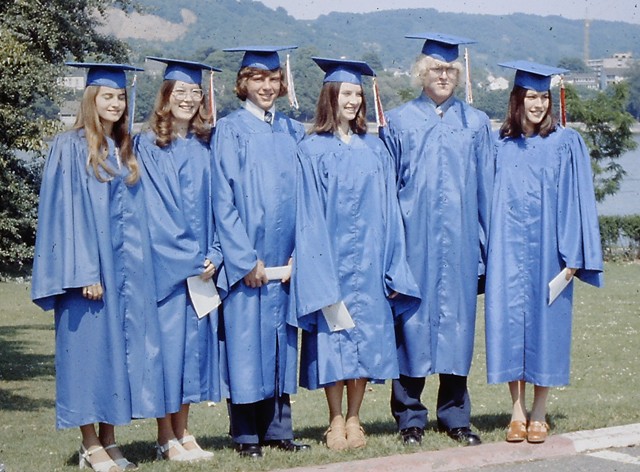
Don’t get me wrong. I’ve said a lot of good-byes in my life. I grew up as a military kid and we moved a lot, so good-byes were pretty standard fare. I went to high school in Bonn, Germany, at what was then Bonn American High School (Go Crusaders!). After our class of fifty-some students moved the tassel in 1976, we scattered all over the globe (literally–and I am using literally correctly).

Some of my fellow graduates. BAHS 1976. That's me second from the left. Our tassels were red, white, and blue to commemorate America's 200th birthday.
Some of my fellow graduates. BAHS 1976. That’s me second from the left. Our tassels were red, white, and blue to commemorate America’s 200th birthday. By the way, that’s the Rhine River behind us.

Then, after college, I said good-bye again to dear people who had been my roommates, my suitemates, fellow residence staff, professors, and friends.

Good-byes are never easy.

So no one warned me that now every year I would have to say good-bye to an entire group of students that I had come to love–literally. Students I had watched grow into great writers. Students I had talked to about their future dreams and plans. Students I had prayed for and with, cried with, laughed with. Students who, each year, taught me a little more about myself.

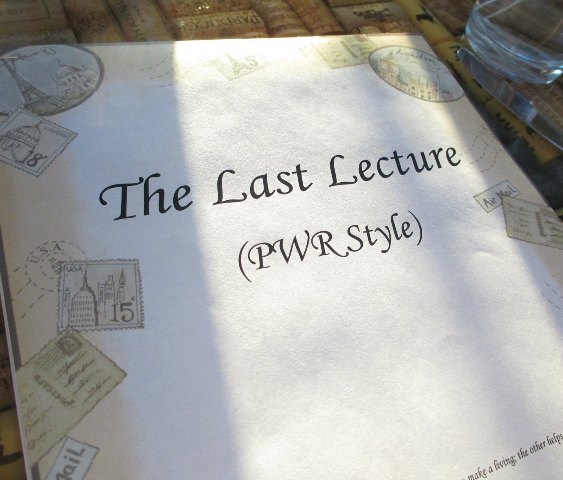
This evening we had a dinner to honor our seniors. Yesterday one of them asked that each of the profs in the department provide a letter to all of them, a “last lecture” of sorts. We wrote those letters, and she put them into a packet for each senior.

I thought long and hard about my letter. Writing should be easy, right? I’m a writer, right? But what do I say? What words of advice can I possibly give to these young people moving the tassel and scattering to the winds?

I told them to expect bittersweet. Graduation has been in their sights for years–but when it comes, it also means good-bye. And that’s hard. It means for the first time in four years they may not know where they will be come August. That can be frightening.

I told them to expect loneliness and confusion. Even if life is mapped out, even if there’s a job or grad program waiting and a wedding in the works, there will be times when they will miss the craziness that is dorm life. They’ll wonder if they’re making the right decisions. If they’re still job hunting and spouse hunting, at times the loneliness can be overwhelming.

But lest you think I’m Negative Nellie (or maybe just Realistic Rachel), let me assure you, I am all about the positive. I just want them to not think they’re alone when those feelings hit.PWR10

I also told them to keep the faith. Follow their path and stay close to the God who brought them this far and has a plan.

I told them to live this crazy adventure called life to the fullest.

I told them to keep writing and to expect rejection (yes, Realistic Rachel, it happens all the time) but to keep writing anyway.

I told them to stay in touch with one another and to continue to encourage one another in life and in writing.

I told them to find their tribes “out there” and to go to writing conferences just to remember what it’s like to be around a writing community.

I told them that they have a gift–the gift of words. Open it, enjoy it, share it, use it.

Good-bye, dear seniors. Thanks for being part of my life.

The Tax Man Cometh . . . and He’s Here to Help

If you’re like me and you’re a word lover, the IRS tax forms with all their lines and numbers send you into a panic attack. I get it. No matter what political persuasion you are or whether taxes bring you joyous refunds or difficult fees, filling out the dang forms can be a stressful endeavor.

If only you could get help—good help, help who knows what they’re talking about. If only there was a website that would answer your questions about your life as a writer and whether or not all of those expenses count on your tax returns (even if that long-sought-after royalty check has yet to arrive . . . or be promised).

Today, my friends, “if only” is here. I offer a helper whose passion is Tax Solutions for Writers (which also happens to be the name of his website). Gary Hensley was an accountant for his entire life, an IRS agent and auditor for part of it, and one of the guys who answered the phone for TurboTax if someone needed help.

He knows whereof he speaks. [Update: Gary Hensley passed away in 2018.]

Every year, our Professional Writing department at Taylor University invites Gary to talk to our students about acting like writers and filing their taxes as such. (In addition, you can catch Gary every year at numerous locations, including Midwest Writers Workshop where he is always one of our most popular speakers.) Or you can go to his website that has every question you can think of, and many you probably haven’t.

Here are just a few things I have learned from Gary about handling my tax returns.

(1) You don’t need to be an official “business” to be in business as a writer and to file a Schedule C for deductions. If you are busy writing (sending out articles, researching that novel, attending conferences to improve your skills), you are a writer and should treat yourself as a professional on your tax return.

(2) Purchase a $5 planner that you can carry with you. In it, document every single activity that you do that shows your activity as a writer. Write down what you did at your desk (your home office area) each day. Track the time you spent writing and what you did. This separates you as an active writer (even if you’re not published) from someone who is sitting around thinking he’d like to write a book someday. You are actively writing. That makes you a writer.

(3) Then use those daily slots to document writer expenses. Maybe you subscribed to a particular magazine or website to help you with information for an article or book. Maybe you attended a conference. Maybe you purchased books about the topic you’re writing about or simply to improve your writing skills. Then, of course, find a place to keep those matching receipts.

(4) In that diary, also keep track of mileage for writerly activities (not just miles, but write in the actual odometer readings to and from anything that had to do with your work—and write next to it the business/writerly purpose for your trip). Perhaps you drove to the library to do research. Maybe you drove to interview someone and purchased lunch for you both. Track the mileage to that writers conference.

(5) Get a separate bank account for your business that has a debit card attached. Again, you don’t need to be an official DBA or LLC or Ltd. or anything. But this particular bank account holds only the money that you earn as a writer (yes, even that $35 for the column you wrote), and it tracks anything you purchase for your business (printer paper, stamps, books, conferences). Maybe you don’t have income, or nothing really worthy to call that. Doesn’t matter. Get in the habit of separating out your writer life from the rest of your life. I know, you may need to lend yourself money back and forth in order to cover a business expense (like a conference—the $35 article won’t cover that), and Gary explains how to do that on his website. The point is to keep your writerly income and out-go separate from the rest of your household.

All of this documentation will make it easier both when you go to fill out next year’s form and if you ever get audited. These expenses are deductible on the Schedule C, so you want to take advantage of them and you want them to be accurate.

I know. The forms are difficult, but it’s time to take hold of your writer self and claim your professional status. Check out Gary’s website for answers to other questions.

And go purchase that journal to track this year’s activities! (Oh, and write down the odometer reading before you go and when you get back!)

Great Editors: Betsy Lerner Helps Writers Understand Editors

I love this book and was so excited when I found it a few years ago. I go to it often and read excerpts to my editing class. Betsy Lerner created a product that helps writers understand editors and vice versa. Titled The Forest for the Trees: An Editor’s Advice to Writers (Putnam, 2000, updated 2010), the first section of this book describes some general types of writers, and the second section peeks behind the editor’s desk and into the publishing world. Lerner knows wherof she speaks having been an editor for fifteen years before becoming an agent. forest She says, “This book is about what I’ve seen and what I know. I wrote it to help writers achieve or get closer to their goals. At the very least, I hope that in contemplating your life as a writer you may get some perspective on your work and in gaining that perspective, see the forest for the trees” (9).

I teach my students that, as editors, they are working in tandem with authors–Betsy describes it as an intricate dance.  The manuscript arrives on the editor’s desk. The editor will close the office door (or bring the manuscript home where she won’t be interrupted, she hopes) and sit back to read through the entire manuscript–either electronically or on hard copy. The scary red pen may be wielded–perhaps on the manuscript itself but certainly on a nearby notepad. She’s taking notes about first impressions–what’s working and what isn’t, what’s clear and what isn’t, when the pacing seems slow or a character seems out of place. She’s not correcting grammar or sentences; she’s seeing if the book in its entirety works.

The best editor is a sensitive reader who is thinking with a pencil in her hand, questioning word choice, syntax, and tense. An editor is someone who probes the writer with insightful questions, who smooths transitions or suggests them where none exist. A good editor knows when the three pages at the beginning of a chapter are throat-clearing. Start here, she’ll mark in the margin, this is where your book begins. And she’ll know when you should stop, spare you from hitting your reader over the head as if your point were a two-by-four. (194)

A good editor is careful. She needs to explain her point clearly and she needs to be respectful of the author. She knows that it’s never easy for an author to finally turn in a completed manuscript only to have it come back covered in comments and suggestions.

Editing is a science and an art. There is a basic architecture to every book, and if the author has a wobbly narrative leg or an insufficient thesis to stand on, the editor must find the blueprint or create one. What an editor learns as she gains experience is that while no two manuscripts are exactly alike, certain predictable patterns crop up, and as with math problems, the more experience you have, the more readily the solutions appear. (196)

I tell my students that, while they may see the problem in the manuscript clearly, they need to be careful and kind when making the suggestions. The best editors build trust with their authors by giving positive as well as negative feedback. They need to be respectful of the words (most of my students, writers themselves, understand that). In short, they need to be good dance partners. But then, so does the author. If you’re fortunate enough to be working with an editor, trust that person. Yes, it’s still your book, but the editor is going to be your very best reader. No one else is going to read your book with the same attention and care. Let your editor help you, as Betsy Lerner so aptly explains, “see the forest for the trees.”

Tell me about your experiences with editors. How have they helped your manuscript improve?

Editors Are People, Too (Just So You Know)

As a writer myself, I totally understand the frustration of trying to read an editor’s mind and understand the why behind lengthy edits or outright rejections. What’s going on?

I’ve been encouraging my professional writing students to be aware of and submit to literary magazines as an outlet for their creative writing. Some of them were only aware of a few such locations to send their writing, others didn’t know about lit mags at all, others knew only about contests and didn’t enter often because of the submission fee. But with the thousands of literary magazines out there (I just discovered Duotrope and used it to help me locate lit mags that publish in my genre), anyone can build a list of locations for future submissions. Literary magazines don’t generally pay (although a few do), but the by-line and exposure are invaluable. So this semester, each of my students will be researching lit mags and building lists.

As with any publishing house, however, the writing needs to pass muster for any number of reasons in order to get published.

That’s why I love this article by Savannah Thorne over at one of my favorite websites for following the world of literary magazines, “The Review Review” (and thanks to Becky Tuch for creating it!). Savannah was accepted for publication in a literary magazine called Conclave: A Journal of Character, only to find that the magazine was possibly going to close down. So she took the amazing step of taking it on as managing editor and turning it around.

Her article, “What the Editor Sees (That the Writer Does Not)offers wonderful insight from a writer turned editor into the world of editing a literary magazine. She describes for writers what happens after you’ve hit “submit.” And why it takes so long to hear back. And what you should do when you get a rejection. And why you should keep trying. And, yes, why it takes so long to hear back.

I’ll wait while you click on the link above and read her article . . . [pause for a refill on whatever I’m currently drinking]

What’s the takeaway? Do your research, write well, keep on writing, keep on submitting. Editors have any number of reasons for accepting some pieces and rejecting others–and often it’s just a gut feeling about a particular piece.

As I said in this post about how editors really aren’t “failed writers” with, as Martin Eden would say, nothing but failure in their past causing their desire to make life miserable for writers who are still trying. Instead, editors are slogging through piles of submissions, many of which are probably great, looking for the excellent, something that sings to them, something that they want to publish in the magazine about which they care so much.

No, you can’t know what that is necessarily. But write your best. Get critiqued. Keep writing. Keep submitting. If someone rejects it, try somewhere else.

Don’t give up, my friend. Keep writing what is truly you. As Herman Melville once wrote, “It is better to fail in originality, than to succeed in imitation. He who has never failed somewhere, that man cannot be great.”

Great Editors–Sol Stein Helps Us Learn to Edit Ourselves

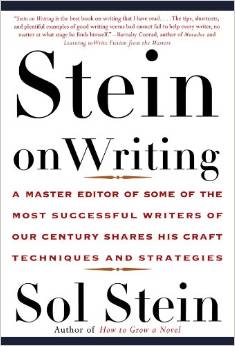
I just finished reading Sol Stein’s excellent book, Stein on Writing–A Master Editor of Some of the Most Successful Writers of Our Century Shares His Craft Techniques and StrategiesI found myself marking passage after passage, “This will be great to teach my students in my feature article writing class,” or “Wow, that’s a real encouragement to me,” or “I never thought of it that way before.”

Born in 1926 and now 88 years old, Sol Stein founded the book publishing firm of Stein and Day in 1962 which operated until 1989. During his tenure there, according to his website, Stein “edited and published some of the outstanding writers of the 20th century, including James Baldwin, David Frost, Jack Higgins, Elia Kazan, Dylan Thomas, Lionel Trilling, W. H. Auden, Jacques Barzun, and three heads of state.”

Describing his editing of Elia Kazan, Stein says,

The author I have spent more time editing than any other is Elia Kazan, winner of two Academy Awards and director of five Pulitzer Prize Stein on Writingplays who turned to fiction and became a number-one bestselling novelist. In his autobiography Kazan said, “I was now in a new profession. My publisher Sol Stein was my producer, and my editor Sol Stein was my director. . . . He saw quickly . . . that I delighted in saying the same thing over and over, thereby minimizing its impact (‘One plus one equals a half,” Sol would say’).” (205)

Throughout this book, Stein offers advice to writers of both fiction and nonfiction on the basics of plot, pacing, dialog, characterization, and just plain how to be a better writer and get noticed by editors. To flesh out the concepts he teaches, Stein uses anecdotes from his editing of great writers and from working with students in his classrooms. Speaking of his advice to Kazan:

Eliminating redundance was an important factor in [Kazan’s] novel The Arrangement remaining number one on the bestseller charts for thirty-seven consecutive weeks. . . . Catching “one-plus-ones” is a function of what is called “line editing.” Shouldn’t writers rely on editors to catch things like that? The hard fact is that editors do a lot less line editing than they used to. If a novel requires a lot of line editing, it is less likely to be taken on by a publisher, who has to consider the cost of editing. Which is why it is incumbent upon writers to become, in effect, their own editors. (205-206)

I know, I know. You want to be a writer. And I do know how difficult it is to see the forest for the trees. And, yes, you do indeed need readers in a critique group, you need editors and copyeditors who will see things that completely escape you. But here’s the deal. Write that article or essay or book and then let it simmer for awhile. Go away from it. Let others read it. Reread it yourself–slowly, carefully, out loud. If you’re fortunate enough to get published, editors and copyeditors will still bleed red ink all over it (or at least Microsoft Word comments), but it won’t be because you didn’t do your job.

Stein continues:

The biggest difference between a writer and a would-be writer is their attitude toward rewriting. The writer, professional or not, looks forward to the opportunity of excising words, sentences, paragraphs, chapters that do not work and to improving those that do. Many a would-be writer thinks whatever he puts down on paper is by that act somehow indelible. . . .

Judith Applebaum quotes Hemingway as saying to an interviewer, “I rewrote the ending of A Farewell to Arms thirty-nine times before I was satisfied.” Asked what stumped him, Hemingway said, “Getting the words right.”

Of the most successful authors I have worked with, I can think of only one who fiercely resisted revising. . . .Unwillingness to revise usually signals an amateur. (277)

Sure, we all want to be published. Sure, we’re in a hurry to get our words out into the world. But let’s make that writing, when published, something of which we can be proud.

Like Hemingway, let’s take our time getting the words right.


What Martin Eden (aka Jack London) Teaches about Writing and Editing

As I continue to write about editors and editing, I came across some very interesting insights in Jack London‘s masterful work, Martin Eden. Written as a thinly veiled autobiography, the story follows a low-class man and his desire for self-improvement in order to impress a high-class woman with whom he has fallen in love. He reads voraciously; learns language, grammar, and syntax; and teaches himself manners, politics, and philosophy. Eventually, he decides to become a writer–after all, he has many stories to tell from his travels around the world as a sailor.

Alas, every story he sends in is rejected and returned in what we would call the SASE (self-addressed stamped envelope). For years, he toils. He goes back and rereads the magazines to which he’s submitting to discover the “secret formula” for getting accepted. He spends hours and hours working at his craft, steadfastly refusing to bow to pressure from the woman he loves (and everyone else in his world) to just “get a job.”

He knows he’s a writer. He can feel it in his bones. He knows he has stories to tell, and he knows his stories are better than anything he’s reading in the magazines.

His money runs out. He barely survives. And the rejections keep coming. Martin begins to wonder:

He began to doubt that editors were real men. They seemed cogs in a machine. That was what it was, a machine. He poured his soul into stories, articles, and poems, and entrusted them to the machine. . . . There was no human editor at the other end, but a mere cunning arrangement of cogs that change the manuscript from one envelope to another and stuck on the stamps. (160-61)martin eden

The chief qualification of ninety-nine percent of all editors is failure. They have failed as writers. Don’t think they prefer the drudgery of the desk and the slavery to their circulation and to the business manager to the joy of writing. They have tried to write, and they have failed. And right there is the cursed paradox of it. Every portal to success in literature is guarded by those watch-dogs, the failures in literature. The editors, sub-editors, associate editors, most of them, and the manuscript-readers for the magazines and book-publishers, most of them, nearly all of them, are men who wanted to write and who have failed. And yet they, of all creatures under the sun the most unfit, are the very creatures who decide what shall and what shall not find its way into print–they, who have proved themselves not original, who have demonstrated that they lack the divine fire, sit in judgment upon originality and genius. (322-23)

Ever felt that way as a writer? Ever felt like the editors either don’t exist or are simply cogs in machines that send out nothing but rejections?

As an editor, I do have to take a bit of offense that Martin sees me as “unfit.” But as a writer, yes, I have at times wondered if anyone with any taste receives–and rejects–my queries, my articles, my blood-and-guts pieces of creative nonfiction.

I’m sure many writers feel the same.

But let me put in a little bit of a plug on behalf of myself and my editor friends.

  • We truly do want the very best writing. But, you need to understand how subjective that is. It’s a gut reaction to a piece of writing. And if you get rejected one place and you really believe in your piece, keep trying.
  • Everything needs to be edited–everything. Trust us. We will work with you to make your writing the best it can be.
  • Editors are human, and each one of us is different. No two editors will edit a piece the same way. Take the advice, but also understand that we are in a conversation with you when we edit.
  • We are busy. Sure, no one wants to wait months for a response, but we’re reading hundreds (sometimes thousands) of pieces. Hence, the form letters that get returned in your SASE. We simply don’t have time to give personal responses to everything. (That said, if you get any kind of response–such as a quick hand-written note on that rejection letter–take that as a huge compliment and keep on trying with that editor.)
  • And generally we aren’t failed writers who defaulted to editing. Many of us write on the side (and get the same treatment from fellow editors). There’s no club. Our work has to stand on its own, just as with everyone else. Many of us have no desire to write at all–editing is our calling and we’re committed to that.
  • Rejection doesn’t mean failure. A piece can be rejected for any number of reasons. It may be that your writing isn’t good–but if you’re in a critique group and you’re taking advice, that probably isn’t the case. It could be things you have no way of knowing–maybe a story like yours has already been accepted and now yours isn’t needed. It could be that gut thing I wrote of above.
  • We really do care about the submission guidelines, the formatting advice we give you, etc. Read these guidelines and follow them. Because we receive hundreds of manuscripts, if it’s apparent you can’t follow the simplest guidelines, then we won’t take the time to read what you sent.

Eventually, Martin Eden does find the success he so long sought, but it comes at a price. He discovers the down side of fame and some of the hypocrisy in publishing, which begins his undoing.

Bottom line, Martin Eden teaches us that it takes persistence, faith in yourself, and hard hard hard work to be a writer.

Don’t give up. Don’t let the editors get you down. Realize that they aren’t “rejection machines.”

Nothing’s perfect, but work with us. Your great writing will find its home.

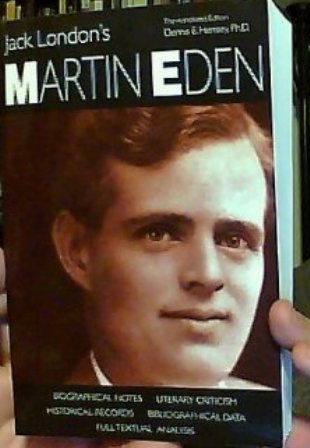
Quotations taken from Jack London’s Martin Eden: The Annotated Edition by Dennis E. Hensley, Ph.D. Upland, IN: Taylor University Press, 2006. This edition is pictured above.

Great Editors–Robert Loomis at Random House

My decision to use my blog to focus on the unsung heroes of publishing–the editors in the trenches–has sent me on an adventure of websites and book reading and rather intense study. But I am loving every minute of it. It’s just not all happening as quickly as my self-imposed blogging schedule might like. But I’m learning along the way about what makes great editors, and I want to pass what I’m learning along to you.

In any case, my trail led me from Maxwell Perkins (see Part 1 and Part 2 of my homage to him) to Bennett Cerf (one of the founders of Random House publishers, more about him later) to Robert Loomis, legendary editor at Random House who retired in 2011 after 54 years.

Right there. That should make him a hero.

You’ve probably not heard of him. But chances are, you’ve heard of some of the people he edited, such as Maya Angelou and William Styron (Loomis edited Sophie’s Choice, among others).

Indeed, the title of an article in The New York Times about his retirement announcement captures his essence: “Nurturer of Authors Is Closing the Book.”

The New York Times article says that upon hearing of his retirement, Maya Angelou said in an email, “Robert Loomis has been my editor since 1968. He has guided and encouraged me through 31 books. I can’t imagine trusting a manuscript in the hands of anyone else. I am not finished writing, so I cannot let him retire.”

That’s the kind of relationship great editors have with writers. The writers need those editors. They love them. They entrust their works and words to them. They know those editors make them that much better as writers. As the article title says, great editors are nurturers of writers.

In fact, from The New York Times archives is this tidbit from “Making Books; Familiarity Breeds Content“:

But while the news accounts go to the authors and editors who pop from one publishing house to another, the less celebrated but more interesting tales are those of continuity and loyalty. Sometimes they even become the stuff of literary legend.

Which brings us back to Ms. Angelou. Her editor is Robert Loomis, an executive editor at Random House, one of publishing’s hall of fame editors. “We are an item,” Ms. Angelou said. ”I would go with Bob if he left and went to a university press. He knows what I hope to achieve in all my work. I don’t know anybody as fierce, simply fierce, but he’s as tender as he’s tough.” . . .

Here’s an insight to a writer-editor relationship. Ms. Angelou said: ”He’s a nuisance. He asks these questions: ‘Why did you put a semicolon there, to give the thought some breath? Is that the word you really want?’ I’ve said to him many times you’re bullheaded, I’ll never speak to you again and then I send him night letters or telegrams telling him he’s right.

”When he finished the manuscript of my last volume he said: ‘Maya, thank you. This is great.’ In 33 years he never used that word for me. Great is good to him.”

In fact, Bennett Cerf, co-founder of Random House (did you know they were so named because they printed “random” books?), counted on the relationships his editors had with their authors to bring those authors into Random House and onto their publication lists. If Random House was able to lure an editor away from a competitor, often that editor’s authors came along.

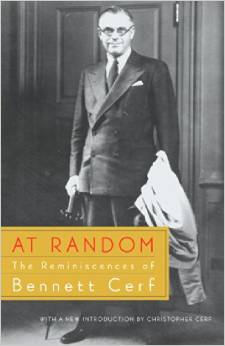
at random

In his book, At Random: The Reminiscences of Bennett Cerf (Random House, 1977), Cerf describes great editors like this:

A good editor, I think, like a good author, has to be born with some of the necessary talents, like a good memory and some imagination. But he also needs to have acquired a fairly broad range of interests, a working knowledge of the English language and a good supply of general information–the more the better–so that he can understand what an author is trying to do and be of help to him in doing it. An editor has to have read widely enough to be able to recognize and appreciate good writing when he sees it. . . .

An editor has to be able to get along with authors–which is not always easy. When the relationship is a good one, an editor can be extremely helpful by serving as a kind of sounding board for an author’s ideas and intentions, and by making suggestions aimed at sharpening and clarifying what the author wants to say. Also, the editor can be of value in pointing out parts of a manuscript that should be cut out because they are repetitive, or dull, or unnecessary. (219)

Being a good editor means caring about books, caring about language, and being a constant learner. Being one of the greats takes perseverance, relationship-building, honesty coupled with kindness, and a big dose of nurturing.

All of that because of a deep desire to help an author write the best book possible.