How do I become an editor? (Part 1)

I’ve had several students take my Editing class and end up saying that it was that class that helped them discover what they wanted to do for a living. They’d been casting around, trying to be writers, and realizing that their love for words did not necessarily translate into becoming the next great American novelist. But give them a fresh manuscript to respond to, to make suggested changes on? They were off and running. They discovered that their love for words—both as readers and as writers—helped them be able to consider a manuscript, see the places where it fell short, and make suggestions. They wanted to become editors.

In my Editing class, we cover all stages of editing. I explain to my students that they probably won’t naturally enjoy all three of them—content editing, copyediting, proofreading—instead, they’ll probably take to one over the others. Inevitably, by the end of the class, some have discovered that they love the big-picture editing; others really liked the grammar portion of the class and wanted to copyedit because they can get in and mess with the sentences; others particularly enjoyed the proofreading we did on PDFs because they loved looking for errors.

It’s natural to gravitate to a particular form of editing. However, if you truly want to try to do this as a potential career, your starting point is going to be in the area of copyediting (more on that in upcoming posts). Rarely do content editing jobs open up without requiring several years of experience. However, that doesn’t mean, if this part really does come naturally to you, that you can’t do this as a freelancer.

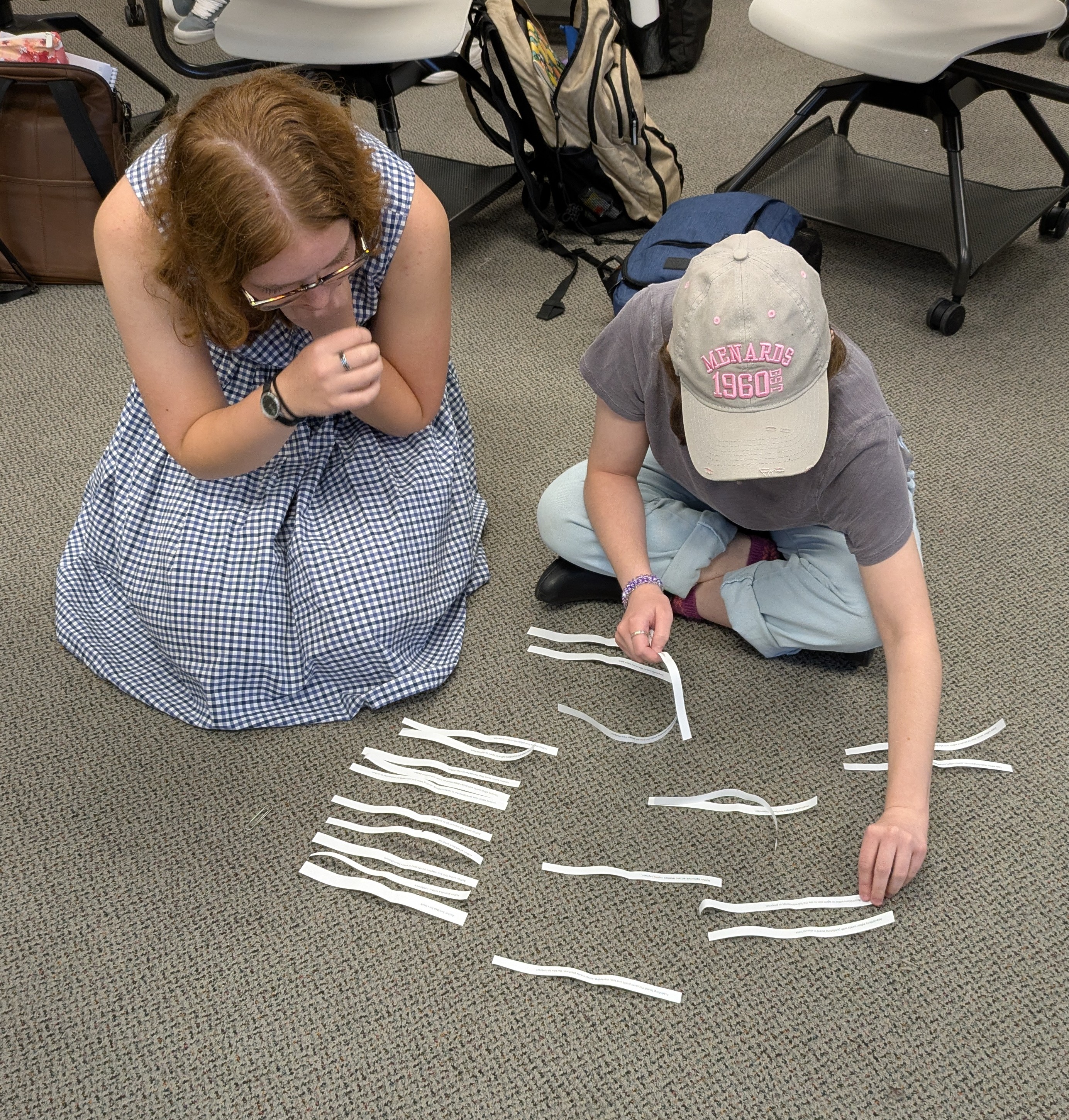
Learning the phases of the book editing process and putting them in the correct order.

Of course, some students realize that they don’t like any of it and just want to stay on the other side of the table as writers. That’s fine. I tell them that at least the class gave them an understanding of what editors do so that, if and when they get a book contract, they’ll understand how their editor is trying to help them.

So whether you’re thinking of hanging out a shingle and doing freelance editing, or if you’re looking for a job at a publication of some kind (whether books, newspapers, or magazines), over the next few posts, I want to share with you key things to do to help you become an editor.

Content editing: the big picture

Let’s talk about the first pass on a manuscript: content editing. This has other names — sometimes developmental editing (which goes back a couple of steps and helps an author actually put together the book) or line editing. In any case, content editing is big picture editing.

For fiction: You’re reading for plot, setting characterization, rising action-climax-falling action (Freytag’s triangle), pacing, and theme. Do you want to keep reading? Is the story compelling?

For nonfiction: You’re reading to make sure the topic is covered well, that the book flows logically, that it’s written well for the target audience, that sources are noted and correct, and other things depending on the manuscript. If you’re working on a memoir, many of the factors you watch for in fiction also come into play.

Genres matter

Just as you may find yourself drawn to different types of editing, you will also find yourself drawn to different genres when it comes to what you like to edit. And you can gain expertise in those genres and focus your editing there.

For example, in nonfiction, content editing a memoir will be different from content editing a self-help book; in fiction, content editing a romance novel will be different from content editing a fantasy or sci-fi novel. Not that you can’t cross genres, but you’ll find a comfort zone and will be able to do your best work once you find it.

When content editing, it helps for you to understand how the genre works. If you love fantasy writing and understand it and hope to edit it, then continue to read lots of fantasy. Read your favorite fantasy authors, read blogs by fantasy writers, read the best of the best. And then, for good measure, read a few bad books as well so you can discern what is making the difference. When you’re marinating in a genre, content editing that fantasy manuscript will be easier because you’ll more easily see what’s missing and what will improve it. You’ll recognize the overused tropes and you’ll get a sense of what draws you as the reader into the story.

Of course, that doesn’t mean you should read only fantasy. Read widely. Read the classics. Read outside your favorite genre. Read nonfiction books about writing and editing. The more that you learn about the process for both writers and editors, the better content editor you’ll be.

Stay in your lane

When doing this pass, you don’t worry about grammar or spelling or sentence structure—instead, you’re reading to see how the whole book hangs together. Your mind can’t process the big picture elements if you’re also trying to correct grammar and punctuation along the way. Besides, you may end up having the author cut or revise whole sections of the book, making it a waste of time to copyedit the detail. Leave that for the copyeditor who comes next in the process after the manuscript has been finalized by the author and content editor.

Follow along in coming weeks for more on becoming an editor, focusing on the copyediting role.

The Splendid Work of Writing

I’ve been reading the essays of author Andre Dubus, considered a master of the short form. In his book, Meditations from a Movable Chair (New York: Vintage, 1999), Dubus writes an essay called “First Books” and offers this encouragement to writers:

An older writer knows what a younger one has not yet learned. What is demanding and fulfilling is writing a single word, trying to write le mot juste, as Flaubert said; writing several of them, which become a sentence. When a writer does that, day after day, working alone with little encouragement, often with discouragement flowing in the writer’s blood, and with an occasional rush of excitement that empties oneself, so that the self is for minutes longer in harmony with eternal astonishments and visions of truth, right there on the page on the desk, and when a writer does this work steadily enough to complete a manuscript long enough to be a book, the treasure is on the desk. If the manuscript itself, mailed out to the world, where other truths prevail, is never published, the writer will suffer bitterness, sorrow, anger, and more dangerously despair, convinced that the work is not worthy, so not worth those days at the desk. But the writer who endures and keeps working will finally know that writing the book was something hard and glorious, for at the desk a writer must try to be free of prejudice, meanness of spirit, pettiness, and hatred; strive to be a better human being than the writer normally is, and to do this through concentration on a single word, and then another, and another, and another. This is splendid work, as worthy and demanding as any, and the will and resilience to do it are good for the writer’s soul. If the work is not published, or is published for little money and less public attention, it remains a spiritual, mental, and physical achievement; and if, in public, it is the widow’s mite, it is also, like the widow, more blessed. (162-63)

dubus

Writers, we must endure. We must keep working knowing that the words we write are worth it . . . it being the process, the “splendid” work, the worthy and demanding work.

No one said it would be easy. No one said it would be a sure path to fame and fortune. But as writers, we must be true to ourselves, to our giftedness and our calling. We must reach and try and write and rewrite and reach again because it matters.

If we’re true to our giftedness, then we will continue to write — no matter whether published or not, read or not. It is the “widow’s mite” that we offer up, and we are blessed.


Little Libraries and Why I Love Them

When we moved from a city in Chicagoland that boasted a “Top Ten Library,” I somewhat despaired. That was the library where I diligently took my children a couple times a month. We routinely checked out and returned and checked out and returned piles of children’s books. This library did indeed have a stellar selection, the latest technologies, and wonderful ambiance.

We have since lived in two small towns in Indiana, both boasting libraries. I was thrilled to locate the first town’s library. I paid my twenty-dollar fee to be a member, only to look around and find rows and rows of romantic paperbacks. “We take donations,” the elderly volunteer behind the desk informed me.

Obviously.

This was not the “Top Ten” library I had made use of for the last 26 years of my life. This was a little town library with just enough money to keep going. That’s okay, I told myself. There were a few biographies and memoirs here I could read. I checked out Stephen King’s On Writing, returned it on time, went to check out another, and a new elderly volunteer asked me if I still had On Writing at home and would I please return it.

“I did, last week,” I told her. I had dropped it off across the street in the plastic box under the desk by the entrance to the video store—the after-hours drop box. “Look, it’s here, on the shelf.” I didn’t want her to exert herself, so I walked over, pulled the book from the shelf and brought it to her. “See? Returned and back on the shelf.”

“Oh, okay,” she said, as she clicked around with the mouse on the computer and tried to find the screen she needed. I didn’t want to start out my sojourn in this little town as the lady who didn’t return library books!

We’ve since moved to another small town that boasts a library as well. Again, mostly donations, but this one I could join for free — just needed to prove my town address. “Do I need a library card?” I asked naively.

“No, we’ll recognize you.”

swayzee library
Our local library. Courtesy of swayzeepubliclibrary.com

The library is in a repurposed brick two-story building that appears to have once been a church. (The bricked-in arches above what are now square windows give me that impression.) The library has been serving this and the surrounding communities for almost a century.

My grandsons and I recently walked the two blocks from our home to visit on a chilly Saturday afternoon. They enjoyed the large Lego blocks and the plastic car track. I wandered the stacks, excited to find many actual readable books (sorry, paperback romances do not translate into my world as “readable”). There are enough current books, memoirs, and reference books to keep me busy.

“We’re not fully computerized yet, but we’re working on it,” one of the volunteers told me.

The library is a gathering place — offering a knitting and crocheting circle, activities for elementary children, and various and sundry lessons.

On a shelf beside the front door are “free” books. (Isn’t that sort of like offering candy to a baby?) The librarian told me they were mostly duplicates among donations. I found a memoir to add to my reading collection. My grandsons each found a book to take home as well.

giphy

I love this little library. It’s clean and bright, and the folks are friendly. People drop in to make use of the free WiFi, pick up and return videos, send a fax, or read a magazine. While I was readying my grandsons to leave at closing time, the librarian kindly told me to take my time. “Someone just called and needs to use the Internet. I’m waiting for him.”

Yes, I have access to three huge university libraries, and I use them diligently for research and the love of my life: “inter-library loan.” Yes, there are websites that show me the “most beautiful libraries in the world” (swoon!).

But I think when I want to simply wander smaller stacks to find a new book to read, or when I want to repeat my earlier process and now take grandchildren to check out piles of books, we’ll walk the two blocks to our little local library.

What are you reading?

My Goodreads account is making me feel guilty.

At the beginning of this year, I made a goal to read 52 books and, well, it is letting me know in its calm yet non-confrontational way that I am “21 books behind schedule.”

Yikes.

I could chalk it up to, I don’t know … writing my own book, finishing my thesis, reading the thesis submissions from my cohorts in the MFA program, and moving ourselves to a new house.

Or maybe I was just lazy.

That’s sad news for someone who regularly lists her favorite hobby as “reading.”

So now I’m attempting to make amends, although since we’re a third of the way through September, I’m not sure I’ll reach my 2017 goal. And it certainly isn’t for lack of books to read. In fact, as I mentioned, we moved ourselves to a house in a new town. That of course meant packing up our many shelves of books. As we packed, I attempted to organize the books into boxes so that unpacking and placing them on new bookshelves would be an easier categorizing process.

We purchased 5 new bookshelves. A few of them are here on our sunny landing where I also have my work office and an old library table that doubles as my desk.

sunny landing

Then we bought a couple more shelves for our entryway:

IMG_20170818_165850783

And we have shelves in our bedroom. I have one shelf that is now dedicated to my “to reads.” In other words, as I shelved the books from the boxes, I set aside all the books that I’ve been meaning to read for a long time — books that were purchased and then made their way to various nooks and crannies and promptly were forgotten.

Now, this way, I always have my “to reads” right in front of me. Here’s a picture of my shelf.

IMG_20170910_180019432

It’s an eclectic mix of fiction and fantasy and memoir and nonfiction. There are 40 books on the shelf; reading half this shelf will get me to my reading goal.

But more than just meeting a goal, I’m excited to finally get through each of these books. They sit there in all their glory, promising so much.

Right now, I’m reading a book written by one of our Professional Writing graduates — a debut novel that won a prize from Simon & Schuster, was first an ebook, and then was released in paperback. I’m so proud of Chandler and what he has accomplished in his young life as a writer. It’s fantasy, so a new genre to me. I’m diving into The Facefaker’s Game.

After I finish that, then I’m on to another book on my shelf. No more looking around wondering what to read next. No more feeling at a loss. The shelf is there. When I finish one and move it upstairs to the other categorized shelves, I’ll have space to add another that I will inevitably purchase.

Because, no matter how far behind I get, I’ll just keep on reading.

What are you reading right now?

Addicted to Reading

I hyperventilate when I go into used bookstores. For thirty years my husband has dragged me to antique stores and the only saving grace to these excursions (where eventually every antique begins to look the same) is that sometimes the booths will have books. I zero in on these, turning my head sideways to read along the spines. I don’t feel the same way in my local Books-a-Million, although if I have to go shopping that’s where I want to go.

There’s just something about the smell of used bookstores and the possibility of treasures to be found. If I’m going to by one of the classics or a book on my list, I don’t want one of those repackaged recent releases or (God forbid) the ones that put on the cover not the person but the movie star playing that person (seriously, a book about Julia Child with Meryl Streep on the cover?). And I’m not all worried about getting first editions or signed copies. Instead, I just want to pick it up and know that I’m giving it new life. It was written (by hand, in the case of those classics), edited, typeset (when typesetting was really setting type), printed bound, and sent out into the world. Someone bought it and put it on a shelf. Sometimes that person’s name will appear handwritten inside the cover. Chances are, that person read it. I love it when evidence of that shows up with underlines or marginal comments.

I love the feel of those books. I will often buy it if it feels right in my hands. I look forward to reading it just so I can hold it and turn the pages. The last time the book felt that was when that person decades ago did the same as I am doing now. It’s a kinship. We read the same words, get engrossed in the same story, get pulled away into the world that writer created.

What is it that pulls us into books? Why do we read, anyway? In her book, Ruined by ruined by readingReading: A Life in Books, Lynne Sharon Schwartz muses about why we are willing to spend hours of our lives with tales others have spun.

I have read for so many years but, like Schwartz, I wonder at why it is I cannot recall so much of what I’ve read. Thus I’m glad to know that others have been in the same boat. Schwartz writes, “I don’t remember much of what I’ve read. My lifelong capacity for forgetting distresses me. I glance at a book on the shelf that I once read with avid interest . . . and while I struggle for the details, all I recall is the excitement of the reading. . . . What do I have, then, after years of indulgence? A feel, a texture, an aura.”

Precisely for this reason of forgetting what I’ve read (and the accompanying distress), a few years ago I gathered up some of those lists of “must read” classic books. I began to work my way through it, hoping to recapture the wonder. As I began pursuing an advanced degree in English, I realized that I had to be able to actually discuss the classic works, not just pretend that I had read them or, even if I had, pretend that I remembered them. So the past few years I dove into Moby Dick and This Side of Paradise and The Old Man and the Sea and Portrait of a Lady among many others of the great classics. Some I enjoyed. Some I wanted to pull my eyes out (hello, Moby Dick. I’m sorry. I probably need to turn in my credentials to speak such blasphemy). But I felt accomplished reading them and saying I’ve read them and being able to, while perhaps not remembering all the details (a problem I wish I could overcome, but maybe no one remembers every detail), at least remember the basic story.

And that makes me feel something.

What is that feeling? And why do I feel it? When I finish a classic work, I join a club—a club of readers across months or years or decades or centuries who also have gently opened the cover, absorbed the words, turned the pages, finished and imbibed the story. No matter what I do, it’s there forever. Of course, not all the details (as I’ve already established) but the story. I am forever changed, I have a new view on the world, I learned something.

That tends to be my “divining rod” (as Schwartz calls it) helping me work my way through the morass of books stacked in teetering piles in used bookstores. I go straight to the reference section to find books about writing that I can use in my teaching. Then I’m over in the classics, then memoir, then the books of essays. I have never been a reader of romance or popular fiction. (On a visit, I once picked up a copy of a Danielle Steele at my mother-in-law’s house. By the fourth page I was so appalled by the terrible writing I laughed out loud.)

When I read, I want to learn something. And if a book isn’t pulling me along with its lyrical writing or keeping me turning pages or giving me info that helps me see the world in a new way, then I’m not interested and am not above putting it back on the shelf unfinished.

Life is too short to read a bad book.

But I feel like I came late to the reading game. I wasn’t precocious. In fact, I remember being mortified that many of my fellow fifth graders were reading from the advanced areas of the reading box when I was down in the “average.” I stunk at math and hated science, but reading? I loved reading. I felt like I should have tested right into those higher levels. It didn’t make sense.

I didn’t go to grad school until I was in my fifties and felt the sting of both not having read the classics and not being “up” on even recent authors. So I made my list of the must-reads and began to work my way through it.

Now I read voraciously, as if trying to make up for lost time. Which I am. But, again, why? It gets back to that feeling of knowing¸ of learning. Is my life better for understanding the whaling culture explained to me (ad nauseum) in Moby Dick? Actually, yes, I think so. Do I have a better understanding of writing from studying The Old Man and the Sea and The Great Gatsby? I do indeed. Is my writing life inspired by the writing of Flannery O’Connor and  Ernest Hemingway and Anton Chekov? Yes.

In short, I read because it inspires me. Sometimes it is the grace of the writing. Sometimes it is the very encouragement I get to live better and be better and write better.

So tell me, what is it about reading that enthralls you?