The Melody of Our Manuscripts

He always arrived in a rumpled brown suit and a wide, striped 1970s-style tie. He would bustle in the door of our apartment in Germany, run his stubby fingers through his mop of gray hair, say “guten Abend,” and sit down in the chair beside the piano bench.

And I duly took my place beside him on the bench.

We opened the book.

I had one piano book when I studied under Herr Mueller. Not a book for scales or a separate book to write in and draw the little notes on the staff and practice making the G-clef. I was way more advanced than that. I’d been taking piano since I could remember.

My piano book
My piano book

So when we arrived in Bonn, Germany, in my freshman year of high school, my parents set about finding a piano teacher.

And they found Herr Mueller.

I wish I knew his whole story. He had been the pianist for the some big orchestra in the United States. Thus, in his younger days, he had played in large concert halls to crowds of appreciative symphony goers. I’m sure he’d worn a tux and, when he approached the piano bench, had deftly tossed the tails behind him. He had been applauded.

And now, he sat beside a high school girl who didn’t appreciate that she was learning piano from a genius.

I ache to think of it.

We practiced from this one book–a big red book filled with music from the great composers. The cover and spine and title page are all missing, so I can’t even give the title. But when I sit down at the piano thirty years later and open the book to page 44, I can still play Beethoven’s “Adagio ‘Moonlight’ Sonata.” I can still play parts of “Fur Elise” (page 48) from memory.

When we opened to a new song that came from an opera, Herr Muller told me the story and where, in the opera, this song appeared. He told me how to play Edward Grieg’s, “Anitra’s Dance” (from Peer Gynt) based on the action at that point in the story, and he could hum every melody from the entire opera.

I think of those days now. I remember how I’d hold my breath when he leaned in close to scribble on the piano page and his bad breath floated into my nostrils. I remember how his stubby fingers flew across the keys. I remember how he loved, loved, loved the piano.

Herr Mueller's fingering notes on my piano page
Herr Mueller’s fingering notes on my piano page

If I could just take lessons from him now. These thirty years later I would cherish every word. I’d have a notebook beside me where I would write down the context of every melody he assigned just as he told it to me.

And I’d just offer him a breath mint and be done with it.

I worked hard for him. I practiced hard. I loved the piano too, for a time, even accompanying my high school chorus for a few programs.

Herr Mueller, I wish I could thank you. I’m sure you’re long gone from this world, but I thank you for your love of the piano and great music. I’m sure that some of my love for great literature comes from hearing Herr Muller tell me the great stories of the operas with unmatched passion. And the fact that I could accompany my high school chorus as they sang Bob Dylan’s, “The Times They Are A-Changin’,” was because I had pounded away at Bach and Verdi and Grieg and Tschaikowsky and Wagner.

The same is true for writers. We’re readers first for good reason. We read great literature (past and present) because it helps us with our craft. We read because we love love love the words on the pages–and we’re amazed when, like the music notes floating on the staffs, the words come together in a way that gives us goosebumps. We want to learn to make that happen in our own writing.

We’re creating a melody in our manuscripts.

I wish I had appreciated the privilege of studying under Herr Mueller. Likewise, I wish I had appreciated the time I spent reading the classics in my literature classes both in high school and college (this summer I’m rereading many of those classics that any self-respecting English major should be conversant about!).

Because now, I understand. Now I appreciate them.

Thank you, Herr Mueller.

Me at the piano with appreciative baby sister as my audience (ca. 1970).

Midwest Writers Workshop–Day 2

It’s the middle of day two of the Midwest Writers Workshop here in beautiful Muncie, Indiana.

Writers are scurrying from pitching an agent to a social media tutoring appointment to their next session from one of our amazing faculty to a manuscript makeover appointment to finding a bathroom to grabbing a snack to checking out the book table to heading to yet another session.

And that’s what it’s all about. Learning more about the craft that we all love.

We’re all here supporting one another as writers. Some with published books. Some with dreams of publishing. All with a passion for words.

That’s why I love it.

This place reeks with people who love words and writing. We’re all geeks sort of geeking out over words and how to put them together. This place reeks of geeks.

And it’s awesome.

There are lots of writers conferences, and I’m a strong proponent of all writers attending a conference for the continued training, support, and encouragement from other writers. I’m new on the planning committee for the Midwest Writers Workshop (we’re celebrating 40 years with this conference), and I’m amazed at how this team pulls together to make a great conference happen.

This year, Cathy Day and I worked together with some savvy Ball State students. Several of the students are acting as assistants for the five agents who are taking pitches, and the others are working in the social media lab giving one-on-one tutoring advice in the art of social media (websites, Twitter, Facebook pages, etc., etc.). Here’s a photo of our social media lab:

The social media lab with one-on-one tutoring about social media for writers

I’m sitting in the social media lab listening to the students talk about how great the attendees are, how they feel like they’ve both been able to teach something to their clients as well as learn something from them, and how they’re enjoying connecting with other writers. We’ve built in time for the students to attend a couple of workshop sessions as well.

We’re all in this writing life together.

And we’re having a perfectly awesome time.

You ought to think about attending next year!

Teaching Editing–A Little Grammar Goes a Long Way

I’ve still got my editing cap on this week. After my tiny proofreading tantrum a couple of weeks ago and completing those two jobs for the client–who now has books way more clean than they were before–I now turn to other editing endeavors.

Namely, revising my syllabus for my editing class over at Taylor U. This year the class will be twice a week instead of once a week, which has meant major revisions to the syllabus. And since this is the fourth time teaching this class, I’m getting a good feel for what works and what doesn’t.

Over the course of the semester, I want my students to try the three main forms of editing: content editing, copyediting, and proofreading–spending roughly a month on each. (Most of them come to class not understanding the differences between these roles, the different points in the book-making process when they happen, and the different skills required to do each job well. I describe the different roles in this blog post.)

I also try to give them “real world” experience. When we edit, I obtain a real manuscript from someone who willingly allows students to give feedback. When we proofread, I show them real pages that I’ve had to work on (“This really did almost go to print, guys, until I helped save it!”).

The one difficult part is helping them realize the tools they need to sharpen in their editing toolbox–namely, grammar. When I have mentioned that part of the syllabus in previous classes, there is an ever-so-slight collective groan. Then I assure them of two things: (1) we aren’t diagramming sentences, we’re just reviewing what they probably already know instinctively or helping them be sure of things they don’t know, and (2) I will give them candy. (It’s amazing what joy mini-candy bars bring when I toss them out for getting the correct answer. And the big bags are always available in October before Halloween when I usually hit this part of the syllabus. It’s a little Pavlovian, I admit. . . .)

The students are already pretty sharp, but I still need to at least show them the rules behind some general punctuation issues. I key in on:

  • quotations marks (single vs. double–and punctuation in and around)
  • parentheses and brackets (and punctuation in and around)
  • commas, colons, semi-colons
  • hyphens, en-dashes, em-dashes
  • capitalizations

Then, I give them copyediting practice on:

  • discerning active vs. passive voice
  • omitting needless words
  • making items parallel
  • using correct tenses
  • using correct modifiers
  • smoothing awkward sentences

I’m digging through some resources in order to create some good worksheet practice for each of these categories. While I train them to work on screen, I also teach them proofreading symbols and have them do some copyediting on hard copy as well.

So you copy editors and proofreaders out there–what are the most common errors you see? Pet peeves? What do I need to make sure my budding editors have in their toolboxes before they head out into the publishing world?

10 Grammar Saves in 10 Years

I have a guest post today from a fellow laborer in the salt mines of proofreading. Good thing she made these saves before the books went to print! It’s people like Stephanie who help keep me from getting angry, because she keeps those horrendous errors from ending up in the final product. Enjoy!

Stephanie Rische's avatarStephanie Rische

I’m not quite sure how I blinked and 10 years passed, but last month I woke up and realized it had been a whole decade since I jumped into the world of editing and publishing. It has been a good decade, and in honor of the mile marker, I thought I’d share with you 10 of the errors I’ve stopped from going into print over the past 10 years.


{Note: I have omitted the authors and titles of these books to protect the relevant parties, but rest assured, these are all real quotes from real books.}

grammar3


10. My daddy was a steal worker, and my granddaddy was a steal worker.

[Sounds like a kind of shady business to me.]


9. Gelatins 2:16 clearly states that human deeds can never save us.

[Shockingly, the book of Gelatins made it through spell-check but not canonization.]


8…

View original post 280 more words

Pages in the Hands of an Angry Editor

Thanks Nathan Sturgis for the title of this week’s blog, and thanks Jonathan Edwards for the sermon that inspired it.

Let me clarify, however. I’m not angry. I tend to be on a pretty even keel most of the time. Frustration is more the word than anger. Part of it is my own obsessive compulsive desire to get things right. A printed book should not have errors. That’s a given. So forgive me for a little anger when a document gets sent to the printer who then prints a book with blatant errors.

I just spent the last week proofreading two books for a publisher. One was printed with such blatant errors that I was hired to do a full proofread quickly so they can do a reprint and send new books to everyone who got the old error-ridden books. Somewhere along the line, someone dropped the ball. The other book was a revision with updated chapters replacing old chapters. Problem is, the new author didn’t take into account any kind of style issues from the old book. While the former book had endnotes in the standard superscripted numbers, the new chapters incorporated the notations within the text. Then there were the capitalization and other stylistic issues (Oxford commas, anyone?). Someone (that would be me) had to go through and make it all consistent.

Don’t get me wrong. I get kind of gleeful when I’m catching and cleaning up errors. I’m thrilled to standardize a book that’s in process. But when a book has been published and went “out there” for all the world to see (with, among other sins, a running header that had only one word from the title instead of the full title) . . . well, that just makes me angry.

Someone should have known better. But then I remember that I’ve had my share of times when I let something slip on by.

So much can go wrong. A Word document or pdf can get lost or corrupted. Changes don’t get saved. Someone picks up the wrong version and then the dominoes just keep falling. A lack of a clean template wreaks havoc  (oh my goodness, I wish everyone knew style tags). Edits get misplaced. A single page change gets forgotten. A change randomly requested by email gets waylaid.

It’s difficult to keep everything straight as files fly back and forth. Even with Dropbox and Google docs, the possibility of error remains high.

And if a busy editor gets the bluelines (the set of pages, in blue ink, sent from the printer to show exactly how the book will look when printed–it’s the last last last chance to make a change, and if you do, it’ll probably cost money) at a time when harried by another deadline, it’s tempting to do a quick scan and send it on its way.

And miss the fact that a word from the title that is supposed to appear on every verso running head is not there.

Arrgh!

It comes down to having a good project management system in place. It comes down to being organized. There are so many steps a manuscript goes through:

  1. The manuscript comes in as a Word doc from the author.
  2. The editor saves a new version and does an edit filled with queries for the author.
  3. The editor and author go back and forth with the electronic document, new versions made and saved each time.
  4. Once the manuscript is the way the author and editor want it, it goes to a copyeditor.
  5. The copyeditor makes a new electronic version and reads for clarity, consistency, correctness, and readability. Style tags are added at this point.
  6. That manuscript goes back and forth with queries to the author and/or the editor, and the copyeditor has to collate those changes (here’s a nice place for Google docs!).
  7. A final clean manuscript goes to the typesetter.
  8. The typesetter flows the manuscript into the designer’s template and creates a pdf.
  9. The pdf goes to the proofreader who marks corrections.
  10. The typesetter makes the corrections, but, not being an editorial person, often notoriously misinterprets the proofreader’s corrections (proofreaders need to be extremely clear!).
  11. The proofreader checks all of the corrections, sends another version of the pdf for corrections still to be made, and this goes back and forth.
  12. The typesetter then creates the final pdf that gets uploaded to the printer.

See how many places things can go wrong?

It comes down to being careful, being organized, being watchful. Even a little obsessive compulsive in order to get it right.

And then, after all that organization and care and watching, the printed book comes out.

And there’s always an error somewhere.

We do our best. That’s all we can do.

Words Matter (and So Do Fish)

Thought you’d like to see a glimpse of my fan club.

My fishy fan club.
My fishy fan club.

Seriously, these little guys totally love me. They’re like groupies (not group-ers, group-ies). Whenever I walk outside my back door into the garden, they all come as one and follow me as I walk by. They dog-paddle (fish-paddle?) at the edge of the pond and watch my every move.

They totally love me.

Or, more likely, they totally think I’m going to feed them.

But still . . .

I like the fact that they notice me. I think it’s funny how they come as an entire group with their little mouths up out of the water looking at me so longingly.

When we moved into this house a few years ago, the little pond was already there with all of these fish (a neighbor recently ‘fessed up that she had taken some of the overflow from her pond and dumped them here during the year that the house was vacant). We had moved in at the end of October and didn’t have a clue what to do to winterize a pond. We figured that the house had sat vacant the winter before and no one had done anything, so we’d just let it go and see what would happen. Sure enough, the little pond froze over and got covered with a layer of snow. We figured we’d have to skim out the dead fish and start over come spring.

Then, as the water thawed, so, apparently, did the fish. By the time the Indiana air turned warm, the fish were back to their usual selves.

The moment I drop some fish food in the pond, I’ve got myself a fan club.

Wouldn’t the writing life be nice if we just dropped a few of our choice words into the world’s pond and we suddenly had such loyal fans? Fans who waited on our every word? Fans who knew we posted on our blog every week and sat by their computer, eyes wide, mouth agape, waiting for us to toss the morsels their way?

Eh, maybe not. fishies2

I just reach into the bag of fish food and toss the same morsels to those fishies every day. And they love me for it.

I can’t do that with my writing. I’m not looking to recycle a formula or take the easy route. In my blog post a couple weeks ago, I talked about the hard work of writing. Our words matter. That’s why even though only a few people may read something we write, we still agonize over what we want to say. We want to represent ourselves well, say what we mean, write something that will be enjoyable or helpful or compelling or inspiring to those folks who take a few minutes of their day to read our musings.

We do that because our writing matters so much to us.

We do that because we instinctively know that the words we put out there can have a life of their own.

Back before everyone was blogging, before Facebook and Twitter, I had a couple little books published. They’re long out of print, so imagine my surprise when a couple of years ago I found one of those books at a garage sale. (You know you’ve arrived when you find your book at a garage sale.) Then, a few years after that, when everyone was blogging and Facebooking and Tweeting, my son sent me a link to a YouTube video a woman had done to recommend another of my books.

Our words live on.

So I guess that’s my encouragement to my writing friends. You never know when a piece of your writing will rise again. Even if a book you wrote years ago went out of print causing you untold despair, it still lives on.

I tell students in Writing classes that they never know how or when a piece of writing will inspire someone. That’s why it matters so much. That’s why we do that hard work of writing. We put ourselves out there because we have something to share and we want to join our friends in digital conversation.

I’ll never know the paths my words have taken. I only know that they’re still out there with little lives of their own.

Our words matter. They live on.

Just like my fishy fan club.

A Classic Summer (#tweettheclassics)

I have plenty to do to keep myself out of trouble this summer, what with fish to feed and gardens to weed and cats who keep having kittens and a research project to finish and a syllabus to write, not to mention the great time to be had at the Midwest Writers Workshop at the end of July.

But what is summertime about if not reading? I’ve been focused on the books I’m reading for my classes, and in the fall I’ll be up to my ears in Shakespeare and the English Romantics, so I’m enjoying this little window to choose my own reading. I got inspired by my summer intensive class where I read:

The Great Gatsby
The Great Gatsby

The Blithedale Romance–Nathanael Hawthorne
Their Eyes Were Watching God–Zora Neale Hurston
The Great Gatsby–F. Scott Fitzgerald
Frankenstein–Mary Shelley
The Awakening–Kate Chopin
The Adventures of Huckleberry Finn–Mark Twain

I also reread Crime and Punishment (just for fun) by Fyodor Dostoyevsky.

Now I have decided to devote this summer to revisiting some classics. Here’s what’s on my reading list for the remainder of the summer (so far):

Moby Dick
Moby Dick

Moby Dick–Herman Melville
The Adventures of Tom Sawyer–Mark Twain
The Scarlet Letter–Nathanael Hawthorne
The House of the Seven Gables–Nathanael Hawthorne
A Portrait of the Artist as a Young Man–James Joyce
Uncle Tom’s Cabin–Harriet Beecher Stowe
Walden–Henry David Thoreau

So what are some of your favorite classic books?

And how about a little challenge. . . . What if I asked you to tweet the classics?

Join me at #tweettheclassics on Twitter (@LindaEdits) and see if you can condense a classic work into about 100 characters (you need to save enough room to add the hashtag and at least some of the book title).

Here’s what I have so far:

In class, we talked about how Dr. Frankenstein (remember the creator is Frankenstein; the monster is not named) is so narcissistic, so self-absorbed, that he willingly lets the monster dash about the countryside killing people because he’s unwilling to deal with the consequences of his actions. In the end, Dr. Frankenstein is more like a monster than the monster himself.

Here’s another one:

Everyone was so willing to party for free at Gatsby’s house, but, despite Nick’s Carraway’s best efforts, “nobody came” to his funeral. Not even Daisy, the object of Gatsby’s obsession. You’d think she could have torn herself away for a few moments? You’d think that the obvious fact that Jay Gatsby took the bullet (literally) for her killing a woman might have softened her narcissistic little heart? But no.

Speaking of narcissists:

I had never read The Awakening before. Edna Pontellier is such a complex character, but I have to say I’m glad she isn’t in my circle of friends or family. Sure, she’s trying to be empowered. Sure, she’s trying to find herself. Sure, this was the timeframe when women didn’t have the opportunities that we take for granted (they couldn’t yet vote, for pete’s sake). But her self-centeredness grates on me.

So here’s my challenge to you. Can you tweet the classics? Either sum up the book in those few characters or tweet a favorite (short) line. Put the title of the book with a hashtag and “tweettheclassics” with a hashtag. I have a column on my Tweetdeck so I can see what we get! I’ll feature some in future blog posts. I’ll be adding more of my own as well.

The Hard Work of Writing

“Do what you love and you’ll never work a day in your life.” I’ve been guilty of saying just that to students in my Editing class. And while it’s true that I get to do what I love (and that, in itself, is a blessing), it’s not true that I’ve never worked. Many many days have been “head-down-plod-through-get-it-done-keep-going-don’t-give-up-the-manuscript-is-soon-ending” kind of days.

Editing is hard work.

And so is writing.

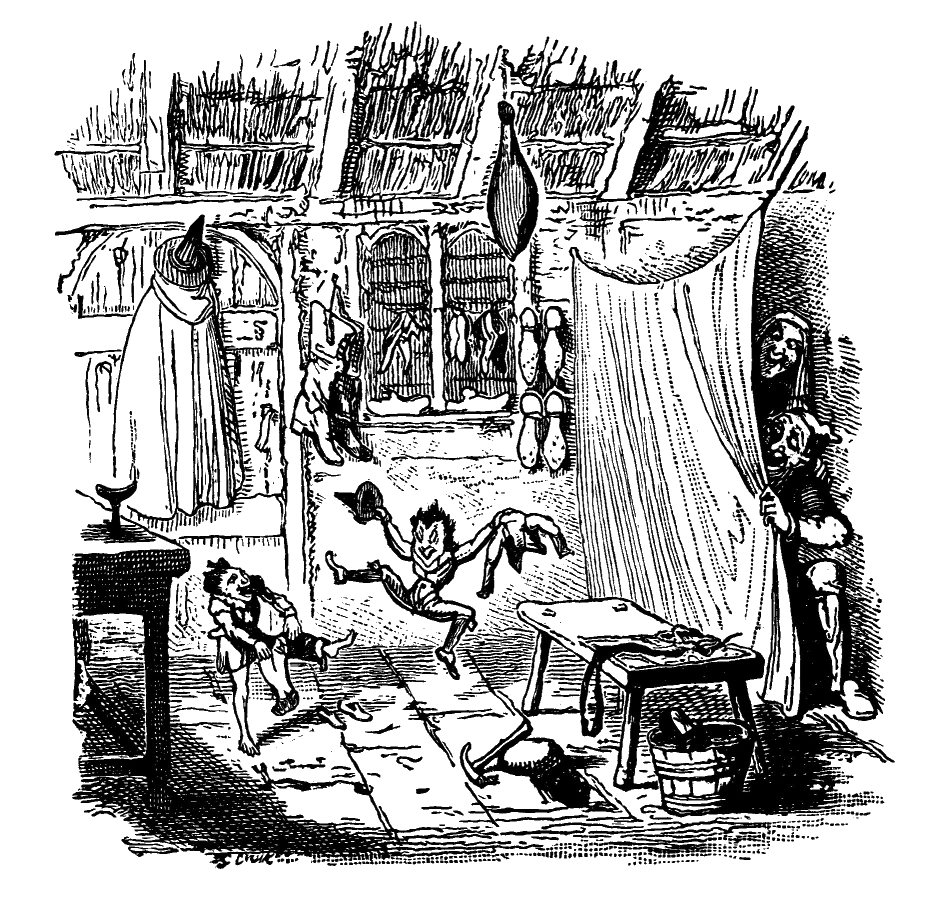
So my friend Kameron McBride (a BSU student and Midwest Writers social media intern) writes in his blog and makes the point that, indeed, writing doesn’t just happen like the cobbler going to sleep while the elves make the shoes. It’s sweaty, difficult, and painstaking work. We don’t (ever) wake up to a manuscript magically completed.

An illustration for the Brother's Grimm story "The Elves and the Shoemaker"
An illustration for the Brother’s Grimm story “The Elves and the Shoemaker”

So it’s a good thing we love it!

To be good at writing takes constant practice. Another BSU student and MWW social media intern John Carter discusses the importance of trying to create a schedule to keep him writing regularly over the summer. Then, of course, once “real life” is in place and summer vacation is a thing of the past (at least if you aren’t in academia), then that schedule and routine will be invaluable.

My friend L. Marie has been posting lots of writing process interviews. We writers must juggle life and overcome fear and discouragement. I love her post about this. (And, if you want more, read her whole lineup–especially if you’re into YA.)

Yep, this writing life is hard work–discouraging at times, frustrating, often unrewarded (except when we’re outstanding in our own minds).

And, like any skill, we need to work to improve. Sure, maybe some of us were born with an innate ability to put words together, but that doesn’t mean we shouldn’t continue to learn or to hone our craft. As Barbara Shoup (director of Indiana Writers Center and, incidentally MWW faculty this year) points out in this blog post, the craft can be learned if you’re patient and willing to work at it.

Work at it.

Here’s what my friend and mentor Cathy Day says about it:

Convincing yourself each day to keep going, this means that you are a writer. The world will be sure to declare, “You matter, but you don’t. Wow, your work is exciting, but yours is old fashioned and dull.” What do you do when someone says, “Eh, you’re okay, I guess.” Do you stop? Or do you keep going? That’s the moment when you know whether or not you’re a writer.

Cathy says, “You must do it simply because you want to.”

Kind of like what Mo Smith (yet another MWW social media intern) describes here.

And it’s hard work.

But therein lies the glory. We want to do it so much that we’re willing to work at it. To stare at the screen on the tough days. To get up early and write when that’s the only time available. To keep on plugging when it fights against us.

That’s the hard part for so many. I hate to sound like an old fuddy-duddy (even if I am one), but in a culture where crimes are solved in a TV hour and purchases are made immediately online and we get upset if someone doesn’t answer our text within 60 seconds–well, have we lost what it means to work at something tirelessly?

We each have to answer that for ourselves.

Love Those Summer Interns

One thing about teaching is the enjoyment I get from watching my students take what they learn and use it. I have to admit, I love the feeling of giving them something that will help them land a job and succeed at it.

That’s why I love teaching editing. I tell my students that if they can master the skills I try to teach them, they’ll have a foot in the door for working in publishing.

So I love it when summer comes and my students are interning somewhere. For instance, Nathan tweeted this last week:

It isn’t easy, Nathan, but it’s a great lesson.

Speaking of great lessons, I guess he learned this one yesterday:

It may have been because of this . . .

Then there are the shoutouts that let me know that what I’m teaching does matter and is helping them in their professional lives:


Yep, working with style tags is vital. I tell my students that learning this will give them a huge advantage and so much value to their supervisors. My students learn how to work with the technical side in order to prep a manuscript for typesetting and for e-booking.

And according to Alex, I guess I was right!

Alex is also getting some terrific hands-on editor-style training:

I’m so thrilled that the publishing houses where these students are interning are giving them more responsibility than just sorting, filing, or making coffee. They’re getting real world experience, they get to see the publishing process up close, they get to get their hands dirty (well, in Nathan’s case, perhaps learning how to stop the printer in the middle of a several hundred page manuscript).

As someone who, in the business side of my life, has worked with interns, I know it can feel a little overwhelming trying to train another person and keep him or her busy on top of your own work. But also as someone who teaches in the college classroom and attempts to prepare my students for those internships (and indeed find them), I thank you from the bottom of my heart. What you’re giving to these students–your knowledge, your expertise, your skills–is invaluable.

“May” I Say Good-bye to Short Story Month?

May, Short Story Month, is almost over.

A couple of weeks ago, I mentioned in my blog about my love for the short story and my personal aesthetic that constantly leads me that direction. I asked for some ideas from readers about favorite short story writers and got some great advice (thank you!). L. Marie (my great friend who writes YA Fantasy) mentioned Flannery O’Connor, Poe (I’m reading him right now in my Romantics class), and the Grimms (and not the guy on the TV show). Cathy Day directed me to a post on her blog titled “Toolbox Stories” where she rounds up a terrific list of the stories she has in her writing toolbox.

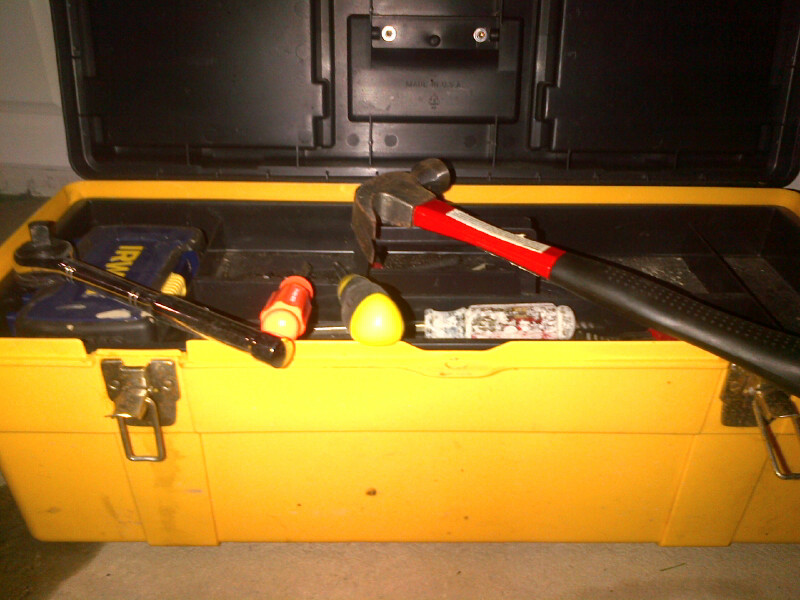
toolbox

We all should have such a toolbox–those go-to stories that just do it for us. Maybe they inspire. Maybe they give us a new way to handle our plot line. Or maybe, as Cathy uses them, a specific story will help a writing student understand how to make his or her own story work better.

I’m working on my toolbox.

Some of my favorites? Ernest Hemingway (“Hills Like White Elephants”), Guy de Maupassant (“The String” is included in the anthology noted here, but my favorite will always be “The Necklace”), James Joyce (“Eveline”), William Falkner (“A Rose for Emily”), John Updike (“A&P”), John Steinbeck (“The Chrysanthemums”), and indeed Tobias Wolff’s amazing “Bullet in the Brain” . . . all included in On Writing Short Stories (Tom Bailey, editor). short stories

So as a roundup this week, I want to also thank The Missouri Review lit magazine which, this past month, has celebrated Short Story Month by writing a daily blog post about their favorite short stories. (If you want to start at May 1 and work your way through the posts, start here.) I’m intrigued by Angela Carter (Day 5), T. Corahessen Boyle (Day 9), Alice Munro (Day 22), and, of course, James Baldwin (Day 23).

There is so much to read, so much to learn. Some of my other favorite literary magazines have great short stories and essays that deserve further attention.

I’ll do my best to bring my favorites to you, some interviews, and even some advice as I learn as well. I’m working on filling my toolbox.

Short story month may be over, but my work is just beginning. I have a lot of learning–and writing–to do.

What about you? How’s your writing coming this summer?