What Martin Eden (aka Jack London) Teaches about Writing and Editing

As I continue to write about editors and editing, I came across some very interesting insights in Jack London‘s masterful work, Martin Eden. Written as a thinly veiled autobiography, the story follows a low-class man and his desire for self-improvement in order to impress a high-class woman with whom he has fallen in love. He reads voraciously; learns language, grammar, and syntax; and teaches himself manners, politics, and philosophy. Eventually, he decides to become a writer–after all, he has many stories to tell from his travels around the world as a sailor.

Alas, every story he sends in is rejected and returned in what we would call the SASE (self-addressed stamped envelope). For years, he toils. He goes back and rereads the magazines to which he’s submitting to discover the “secret formula” for getting accepted. He spends hours and hours working at his craft, steadfastly refusing to bow to pressure from the woman he loves (and everyone else in his world) to just “get a job.”

He knows he’s a writer. He can feel it in his bones. He knows he has stories to tell, and he knows his stories are better than anything he’s reading in the magazines.

His money runs out. He barely survives. And the rejections keep coming. Martin begins to wonder:

He began to doubt that editors were real men. They seemed cogs in a machine. That was what it was, a machine. He poured his soul into stories, articles, and poems, and entrusted them to the machine. . . . There was no human editor at the other end, but a mere cunning arrangement of cogs that change the manuscript from one envelope to another and stuck on the stamps. (160-61)martin eden

The chief qualification of ninety-nine percent of all editors is failure. They have failed as writers. Don’t think they prefer the drudgery of the desk and the slavery to their circulation and to the business manager to the joy of writing. They have tried to write, and they have failed. And right there is the cursed paradox of it. Every portal to success in literature is guarded by those watch-dogs, the failures in literature. The editors, sub-editors, associate editors, most of them, and the manuscript-readers for the magazines and book-publishers, most of them, nearly all of them, are men who wanted to write and who have failed. And yet they, of all creatures under the sun the most unfit, are the very creatures who decide what shall and what shall not find its way into print–they, who have proved themselves not original, who have demonstrated that they lack the divine fire, sit in judgment upon originality and genius. (322-23)
Ever felt that way as a writer? Ever felt like the editors either don’t exist or are simply cogs in machines that send out nothing but rejections?

As an editor, I do have to take a bit of offense that Martin sees me as “unfit.” But as a writer, yes, I have at times wondered if anyone with any taste receives–and rejects–my queries, my articles, my blood-and-guts pieces of creative nonfiction.

I’m sure many writers feel the same.

But let me put in a little bit of a plug on behalf of myself and my editor friends.

  • We truly do want the very best writing. But, you need to understand how subjective that is. It’s a gut reaction to a piece of writing. And if you get rejected one place and you really believe in your piece, keep trying.
  • Everything needs to be edited–everything. Trust us. We will work with you to make your writing the best it can be.
  • Editors are human, and each one of us is different. No two editors will edit a piece the same way. Take the advice, but also understand that we are in a conversation with you when we edit.
  • We are busy. Sure, no one wants to wait months for a response, but we’re reading hundreds (sometimes thousands) of pieces. Hence, the form letters that get returned in your SASE. We simply don’t have time to give personal responses to everything. (That said, if you get any kind of response–such as a quick hand-written note on that rejection letter–take that as a huge compliment and keep on trying with that editor.)
  • And generally we aren’t failed writers who defaulted to editing. Many of us write on the side (and get the same treatment from fellow editors). There’s no club. Our work has to stand on its own, just as with everyone else. Many of us have no desire to write at all–editing is our calling and we’re committed to that.
  • Rejection doesn’t mean failure. A piece can be rejected for any number of reasons. It may be that your writing isn’t good–but if you’re in a critique group and you’re taking advice, that probably isn’t the case. It could be things you have no way of knowing–maybe a story like yours has already been accepted and now yours isn’t needed. It could be that gut thing I wrote of above.
  • We really do care about the submission guidelines, the formatting advice we give you, etc. Read these guidelines and follow them. Because we receive hundreds of manuscripts, if it’s apparent you can’t follow the simplest guidelines, then we won’t take the time to read what you sent.

Eventually, Martin Eden does find the success he so long sought, but it comes at a price. He discovers the down side of fame and some of the hypocrisy in publishing, which begins his undoing.

Bottom line, Martin Eden teaches us that it takes persistence, faith in yourself, and hard hard hard work to be a writer.

Don’t give up. Don’t let the editors get you down. Realize that they aren’t “rejection machines.”

Nothing’s perfect, but work with us. Your great writing will find its home.

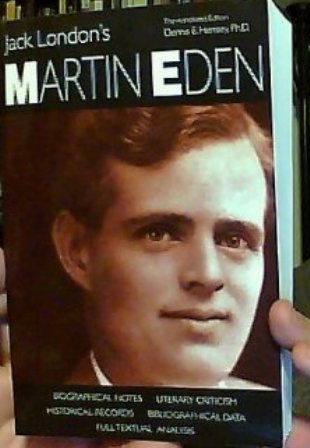
Quotations taken from Jack London’s Martin Eden: The Annotated Edition by Dennis E. Hensley, Ph.D. Upland, IN: Taylor University Press, 2006. This edition is pictured above.

Great Editors: An Interview with Stephanie Rische

Continuing to sing the praises of some of the unsung heros of publishing, I bring to you today an interview with my friend Stephanie Rische, who is a senior editor at Tyndale House Publishers. Stephanie works mainly with nonfiction–so that includes memoirs, inspirational books, devotionals, Bible studies, etc. I love that fact that she loves her work so much. Below, Stephanie answers some questions I asked her about her own process of editing and how it works at Tyndale.

stephanieHow long have you been working as an editor?
I’ve been at Tyndale House for almost a dozen years now. Before I started here full time, I edited curriculum on a freelance basis. I started out as a copy editor at Tyndale, and now I’m a senior editor, working with authors at a developmental level and managing one of our nonfiction teams. I wake up every morning marveling that God would allow me to read books for a living!

You generally edit nonfiction, but do you ever cross over into fiction? In your opinion, how familiar does an editor need to be in a genre in order to edit it well?
I love to read just about anything, but I edit nonfiction (memoir, devotional books, Christian living, children’s Bible storybooks, etc.). I think the best training to be a good editor is to read good writing. Part of your job as an editor isn’t solely to work on the manuscript in front of you; it’s also to do background reading in the genre you edit in so you know what readers are expecting, what the competition is doing, and what makes your manuscript stand out.

Give us a sense of your career path. Did you always know you wanted to do this job? Did you prepare for it in college, or did other circumstances lead you where you are today?
I have always loved to read. I remember missing my bus stop in second grade because my nose was in a book. I didn’t know much about editing until later in life, but in a sense I was being prepared for it through my love of books and writing and words in general. I’m not sure if this was a direct part of my career path, but I’ve always been a noticer. I enjoy observing and exploring, whether it’s little grammar details or big ideas.

In terms of my education, I received a strong foundation in English and writing from Taylor University, and then I taught English for several years. There’s nothing that solidifies your understanding of grammar and writing techniques like having to explain it to a roomful of teenagers who would rather be dong something else!

At Tyndale House, what is the process for acquiring manuscripts, and at what point do you receive the manuscript to begin your work?
At Tyndale the manuscript comes to me after the contract has been signed. In some companies, editors acquire and do developmental editing, but here those two roles are separated. There are advantages to each approach–the consistency is helpful when those roles are combined, but I appreciate that the division here allows me to be more of a purist about the editing process–to be devoted to the content and what’s best for the manuscript without having to weigh the financial and contractual side of things.

What is your process for editing? When a new manuscript lands on your desk, what tools do you gather and then what steps do you take to go from A to Z?
First, I do a manuscript review and make a plan for editing. At that point I talk to the team that acquired the manuscript and make sure we’re all in agreement about the vision for the book as we move forward. The next step is to meet the author (usually over the phone) and let him or her know what the editing process will look like. Depending on how much work the manuscript needs, I’ll go through it two more times–once to make the big-picture, structural edits, and once more to fine-tune and make line edits. It’s a funny thing about the way the brain is wired–it’s almost impossible to do the more creative, right-brained edits at the same time as the analytical, left-brained work. When I’m finished, I’ll send it on to a copy editor, who will do the fact checking and take a close look at the grammar and spelling.

Do you generally work back and forth with the author? What are the guidelines or expectations for that process—that is, do you always have to defer to the author or how much can you, as editor, press your point?
The back-and-forth process with authors is one of my favorite parts of editing. When people find out I’m an editor, they sometimes ask, “How do you decide who wins: you or the author?” But I don’t see the author/editor relationship as an adversarial one; it’s more of a collaboration. Both parties have the same goal: to make the book the best it can be. I marvel at how often the collaborative process of editing produces a third way–a solution that’s better than what the author or the editor would have come with individually. As an editor, I have the privilege of shaping and sharpening someone’s story, and it’s a responsibility I don’t take lightly.

For my students who are learning editing and want to eventually work in a publishing house, what would you tell them is the most important skill to acquire in their preparation so they can hit the ground running when the arrive in an editorial department for an internship or a job?

  1. Read a lot, and read widely.
  2. Read critically. As you read, be aware of what’s happening under the surface. Are there parts you’re tempted to skim? If so, why? If you’re hooked, what has the author done to make that happen?
  3. Learn the basics. Even if you want to do higher-level editing, those grammatical building blocks will help you understand language in a deeper way.bird by bird

Any favorite books about editing? What has been most helpful?

Anything else you want to add?
In his memoir On Writing, Stephen King offers these words of thanks to his editor: “One rule of the road not directly stated elsewhere in this book: ‘The editor is always right.’ The corollary is that no writer will take all of his or her editor’s advice; for all have sinned and fallen short of editorial perfection. Put another way, to write is human, to edit is divine.” His words are a bit tongue in cheek, but there is some truth in the idea that editing is a divine practice. As editors, we have a high calling to take someone else’s words and be part of that mysterious process of iron sharpening iron.