4 keys to your author social media strategy

As much as I talk and teach about social media, I have rarely written about it on this blog. Turns out, 2015 was the last time. In rereading that post from nine years ago, I see that it stands the test of time. While social media constantly changes, some things stay the same. One thing that is the same:

If you want to get your book published, you need to be out there on social media.

So how do you build a social media strategy? I know many of you struggle with this. But every publisher or agent will tell you that it is vital that you have a presence on social media. Let me help you get over your distress and offer four key points.

1. It’s not all about you.

That’s meant to make you feel better. Being on social media as a writer means the privilege of engaging with your “tribe” (a Seth Godin term), the community of writers — and not just writers, but writers writing in your genre, published and unpublished, local or around the world. On social media you find and follow those people. It has never been easier to connect with your favorite authors and with other likeminded writers working in the trenches. Seriously, we need one another.

Make your social media about those folks. Celebrate their successes. Read their books and learn from them, then share them on your social media, write reviews, be excited. Point to others, not at yourself. The more you do this, I guarantee you’ll begin to build a network of people around you who will support you when your time comes.

2. But you should also share about you–authentic you.

But at the same time, you need to let people see a window into your world. You’re not just lurking over in their world while presenting a blank slate about your own. That’s hardly helpful because the whole purpose is to join these networks of people. So let them know you a little. But be you. Be authentic.

Share about your writing process: was today a great day of writing? Why or why not? What works best for you? Share about what you’re researching and learning. All writers know the rabbit trails we can get on when we’re researching information on the internet. What new pertinent (or not) information did you learn today? Then you can get a little more personal.
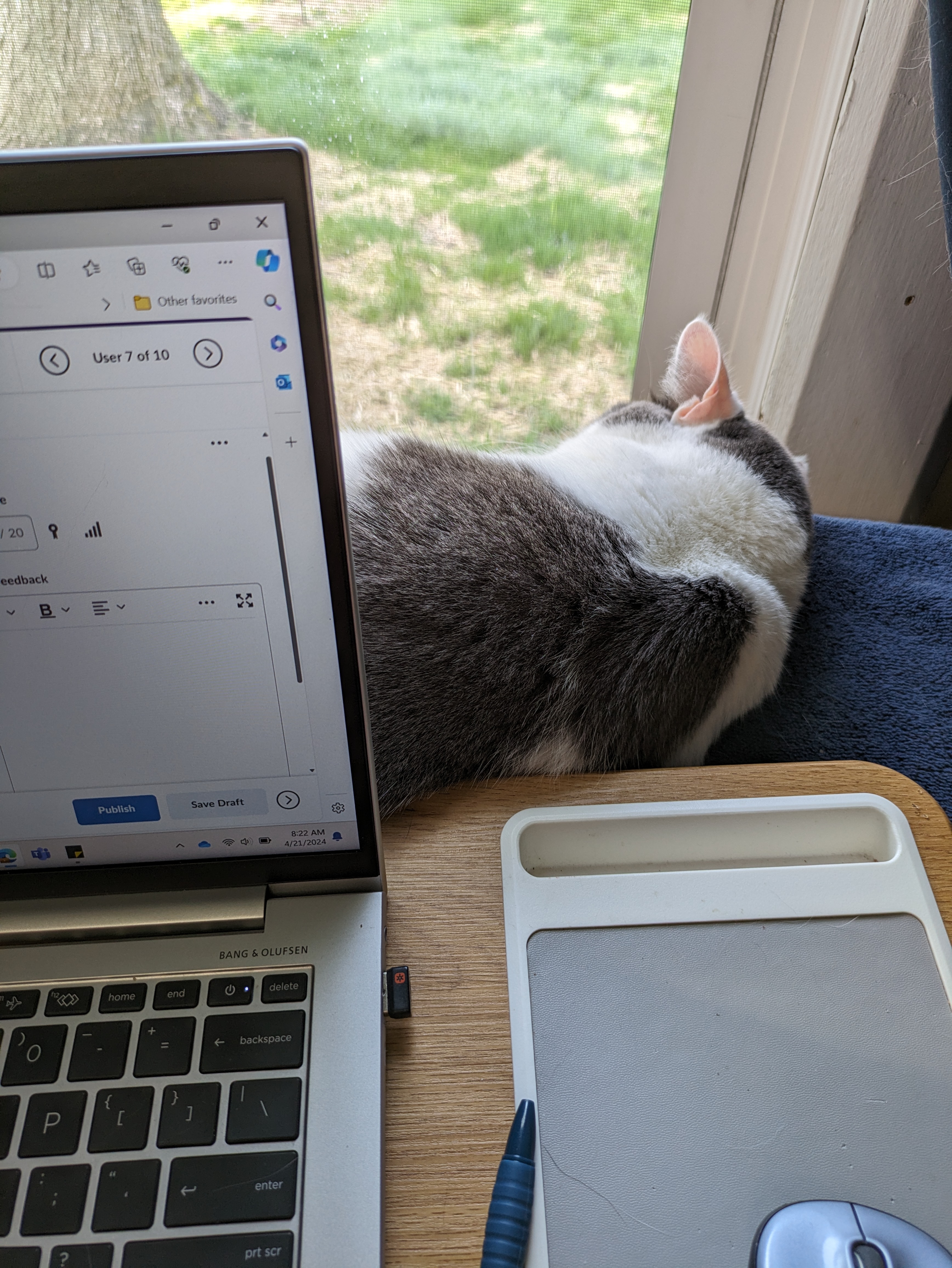
Pinky is not helpful at all.

You don’t need to go overboard, but do know that people are interested. Talk about how your cats are not helpful. Pets are always safe and fun, especially if you don’t want to share family photos or information. Fine, just stick with your writing. I would advise you to stay out of politics unless that’s what your book is about. Just stay on brand. You can do all of these whether you’re blogging or posting on social media.

3. You don’t need to be everywhere.

You can’t do every social media platform and do it well. After all, you have a book to write and, I assume, probably a million other things going on in your life. You should be on the platforms you’re comfortable with and where your readers are. I would advise that you have a website, because that is your own piece of real estate that all of your social media can point back to. This is where you have your author photo and bio and your blog (and yes, you need a blog so it can showcase how you write and that you can indeed write).

From there, perhaps you just want to do Facebook. Or Goodreads. Or Pinterest. If you’re writing YA, then you need to be where the young people are, which is probably Instagram. Study how to use these platforms well. Find your favorite authors or writers you admire and see what they’re doing on these platforms to give you ideas.

4. Post and engage consistently.

This ties back to the “if you want to get published” theme and the “you can’t be everywhere” idea. You may despair that you haven’t been active for a long time or you don’t have many followers. That’s okay. Start back in again, and then create a weekly schedule that you can keep up with. It has to work for you or it won’t work.

Perhaps on Monday you’ll share on Facebook about something you learned in your research. On Wednesday you’ll post on Pinterest some photos you found about the time period of your historical fiction. On Friday, you’ll share the link to an article you read that was pertinent to your book’s topic. On Saturday, maybe a Canva-created quote from your book.

Then, as people engage with you, engage with them. While many social media experts will talk about how you need X number of followers to even be considered for publication, that’s not true everywhere. If you’re building a following and engaging with your followers, if you’re actively and consistently posting on brand, if you’re showing yourself as winsome and creative and someone any publisher would love to work with, well, you’re doing it exactly right.

Realize you’re building relationships. That’s the most important thing you can do as you build your social media and create your author platform. It’s not all about you. You don’t have to become an internet influencer posting selfies all day. In fact, that’s the opposite of what you want to do. Focus not on yourself but on your tribe and your readers. Put good content out there that will be interesting and helpful to them.

Be you. Be there. Enjoy. Drop your blog link or social media handles below so I can follow you!

Writing Real — More than a Dum Dum

In my Freelance Writing class this week, we’re working on the “art of living” article — writing that seeks to inspire or help readers live life just a little better based on our ability to share our own joys and struggles.

Our text puts it this way: “The key to writing art-of-living articles is to write an article that will make a difference in someone’s life—to provide the reader with something to hold on to and take away into her own life.” —Handbook of Magazine Article Writing

To really make this work, however, that piece needs to provide transparency into the life of the author. Readers want writers to be real, to dive deep, to share their stories.

But it doesn’t need to be dark or traumatic. Sometimes the sweetest and most inspirational pieces of writing come from memories, moments, minute details of life that draw us back and make us think. To give my students that opportunity, I gave them a handout with their lives (so far) divided into segments. They were to write down five or six memories from sets of years: 0-5, 6-10 (elementary school), 11-14 (junior high), 15-18 (high school), and 18+ (college). As they began to scribble, I explained that the memories that came quickly are worth thinking about further. There’s a reason that those bubble to the top.

Their job then was to choose one of those memories and describe it. That gets the scaffolding in place. Now to get a solid art-of-living piece, to get to something that will resonate with our readers, we need to go deeper.

So we considered some questions. I asked them to close their eyes and go back to that memory. What was going on in their lives at that time, in their family life, in the world? Where were they living? Who else was part of their lives at the time? What else do they see, hear, feel, smell, taste? As they looked at that memory in a bigger picture and considered why that particular memory surfaced at all, they can write a story with heart. They can begin to see how that minor thing matters, and in turn, help their readers put themselves into their own similar story.

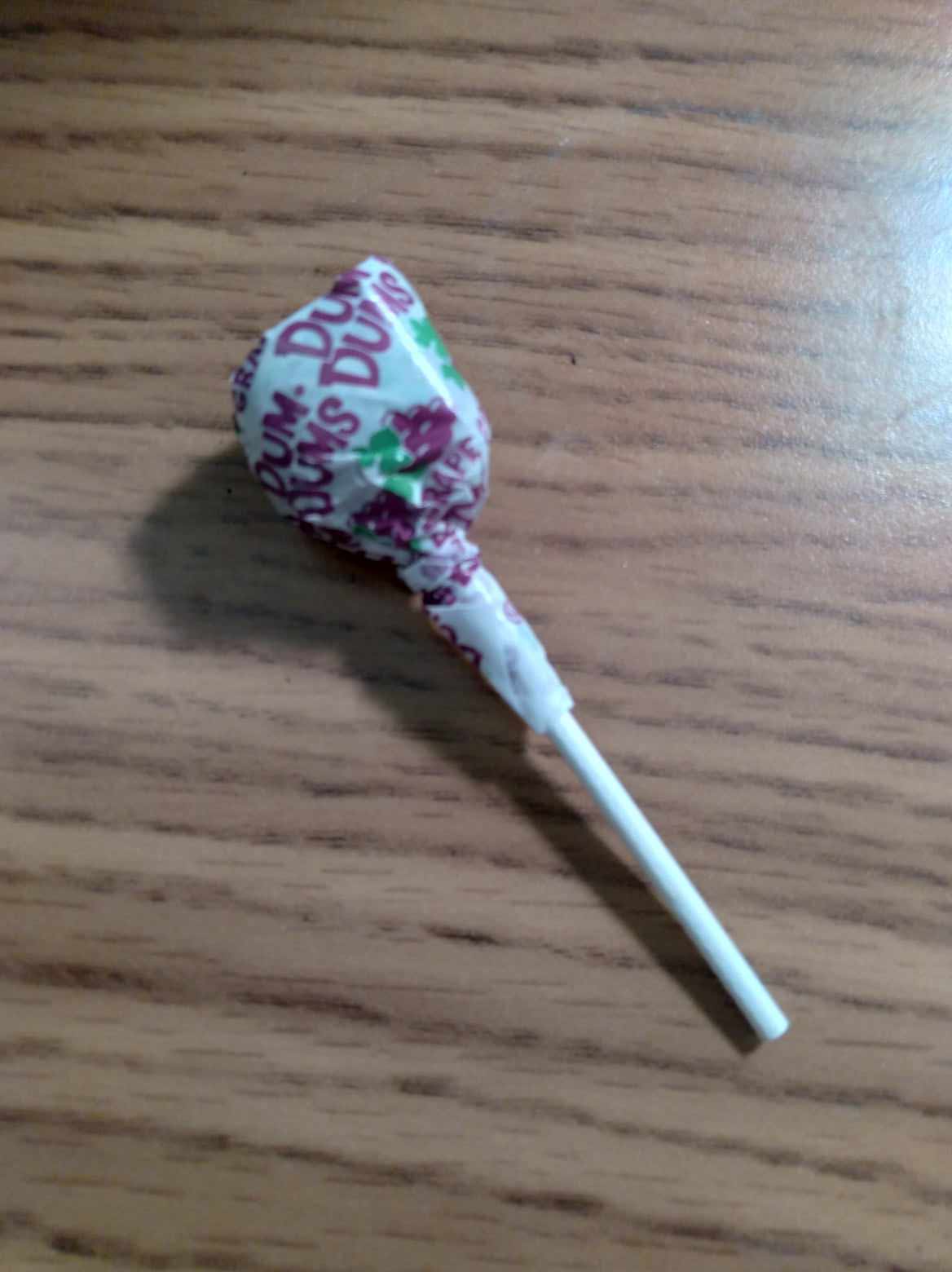
As if to make me take my own advice, today, a sweet college student dressed as a bunny rabbit stopped into my office and let me draw some Halloween candy from her outstretched pumpkin basket. I drew out a Dum Dum.

The Dum Dum that arrived today.

In that moment, I saw my Grandpa Chaffee’s face. He had been a rural mail carrier in the little town of Wattsburg, PA, and its environs. He drove his massive Oldsmobile Toronado to deliver mail — and there was always a big bag of Dum Dums on his front seat. The children on his route knew he’d give them a sucker. Even though our family visited him only once a year or so, whenever I got into that enormous car to ride with him, I drew a Dum Dum from the bag and stuck it in my mouth, sucking happily as we zipped down twisty dirt roads.

Gramps, me, and Trixie, circa 1964.

That Dum Dum sent me back. The joy of our traveling military family always returning to deep extended-family roots in western PA. The legacy of love and faith I’ve been privileged to receive. The deep loss of grandparents and now both of my parents. Changes as decades pass; foundations that remain solid. Heaven’s certainty. A loving family that shaped who I am. Sweet memories and sweet candy.

It’s just a Dum Dum, but now there’s something there worth writing. Something to help readers also think about how life changes yet some foundations are worth holding onto and passing on. It was just a Dum Dum, but it’s so much more.

What simple things in your life have a depth of meaning? What memories rise to the surface? How might you write about them?

Keeping me humble – adventures in typos

We writers know that, on the one hand, we need self-confidence to put our writing out there and dare to get published, but we also need humility. We don’t want to go out into the publishing world with an arrogant attitude.

I dare say we will be served up humility constantly — we probably don’t need to seek it. We just need to learn how to deal with those times when embarrassing things happen.

Here’s my latest dilemma. I’ve talked on this blog about my latest book, Pathway to Publication. I’m very proud of this book (seriously, in the best way; you know, that “humble proud” attitude). I feel very good about the book and what it can offer writers.

There’s a meme out in the world that says if you want to do a really good proofread, get your book published and then open to any random page.

I laughed and laughed.

Then yesterday, I opened my book to two random pages.

I found two (count ’em, TWO) typos in my brief foray. This does not bode well for the rest of the book. I promise, my book was proofread by me, by editors, by the publisher, and again by me. I have no one to blame but myself. Me. Professional editor. Me.

Original meme is from shencomix.com

Here they are, for your viewing pleasure.

First, on page 17, right away in the “How to Use This Book” section, I managed to say first that readers could download a “Microsoft Word or Excel” version of the worksheets on my website. Dear readers, I meant “Microsoft Word or PDF” (PDF appears later). In my proofread, I slid right right past it.

This second one, again, in my brief visit back into my printed book, appears on page 47, end of the first paragraph. Clearly I edited something in that sentence and left out the word “What” at the beginning (or I could have seen this and deleted the word “about”).

Seriously. Excuse me while I go away and eat some humble pie.

It’s just part of the process. I join a legion of professionally published books out there with typos.

https://en.wiktionary.org/wiki/ugh

Indeed, in her keynote presentation this past weekend at our Taylor University Professional Writers Conference, Maggie Rowe made clear to all of us that we need to “embrace humility.”

Well, humility and I are hugging it out right now!

Have you ever found a typo in your own work, after the fact?

Pathway to Your Dreams

She’s leaving today.

My sister, that is. Today she leaves to begin on a dream that she’s been holding in her heart for over thirty years. She begins her thru-hike on the Appalachian Trail.

She has been planning this trip for the past couple of years. I first heard about it during a quiet late December evening in 2021 as we sat together chatting, keeping vigil over our dying mom. We held her hands and whispered, and Carol told me of this plan.

And now, the day has come. She and her husband (who will be accompanying her on portions of the trail) have donned their well-prepared backpacks and taken the first steps toward a decades-old dream.

My sister and brother-in-law at the first white blaze that marks the southern start of the Appalachian Trail on Springer Mountain, GA. Only 2,190 miles to go!

It was in some of those quiet conversations with Carol that a thought came to me: The kind of preparations and patience and planning required for such a trek for her to reach that dream are comparable to the kind of preparations and patience and planning required to get a book published.

I was in the beginning stages of writing my book about the process of publication. I was struggling for a hook, plagued by imposter syndrome. But her words ignited something in me.

And Pathway to Publication — the title, the plan, the hook, and eventually the cover design were born. (Thank you, Bold Vision Books for this perfect cover. Read more about the book on this page here on my site.)

When you get ready for a long hike, you don’t just put on your gym shoes and start walking. You need preparation, plans, accurate maps, and appropriate equipment. Likewise, when you step onto the pathway to publication, you can’t rush the process. The publishing world has its own language, processes, and gatekeepers. You need to take the time to develop a plan, create the required pieces, and understand each step along the way.

I wrote this book for the dreamers. Those of you out there who so much want to get published. You have a manuscript but you don’t know what to do next. What are the steps on the pathway to that dream of publication?

My book will help you get there.

My sister is making her dream a reality. I’m hoping to help you make your publication dream a reality.

The book can be purchased on Amazon here.

And, incidentally, if you’d like to follow along my sister’s journey, you can read her blog updates here at “The Trek.”

I’m here to help be your guide on this pathway. Please feel free to contact me! In addition, I’d love to speak to your writers groups or conference. Helping writers is what I do.

Let’s grab our gear and get started!

Writers Need Thick Skin, Part 1: Dealing with Rejection

I tell my students this all the time: “You want to be a writer? You want to get published? You want to get your writing into the hands of readers? Then develop a thick skin.”

Sounds tough, I know. But it’s 100 percent true.

And this theme is a key element of my upcoming book, which has no title yet but is right now affectionately called, “So you’ve finished your manuscript? You want to get published? Here is everything you need to know, prepare, do, and plan for.” I know, too long. But that’s basically what it’s about.

And there’s a whole chapter on the idea of having a thick skin. Because writers need it.

We need it before we get published, and we need it after (which I will discuss in a later post as Part 2).

First, the BEFORE. Anyone who has been writing and submitting for more than a week has discovered that rejection is simply a part of the process. Writers need thick skin to be ready to handle those inevitable rounds of rejection and maintain personal mental health. No matter how many years you’ve been at it, no matter how many pieces you have or have not published, those four simple words “not right for us” hit right in the gut.

Every. Time.

Why does it hurt so much? Well, as a much-rejected writer, I believe it just comes down to how much of ourselves we put into every piece we write and how rejection feels like a rejection of us personally. Whether it’s a literary story, or a transparent memoir, or a how-to on keeping houseplants alive, we worked hard and put ourselves out there. So it is always with great fear and trembling that we send out the piece or the query or the proposal and anxiously await the response.

We fear that someone out there will laugh uproariously at our audacity to think we can write and that anyone would publish us, show it around so everyone else laughs at our expense, and then reply with the terse email, “Not right for us.”

Courtesy of memebetter.com meme generator (which I love!). Grumpy cat photo and meme created by Tabatha Bundesen.

Can I offer up a few facts to help keep those rejections in perspective?

However, first, I’m going to assume that you are a careful writer and researcher, that others have read and critiqued your work, that you’ve revised and revised to make it the best you can deliver. That is my assumption. (Please don’t be one of those writers who tries to send off the first draft or who dares to think that “God gave me the words” so therefore it’s perfect as is.) Good, solid writing takes time and care.

Beyond that, here are some thoughts from my own (and many others’) experiences:

  • Everyone gets rejected. Every single famous author started out right where you are — wallowing in the misery of the “not right for us.” If you don’t believe me, here’s an article about best-selling books that were initially rejected (often many times).
  • You have to understand how many pieces these editors are seeing every single day. Sometimes hundreds. You have a lot of competition when there are a couple hundred submissions for a single spot in a magazine, or when there are hundreds of book proposals for perhaps five publication slots at an imprint of your genre for the next publication season. So don’t take it personally.
  • It could be that, although your piece or proposal is stellar, someone got in right before you with something very similar. And yours gets rejected. There’s no way you could know that.
  • Acceptance is very subjective. The gatekeeper reading your query or literary piece or proposal needs to “feel it.” They need to resonate with your topic or your voice. And if they don’t, then it will be rejected. Not because you’re a terrible writer, but simply because this particular editor just didn’t have that gut reaction. And there’s no way you can control that.
  • Rejection is about the piece, the query, the proposal — it is not a rejection of you as a person or as a writer (no matter how much it feels that way).

So how can you handle rejection? Here are a few more thoughts:

  • Allow yourself to feel bad for a bit. It does hurt. (Give yourself a day to wallow, if needed. But no negative self-talk. Remember, it’s not a rejection of you.)
  • Pick yourself up, dust yourself off, and go back to your tracking system for the next place to submit. (You do have a tracking system, don’t you? If not, create one. Make a list of all the places you want to submit to on something like an Excel doc. More on that in a later post — oh, and also in my upcoming book. <just a teaser>). What I mean is that on such a list you can now mark down that XX publication or publisher rejected it, so now turn around and send it to YY. Of course you’ll have to revise your piece, and double check submission guidelines and word counts, but get it out there again. If you really believe in it, keep trying at other places. You might hit right at the moment when they DO need just your piece and the editor DOES resonate with it.
  • You could even take an optimistic approach, like this writer, on why you should aim for 100 rejections a year (pardon the swear word in the article — but the point is valid). The basic premise is that the more you’re submitting, yes, the more you’ll get rejected, but by the law of averages, it also means the more chances you’re giving yourself to eventually be published.
  • Stay classy, don’t burn bridges with any editor or publisher, and thicken that skin.

You writers out there who have experienced rejection, how do you handle it and keep your writing sanity?

Thank You, Dr. Leax, for Your Inspiration (part 2)

I am recently inspired by a book that I randomly picked up in a dusty resale shop in Marion, Indiana. You know how it goes — at least if you’re a reader or writer — the first stop is in the back where castoffs unsold at garage sales or lugged from overflowing home libraries rest precariously on makeshift bookshelves or in unorganized piles.

I’m usually looking for classics, memoirs, or books about writing, although our own overflowing bookshelves force me to try to be selective. But that day, I found a treasure. In Season and Out is a book by John Leax, my writing professor from Houghton College, whom I’ve written about before. A bonus is that the lovely illustrations are by a dear family friend, Roselyn Danner, now in heaven.

The book is simple, beautiful, lyrical. Divided into four seasons beginning with summer, the entries are dated and chronicle Dr. Leax’s woodcutting, vegetable gardening, teaching, and small town living. This passage, in particular, resonated with me:

Last night while walking Poon, I suddenly realized I had walked past nine houses within one quarter mile and did not know the occupants of any of them. I can rationalize my ignorance. The generation gap accounts for part of it, most of the houses are occupied by elderly couples or widows who keep to themselves. The cultural gap figures in it too; college English profs are not easily assimilated into the daily life of a small rural town. And the inevitable knowledge gap between old and new residents finishes it off; I’ve only been in this town nine years — I’ll never possess the local knowledge of those who go back generations.

(In Season and Out, Zondervan, 1985, p. 41)

My husband and I take a twilight walk. We’ve been in this tiny country town for almost exactly three years, slowly remodeling our 110-year-old house. We don’t know most of the 986 occupants of Swayzee. Fortunately, we do know most of our direct neighbors along our street, but any conversation quickly uncovers the truth that no matter how long we live here, we will always be newcomers who will “never possess the local knowledge of those who go back generations.” Folks here grew up together, went to school together, and lived around one another as they married, had children, worked, and grew older.

As much as I love our small town, I mourn the boarded-up and vacant buildings, the cafe someone bought to remodel and never finished, the houses unkempt or uncared for, the closed-up hardware store still full of supplies, the empty downtown building that fell (literally fell) because of neglect. At one time, this was a vibrant town — now the biggest news is that we watch a field outside of town slowly transform into a Dollar General.

But there is splendor here, splendor in the ordinary. The open fields, the sunsets, people’s care for one another, the annual rummage sales, the tractor day parade, the parks, the elementary school kids lugging their backpacks, the fresh wind bringing the scent of a new harvest.

Dr. Leax’s book inspired me to spend my summer writing about my small town, our butterfly gardens, our slow remodeling progress, our attempt at growing vegetables, my preparation for fall classes — all of which he touches on. I want to celebrate my very ordinary life, capturing its splendor as best I can.

I am not trying to get this published. I am writing to sharpen my skills and voice, to keep doing what I teach my students to do.

I owe it to my old prof, forty years later. Once again, Dr. Leax, thank you for your inspiration.

Submitting in 2021: Get It Done!

I’ve been watching Twitter feeds in the #writingcommunity hashtag and seeing lots of folks post that 2021 is the year they will finally submit — to magazines or literary magazines or a book publisher. I say, YAY. GO FOR IT! You pour yourself into those words and you have something to say into the world.

In order to do that, you’ll need to submit to gatekeepers at these various publications. Let’s make sure you do everything you can to get read! Following are a few tips as you make 2021 your year for submitting!

1. Follow the submission guidelines.

I can’t stress this enough. Read those submission guidelines — don’t just send off your piece. Not following the guidelines will assure that your submission will be rejected before it’s even read. Remember that editors and agents receive hundreds of submissions. They will immediately toss or delete anything that isn’t submitted per the guidelines.

You can find submissions guidelines on most publication or publisher websites (same for literary agents). You might need to scroll to the fine print at the bottom of the home page, or locate the contact page, but generally they will be there. You can also find information in Writer’s Market (or Christian Writer’s Market Guide if you’re writing for the Christian market).

For instance, if you’re going to submit to Grit magazine, navigate to their submission guidelines and follow them to the letter. Here’s the link as an example. Notice on the Grit submissions page that it tells you:

  • what they publish and what they don’t
  • the fact that you can’t send anything unsolicited; you must send a query letter first
  • where and how to send the query (even what to put in the subject line of your email)
  • word counts
  • where and how to send your submission

Or check out the submission guidelines for the Chicken Soup for the Soul series of books here. Notice again:

  • how to write your submission (even how the first paragraph should read)
  • how NOT to write your submission
  • that you must submit through their website

That basic information will get you a long way toward getting your piece in front of an editor’s eyes. Of course, you still need to write well, have a compelling piece, and fit the editor’s desires or needs (which, of course, you have no idea about necessarily). But you could have all of that but will lose the opportunity if you don’t follow the submission guidelines to the letter. So make that a resolution!

2. Proofread your submission and have someone else (who knows what they’re doing) proofread as well.

Have your proofreader double check your submission along with the submission guidelines. (They might see something you missed.) Make it a joint effort. Don’t be in such a hurry to meet your goals of submitting that you hurt yourself. And proofreading by yourself is never a good idea. You’ve read the piece so many times your mind will automatically correct words or fill in missing words. I have previously noted some tips and tricks to help you proofread.

3. Don’t take rejection personally.

You’re going to get rejection letters. The more you submit, the more you’ll get rejected. That’s just the way it is. But also, the more you submit, the more opportunity you have to get published. It might help to do as this writer did and actually set a goal for rejections — the point being, of course, that eventually out of all those submissions will come publication. Sort of takes the sting out of it . . . a little . . .

Image courtesy of writers.write.co.za

4. Keep good records of your submissions.

Do this now if you haven’t already. Create a document or an Excel sheet or some kind of system whereby you track where you send what. Trust me, over time, you’ll forget. Whether you’re writing articles or seeking an agent/publisher for your book, you want to capture:

  • the name of the publication/publisher/agent
  • website link
  • submission guidelines general information
  • title of the article/book you queried (or sent)
  • date sent (so that if it says they’ll respond in one month, you know when that month has elapsed and you can follow up)

In addition, you can keep a running list of various places that you want to query. In my Freelancing class (in the Professional Writing program at Taylor University), where we focus on writing articles, the students create a tracking system listing at least 10 possible magazines they can submit to, a separate page for literary magazines, and then another page with their various article ideas or WIPs captured. If they hope to one day get a book published, a new page can begin to capture potential agents or book publishers for the genre of their book. For every piece they write, they have to write an accompanying query letter, and then actually send three of those letters during the semester. Learning to have the discipline of creating solid query letters, tracking where they’re sent, and having a list of potential publications means that they can keep writing.

For example, you send out the query, you receive a rejection. Instead of letting that stop you, you go to your tracking list and mark down the rejection (so you don’t accidentally send the same query to them again). Then you look on your list for another publication that might like that same article or that article with a slightly different slant or focus or word count. You revise your query letter and send it to that publication. I know some writers who have such a system that, when a rejection arrives, they have that same article pitched somewhere else within 24 hours.

The same goes for book publishers. Find the agents and publishers that accept what you’re writing, create a solid query to them, and send it on. When a rejection arrives, move on to someone else.

The point is, keep going, dear #writingcommunity. Make 2021 your year!

Close Reading — It’s Good for You

Back in June of 2015, I wrote a post about how excited I was to teach a class in our Professional Writing major called The Writer’s Craft. As it turns out, I’m teaching the same class again this spring semester, five years later. I have enjoyed recasting this class with some new writing to explore, new pedagogies to try, and five more years of teaching confidence under my belt.

As I noted in the earlier post, this class does not look at the why of a piece of writing. Instead, we focus on the mechanics, the how, the craft. What words does the writer use? How are those words making this piece sing? What about sentence structure? Paragraphing? How is this dialogue telling us the story without telling us the story? We’re still using some tried and true greats (Hemingway, Fitzgerald, Steinbeck), but I’ve added a few titles still classic but not as old (Tim O’Brien, E. B. White, John Updike, Flannery O’ Connor), along with diversity (Joy Harjo, Jame McBride, and a few names I’m still researching), plus some YA and fantasy genre pieces (also still researching).

Seriously, the class is planned, but in the short time frame between closing out J-term capstone class and beginning the spring semester (3 days), I found myself with a few TBDs on the reading schedule that I’ll fill in as we go along.

College teaching is just sometimes like that.

In addition, we’re still using Francine Prose’s book Reading Like a Writerbut this time I’ve also added Anne Lamott’s delightful Bird by Bird: Some Instructions on Writing and LifeIt may be 25 years old, but I know it will speak volumes to my students about being writers.


The essence of the class is what Prose calls “close reading.” Usually when we read for pleasure, we skim along, anxious to discover who falls in love, or whodunit, or how to solve that problem the book promises to solve.

With close reading, however, we linger over the words. The students receive printed copies of the pieces they’ll be “close reading” so they can write all over them — commenting, highlighting, underlining, circling. This kind of reading helps us to read, as Prose says,

. . . more analytically, conscious of style, of diction, of how sentences were formed and information was being conveyed, how the writer was structuring a plot, creating characters, employing detail and dialogue. . . . I discovered that writing, like reading, was done one word at a time, one punctuation mark at a time. It required what a friend calls ‘putting very word on trial for its life.’

As writers, our currency is the words we string together. We write our first drafts and then go back and revise, putting every word on trial, forcing it to explain why it should stay, removing or replacing it if the case isn’t made — if the lyricism or characterization or structure or foreshadowing requires something else.

As we read these masterful writers, we stand in awe at how they make look so simple a scene that we know required dozens of small perfect choices.

And even as I continue to journal Scripture, close reading is causing me to slow down on familiar passages and read them more carefully, seeing them anew.

In our busy culture with quick social media posts and constant bombardment of words, it’s almost a relief to be forced to slow down and delight in the world an author so carefully crafted for us.

Try a little close reading. It’ll do you good.

What’s your favorite book that has delighted and astounded you with its writing?

That Elusive Perfect Word

Child, to say the very thing you really mean, the whole of it, nothing more or less or other than what you really mean; that’s the whole art and joy of words.

C. S. Lewis, Till We Have Faces

Finding that perfect word that says the thing I mean, what I really mean, is a struggle for the writer — and I know all writers experience it constantly.

But it’s not just a writing problem; it’s also an editing problem

As an editor, my job (especially at the copyediting phase) is to make a manuscript sing. If I read your story or essay or article or devotional, I’m looking closely at the sentences and the words — and I’m asking if the words I see are the best words. Sometimes something I read makes me stumble. I have to go back and understand the sentence, or visualize the scene, or simply try to comprehend what the author means to say. I stumble because something isn’t working.

And if it isn’t working for me — the editor — then it isn’t going to work for the readers either.

Maybe I need to replace a blah verb with a stronger verb — or better yet, an adverb and verb with a strong verb. “He slowly walked across the street.” Ugh. Adverb. Not helpful. Many strong verbs can picture a slow walker, but the verb needs to be the best verb for the scene. Does he amble? trudge? shuffle? Amble sounds like he’s carefree . . . trudge sounds like he’s sad . . . shuffle sounds like he’s elderly or injured perhaps . . . I have to study the scene and suggest a strong verb, the right strong verb.

Or maybe the descriptor isn’t quite there. A “shiny” item might better be described as shimmering or glittering or glistening or gleaming or glossy (wow, lots of “g” words there).

At times, I look for a word that will add some alliteration — if it works with the tone of the piece.

It takes a writer, a reader, a word lover to be a good copy editor, to massage the message, to tame the tome (see what I did there?).

the best

Some sentences just make me stop in wonder. Some words string together like the notes of a beautiful melody. They take my breath away. (I gave a few examples in this post called “Word Power.”)

It’s hard work, this writing, editing, and trying to say what we want to say or trying to help authors say what they want to say.

But when a sentence sings, when we “say the very thing [we] really mean, the whole of it, nothing more or less or other than what [we] really mean” as C. S. Lewis writes, it’s all worth it.

We live for those moments.

Ever have one of those times when it all came together?


The Joy of Coordinating a Writing Conference

This past weekend (August 4-5, 2017), we held the second annual Taylor University’s Professional Writing Conference at Taylor University.

Last year, 2016, we did our first conference. We started with zero dollars and hoped that we’d break even or perhaps have a little extra to have seed money to hold a second conference. We didn’t know if we’d make it or not … until about two weeks prior to the conference when a flurry of activity brought us above our minimum (100 attendees) and encouraged us that we were meeting a need and should hold another conference.

Which we just did.

And this time? We got to 120  … 130 … 140 registrants, plus 20 faculty and staff, and suddenly my behind-the-scenes self was worrying about having large enough rooms for breakout sessions. So I closed the conference registrations (and still let through about 10 more people who begged) and held my breath that we’d have enough space.

THEN, our main session room was determined to not be ready, so we scrambled for another room and another breakout room. Thanks to staff at Taylor U, we moved to another room (holds 190, so we were tight but had close fellowship), and located another large-enough breakout room.

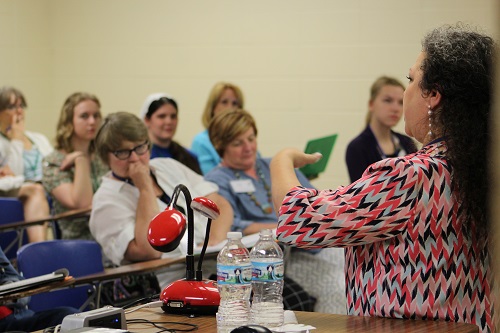
Then our folks arrived. Sessions began, keynoters encouraged, faculty taught, one-on-one meetings went on in the Campus Center, books were bought, snacks were consumed, staff people ran around, and while I used the passive voice here nothing was passive at all. It was proactive, energized, encouraging, and … from my perspective … so much fun!

It’s always terrific to get to communicate and rub shoulders with authors and agents and acquisitions editors and editors in the industry — some I’ve known for years, some I’ve known of, and some I’m getting to meet for the first time. They prepare talks and handouts, they sit on panels, they talk individually to conferees in one-on-one appointments, they stay overnight in college dorm rooms — simply because they love writers. All of them are amazing professionals with a heart for helping and encouraging.

And conferees? We couldn’t do a conference without those amazing people who set aside the time and money to come to a two-day conference. These folks were appreciative, which makes it all worthwhile!

IMG_7298

In addition, I had wonderful staff (former Professional Writing students) who spent two days running (which, as writers know, is not part of our general activity). They helped me put together conference packets, they ran to the store to purchase 160-people-worth of snack items, they checked on technology in the breakout rooms prior to each session, they got water for speakers, they ran extra copies of handouts, they carried boxes … they basically did whatever I asked them to.

And they made me laugh.

I couldn’t have run this conference without them.

Thanks guys.

If you’ve never attended a writers conference, get thee to one! They’re a great place to be with like-minded folks, discuss the craft, be encouraged, and fill your tank for a few more months of lonely writing. Conferences happen all over the country (and world) at all times of the year. Look here and here and here for some listings of conferences.

And, of course, you can always consider the 2018 Taylor University Professional Writing Conference. We’ll be here!