Trying to meet the AI challenge: Part 2

As I noted in this post at the end of December, I was studying ways to teach my students how to use AI (artificial intelligence; in this case, specifically ChatGPT). However, “teaching them how to use” is a misnomer because I quickly discovered that students already are using it. And I was naive to think otherwise.

That discovery meant that my lesson preparation turned from presenting the opportunity of AI to instead focus on the ethical and practical uses of AI when writing. From a course like Essentials of Written Communication (business writing), students need to learn to be able to use AI well when they get into their internships or jobs. In fact, ability to use AI, write prompts, and yet understand AI’s limitations, will be a requirement by employers.

https://learn.aiacontracts.com/articles/

But first …. let’s understand what AI can and can’t do. I had the students read the article: “The Good, the Bad, and the Ugly of AI Writing.” Here’s a synopsis:

AI can be good and helpful because it can save time, thus making employees more productive, and it can help reduce human error. (For instance, even using a program like Grammarly or the Editor in Microsoft Word is using AI to help clean up writing.) I want my students to see that AI can be helpful with time-saving idea generation, editing, and yes, even some first draft preparation.

For my students, it will be important to learn how to write good prompts and create perhaps some initial ideas for drafts of documents they will need in their future jobs, help them with research, provide guidance when making sense of statistics, etc. Learning how to use AI well will be a timesaver, allowing them time to do other important aspects of their job.

But ..

AI can be bad for myriad reasons. It is only as creative as what is already “out there”; thus, it really has no creativity or originality. It only takes what others have done as everything appears online. (As a writer, this for me is the nonstarter. I refuse to let it do any writing for me. Indeed, I am writing this blog post all on my own!)

Students who use AI to write their papers end up with writing that (ahem) is often easy for teachers to spot. (Not always, but sometimes.) One of the key assignments my colleagues and I are doing is to have students write something in class at the beginning of a semester, which gives us a sense of their writing ability and style. That provides us with a benchmark to work from. And we check all quotes and sources to make sure they exist and are correct.

Students must never depend on AI to deliver a final product. It needs their human eyes and human voice. Thus, they need to know how to edit, what to look for, and how to take what AI gives them and polish it.

But …

AI can be ugly because it doesn’t have ethical standards. It’s happy to write pages of uninspired, generic material, make up quotes, make up sources, make up statistics, all while using everyone else’s ideas that exist in online world.

My students need to find the uses for AI that are helpful but not unethical, such as brainstorming, clarifying material that is difficult to understand, even help with foreign language learning. As a professor, I have had it create some games to make the point of a lesson, or give me some case studies to use, or even advise on how to simplify a concept for my students.

For instance, one assignment we did in class was to have each student write an email to a prospective student. We discussed audience, format, and structure of good emails. We put the characteristics of our target audience on the board.

I gave them a worksheet on which they did the following three activities — all three of which would be turned in. First, write an email in class, without any kind of AI help. Second, create a prompt and put it in ChatGPT, then copy and paste onto the worksheet both the prompt and the generated email. Third, create a final email starting with the original and incorporating anything from AI that seemed helpful (and highlight those things).

I was pleasantly surprised to discover that, in most cases, the first email written on their own was just fine, but they did at times incorporate another point or even a particular phrase that they liked from the AI-generated version. And I did ask them to run their final version through the Microsoft Editor (yes, still an AI) to help them clean up any grammatical or spelling errors.

I’m hoping from this lesson they learned that some helpful ways to use ChatGPT can be for them to write a first draft, get a bit of help from AI, and then adjust their final product if the program did indeed give them something useful. And then, of course, to let it help them make sure of their grammar and spelling.

In other words, it’s only supplemental, not the final say.

Stay tuned. I’m still learning and working …
My next teaching challenge: The AI effect

The chair of my department came into my office and said, “Linda, brush up on AI. You’re going to need to teach your students to use it.” He was referring to my Essentials of Written Communication class, a class where I teach the format and strategy of different types of writing that is important to both their lives on campus and beyond into the business realm.

And I must teach my students to effectively and ethically use AI platforms (such as Chat GPT) to truly prepare them for their future careers. The world is heading that direction and they need to be ready.

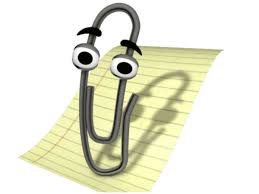
I have to admit, I’m a little worried. I’m a veteran of the 5-1/4-inch floppy disk era. Even before that, I navigated my way from typing class in high school (on typewriters) to computers with various floppy disk sizes and on through the many, many versions of Microsoft Word (remember when “Clippy” would give writing advice?).

Clippy, courtesy of Mental Floss

And then came email (woo hoo! Files could be attached and sent instantaneously) and the Internet. So far I’ve managed to move through these past 50 years of my writing career with a minimum of turmoil.

But I have to admit that the world of Artificial Intelligence is setting me back on my heels a little. While many of my colleagues have embraced and are using it well, I’m setting aside January to catch up. Here’s my reading material, Teaching with AI.

I have my concerns. As a writer, I’m honestly worried about my students deferring to AI and not understanding the creativity needed for every kind of writing — an email, a news release, a report. Having an AI just generate these annoys every part of me.

But I’ve been teaching long enough to know that writing doesn’t come easily to everyone. Even as I teach my students to use programs like Grammarly or Microsoft Word’s editing tools on their papers means I already have been teaching them to use AI.

So as I prepare for my spring Essentials of Written Communication class, I will be rewriting my curriculum to continue to teach the formatting and structure of various types of writing, while planning for students to use AI. I plan to create assignments for them to write and then edit with AI; I’ll be showing them how their human touch is still vital to anything they use AI to create; I’ll be talking about the ethical use of AI so they understand its creative limitations (and potential for plagiarism).

As the book says, “It is essential that educators start to talk about these issues with students. if we want students to use AI responsibly, both in school and beyond, AI ethics must be baked into curriculum and include AI literacy, an emerging essential skill” (3).

Do you use AI? How has it helped you? What concerns do you have about its use?

What kinds of jobs can a writer get?

OR How can I turn my writing into a career?

Helping my students turn their love for words and ability to write into a career is exactly what I’ve been trying to do with my life for the past 15 years.

I’m planning a class for spring 2025 that will be the introductory class to my Professional Writing major here at Taylor U. But I’ve set my sights a bit bigger as I also want to invite into the class any student who might be sitting around considering their major and thinking, “But I’m also a pretty good writer.” I want to offer a class where they can explore how their ability with words (which, believe me, isn’t something everyone has) can be leveraged into many types of jobs in their chosen fields.

Here’s the deal: Even though I teach the students who major in Professional Writing about the ins and outs of writing well and book publishing, I don’t leave them with the unrealistic dream that they’ll be able to make a living off the royalties from their published books (if, indeed, they get published). My students who have had their books published often still have day jobs — or have spouses who have day jobs. (I know you writers, laboring in the evenings or early mornings on your manuscripts in between bouts of “real life,” understand this.)

Gif from plaidswan.com

Most of my alumni are using their ability with words in many fields. I currently have former students in the following jobs:

  • Copy writer
  • Magazine editor
  • Book editor
  • Freelance editor
  • Digital content strategist
  • Communications director
  • Marketing director
  • SEO specialist
  • Publicist
  • Acquisitions editor
  • Literary agent
  • Author
  • Technical writer
  • Social media director
  • Proofreader
  • Email marketing manager
  • Blog writer
  • Web writer
  • Content writer

And no, AI is not going to replace all of these people. In fact, I plan to teach ways to use AI strategically to help us (and it can). However, we’re going to learn what we humans still need to know to help AI do its thing, as well as to help it deliver what’s needed.

Thus, as I create my syllabus for the coming semester, I hope to expose my students to the many opportunities available to anyone who can string words together in a coherent, concise, and clear manner. Good writers are desperately needed because content is desperately needed almost literally everywhere. Even writing a good email has become a lost art.

What jobs are you aware of that need good writers? Even if you’re a novelist by night or hammering away at your opus, where else do you use your writing skills?

Help me give my students some encouragement!

Create a personal social media calendar

As I mentioned in a previous post (4 keys to your author social media strategy), you as a writer need to be on social media, you need to choose the platform(s) that most works for you, and you need to be posting consistently.

“Aye, there’s the rub” (to quote Shakespeare). It’s difficult to be consistent.

In that post, I suggested that you create a weekly schedule that you can keep up with (and because that weekly schedule can repeat, you easily have a monthly schedule). I said that perhaps on Monday you’ll share on Facebook about something you learned in research for your book. On Wednesday you’ll post on Pinterest some photos you found about the time period of your historical fiction. On Friday, you’ll share the link to an article you read that was pertinent to your book’s topic. On Saturday, maybe a Canva-created quote from your book.

But if you’re a visual person like me, perhaps putting this on a calendar (physical or electronic) will help this make sense. This will keep you from worrying about posting or getting behind and having lapses of days or weeks at a time.

As I was posting around the release of Pathway to Publication, I needed to create a visual plan to help me to both remember to post and not stress about remembering to post.

Below is a sample week that I created at the time. This one week provided a template for the rest of the month — which then created a habit that’s easy to remember. Each day I describe a post or two and which platform. Of course, when I feel inspired, I can post more often. I take Sundays off and breaks on Saturdays between blog posts. And I only blog once a month. I wish I could do more, I just don’t have it in me with my other responsibilities.

Sample One Week Social Media Calendar

MonTuesWedThurFriSat
Insta and X: Create a Canva with helpful line from book.
Post.
FB and X:
Post regular weekly Typo Tuesday pictures.
X: Share a link to an article of interest about writing or books.Insta and X: Post humor meme about writing, teaching, or books. X: Ask convo starter question. Insta: Photo “day in my life.”Website: Work on blog. Plan 1x or 2x month. Share on FB & X.

You may have other social media to post on, or you might set aside a day each month to work on a newsletter. The point is to decide what you need to do and then schedule time each week or month to get it done.

So much less stress when you just have to do what is scheduled on each day to do!

Beyond the weekly schedule, I try to be aware of annual holidays and special days throughout the year tied to my brand — writing, editing, books, communication, teaching. (The following are courtesy of the Days of the Year site.) These can help focus the quotes I use.

  • January: New year, resolutions, how you can set up for a successful writing year, setting goals; January 9 (National Clean Your Desk Day); January 23 (National Handwriting Day)
  • February: God’s love for us; February 7 (National Send a Card to a Friend Day); February 14 (International Book Giving Day); National Library Lovers Month; Freelance Writers Appreciation Week (second week)
  • March: March 2 (Dr. Seuss Day); March 2 (World Book Day); March 4 (National Grammar Day); Easter (March or April)
  • April: Easter (March or April); spring cleaning; April 6 (National Bookmobile Day); April 20–26 (National Stationery Week); April 23 (World Book Night); April 27 (World Stationery Day); April 30 (Independent Bookstore Day)
  • May: My college students graduating; May 3 (Write a Review Day); May 16 (National Biographers Day); May 19 (National Notebook Day); Memorial Day
  • June: my professional writing summer academy week; June 23 (National Typewriter Day)
  • July: Info about the upcoming Taylor University Professional Writers Conference (held end of July); July 1 (Write a Letter Appreciation Week); July 4 (Independence Day); July 30 (Paperback Book Day)
  • August: Prep for the teaching semester; August 5 (Blogger Day); August 9 (National Book Lovers Day); August 31 (We Love Memoirs Day)
  • September: Back to teaching; Read a New Book Month; Sept 1 (World Letter Writing Day); September 6 (National Read a Book Day)
  • October: October 1 (International Coffee Day); October 18 (National Chocolate Cupcake Day—I love cupcakes; sue me); October 29 (National Cat Day—I own way too many cats)
  • November: November 4 (Fountain Pen Day); November 15 (I Love to Write Day); Veterans Day (I’m an Air Force brat); Thanksgiving
  • December: December 21 (National Short Story Day); Christmas

Now if you check up on me, you’ll probably not see this continued activity because I know what I should do but am not very good at execution. I did fairly well around the release of my book but have not been consistent since. Writing this post is making me think I need to get myself back on track.

What about you? What do you do to stay motivated and consistent with your social media postings?

Gif courtesy of https://metricool.com/social-media-gifs/

Writing Real — More than a Dum Dum

In my Freelance Writing class this week, we’re working on the “art of living” article — writing that seeks to inspire or help readers live life just a little better based on our ability to share our own joys and struggles.

Our text puts it this way: “The key to writing art-of-living articles is to write an article that will make a difference in someone’s life—to provide the reader with something to hold on to and take away into her own life.” —Handbook of Magazine Article Writing

To really make this work, however, that piece needs to provide transparency into the life of the author. Readers want writers to be real, to dive deep, to share their stories.

But it doesn’t need to be dark or traumatic. Sometimes the sweetest and most inspirational pieces of writing come from memories, moments, minute details of life that draw us back and make us think. To give my students that opportunity, I gave them a handout with their lives (so far) divided into segments. They were to write down five or six memories from sets of years: 0-5, 6-10 (elementary school), 11-14 (junior high), 15-18 (high school), and 18+ (college). As they began to scribble, I explained that the memories that came quickly are worth thinking about further. There’s a reason that those bubble to the top.

Their job then was to choose one of those memories and describe it. That gets the scaffolding in place. Now to get a solid art-of-living piece, to get to something that will resonate with our readers, we need to go deeper.

So we considered some questions. I asked them to close their eyes and go back to that memory. What was going on in their lives at that time, in their family life, in the world? Where were they living? Who else was part of their lives at the time? What else do they see, hear, feel, smell, taste? As they looked at that memory in a bigger picture and considered why that particular memory surfaced at all, they can write a story with heart. They can begin to see how that minor thing matters, and in turn, help their readers put themselves into their own similar story.

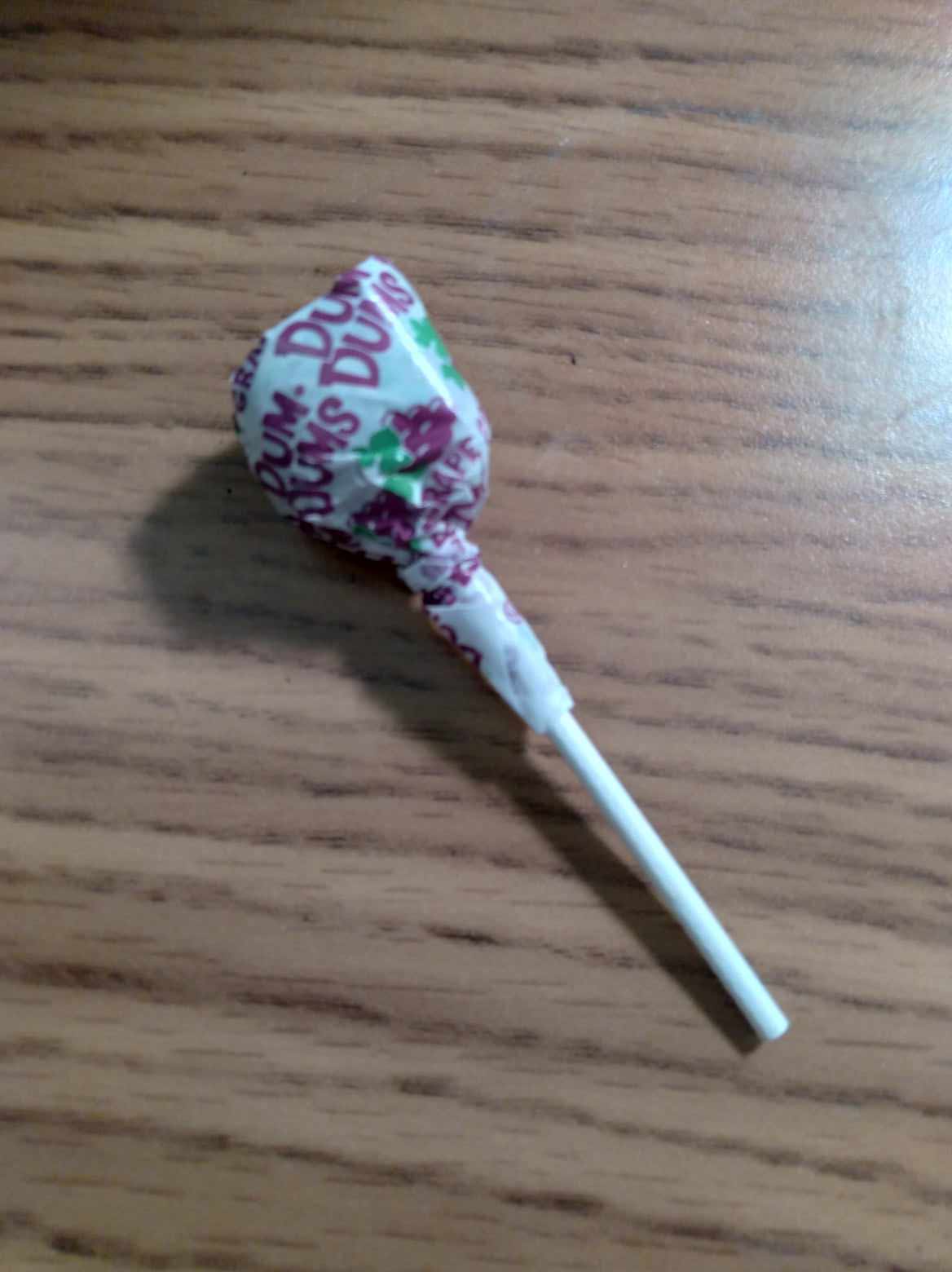
As if to make me take my own advice, today, a sweet college student dressed as a bunny rabbit stopped into my office and let me draw some Halloween candy from her outstretched pumpkin basket. I drew out a Dum Dum.

The Dum Dum that arrived today.

In that moment, I saw my Grandpa Chaffee’s face. He had been a rural mail carrier in the little town of Wattsburg, PA, and its environs. He drove his massive Oldsmobile Toronado to deliver mail — and there was always a big bag of Dum Dums on his front seat. The children on his route knew he’d give them a sucker. Even though our family visited him only once a year or so, whenever I got into that enormous car to ride with him, I drew a Dum Dum from the bag and stuck it in my mouth, sucking happily as we zipped down twisty dirt roads.

Gramps, me, and Trixie, circa 1964.

That Dum Dum sent me back. The joy of our traveling military family always returning to deep extended-family roots in western PA. The legacy of love and faith I’ve been privileged to receive. The deep loss of grandparents and now both of my parents. Changes as decades pass; foundations that remain solid. Heaven’s certainty. A loving family that shaped who I am. Sweet memories and sweet candy.

It’s just a Dum Dum, but now there’s something there worth writing. Something to help readers also think about how life changes yet some foundations are worth holding onto and passing on. It was just a Dum Dum, but it’s so much more.

What simple things in your life have a depth of meaning? What memories rise to the surface? How might you write about them?

6 Masks I’ve Worn This Week: Pros & Cons

It’s a brand new school year and a brand new way of thinking and teaching. If I thought that going completely online with my classes last March was a challenge, I’m now trying to teach in masks. Below are pics of me trying these various masks and the pros and cons of each. 

I’m only a few days in and already trying to determine what’s going to work for me. I started with the standard mask that I’ve been wearing into stores since March.

Pros: Lightweight and easy to wear, easy to speak through. Cons: Soooo boring.

I purchased some nicer, heavier-duty masks that I thought would be healthier by maybe screening out those germy germs better …

Pros: Heavier duty (keep germs out better?). Cons: These pull on my ears and begin to give me a headache during an hour of teaching.

Received this cute one with cats on it from my sister. (Does anyone else find it odd that these masks are now fashion statements?)

mask-2
Pros: So cute! And so appropriate.
Cons: Kept slipping down as I talked and needed to constantly readjust. Best for wearing when I’m not going to be doing a lot of talking.

Received this one from our department chair who felt it would be especially appropriate for me.

mask-1
Pros: Yay for a grammar mask! Cons: Kept getting caught in my mouth as I talked. Best for silently correctly people’s grammar.

Got hold of this one because … well … school spirit.

mask-3
Pros: School colors, school logo. Comfy. Cons: As with most of the other masks, a bit of a fogging issue on my glasses.

But still, the issue became that I really like to smile at my students. It’s bad enough that I’m looking at masks and eyes and receiving very little feedback visually. It seems worse that they can’t get any kind of visual feedback from me. So I have now opted for this:

mask
Pros: I can smile at my students and they can see it. Cons: I look like a welder. It messes up my hair. When I speak, it goes straight into my own ears so I feel like I’m in an echo chamber. Beware of a sneeze or spit. Can’t wave my hands a lot. Can’t scratch my nose or eyes. Oh, and I can’t take a drink with it on, unless I have a loooong straw.

So, why choose the one mask with the most cons? Well, I feel like the ability to offer some kind of visual feedback to my students is very important — hair, spit, echoes, itchy nose, and all.

Around campus, I’ve seen masks of various materials, colors, and styles. We are indeed making these into statements to try to reflect a bit about ourselves, even … ahem … behind the mask.

What about you? How are you dealing with the masking situation and what are you doing to make your masks reflect you?

6 Tips for Parents to Help Their Kids Survive as Virtual College Students

Last week’s post about surviving as a virtual college student offered some basic info for many students heading home to finish their semester. I (and all my colleagues at Taylor University and teachers pretty much everywhere) have been trying to comfort students and rework courses so we can deliver the desired learning outcomes in an online format.

Then I came across a post on Facebook by Lori Heinrichs Cahill. I don’t yet know the source of this material (indeed it may be her), but it’s so helpful that I want to repost much of it. If this is coming from another source, as soon as I know if there is an origin beyond Ms. Cahill, I will happily add that source here.

And, also happily, there are … wait for it … 6 tips! The advice here is really only going to be workable if (1) your student does what I’ve suggested in the previous blog about creating a schedule and being in the school mindset, and if (2) parents and their student(s) figure this out together. Start the communication now and figure this out together now. Trust me. There will be a whole lot less stress later if you lay the groundwork now and then adjust along the way over the coming weeks.

yes

So here you go with credit to the original author (and additional comments from me in purple):

A message from a faculty member to parents of students now doing college from home:

Many of us are navigating new terrain beginning this week, so I thought I’d share a few thoughts as we move forward.

1. Your student is not home for break, and don’t treat it as such.

Your student is still carrying a full course load and class schedule. They may have a class scheduled during your normal family dinnertime. They are not going to be able to supervise younger siblings all day. They may not be available to drop off groceries for Grandma. That’s not to say they shouldn’t help with things around the house. . . . But make sure that you are making requests when they are truly available and respect their schedule.

[Author’s note: While some teachers will be allowing students to do their own work at their own pace (hence, the need for them to create a schedule that forces them to do the credit-hours-worth of work each week), some teachers will be creating a few classes that will require students to log in at the same time for a virtual class. It is going to be vital that your student be able to do this–both in terms of schedule and in terms of capability. Many Internet services are offering help during this time of great need. Check with your provider.]

2. Realize that they are under A LOT of stress.

We are entering the most stressful time of the semester with final projects, papers, and course material that is at its peak difficulty. We are asking them to navigate new online systems that they may not have used before. On top of that they have been displaced from their normal routine, their social interactions, their campus resources, etc. Many of them (especially seniors) are grieving the loss of anticipated spring performances, sporting events, and campus activities that they have been working toward all semester/year. Some of them have lost the opportunity to say goodbye to their senior friends.

3. Make sure they have the resources they need to be successful.

To the best of your ability, make sure they have a place to work where the rest of the family knows to leave them alone. Do they have the computer/Internet connection they need to do their work? Have they retrieved all of the necessary textbooks, notes, etc. from their dorm room? If that’s not feasible, have them check with their professor about online access to the text. Many publishers are providing free Ebook access during the pandemic.

4. Remember, they are not in high school anymore.

They do not need you to remind them when they have assignments due, and you don’t need to tell them when they should start studying for the next exam or writing that paper that is due tonight. They are adults and fully capable of managing their workload.

[Author’s note: But as is mentioned above, they are indeed grieving, feeling confused, and worried. We’ve been through a lot in our lives (our grandparents remember rationing during WWII, our parents remember the draft during the Vietnam War, we remember 9/11). Our kids don’t have a way to process this since they’ve never experienced anything like this. They might need a little bit of encouragement. You know your young person. Help out as needed and be available, but don’t be a helicopter parent.]

5. Just a warning, college students have really weird working and sleep schedules.

It is not uncommon for them to schedule a meeting with team members at 9 or 10 pm, and prime study time for most is after dark. Just let them do what works for them and remind them to shut the lights off when they finally do go to sleep.

[Author’s note: They may still be working on group projects that will require them to work together on some form of group communication platform (if your broadband can handle it). This may mean some late nights. Let them do what they need to do when they need to do it.]

6. Discourage them from getting together with local college and old high school friends.

. . . Reassure them that in a few weeks, when the coronavirus cases start to decline, they will be able to go out and do things with friends. For now, stay home as much as possible. And (I never thought I’d say this) encourage social interaction through the phone that’s always attached to their hands for the immediate future.

Most of all, enjoy having your kids back under your roof for a while.

Stay healthy!

P.S. Remind them to be kind to their professors. Most of us have had a week or less to completely revise our classes, assignments, and assessments to an online platform. We are using technology that we have never used or never used in this way. Many of us also have children home from college, school, or daycare — or elderly parents that we are concerned about. We will do our absolute best to provide your students with the quality education they deserve, but we will make some mistakes and some things we try are going to fall flat. Be patient, we’ll get through it together.

[Author’s note: Amen and amen.]

challenge

I’d love to hear from you. What are you doing to help make this transition work for your college student?

Where’s Your Foundation?

As a Christian publishing professional, editor, writer, and now faculty member teaching Professional Writing, I have been considering my responsibility to my students about their responsibility as Christian writers.

The first concern, as noted in this post, is that my students stand firmly on the foundation of their faith. From the first day of the 101 class to the last day of capstone, I want to help them understand that they must stand on solid foundational truths that will undergird their writing (and, by extension, their lives).

Most of my students have a foundation of faith that drew them to Taylor University. Most are Christians but with a wide variety of perspectives on doctrines, social issues, and politics. There is room for all of those perspectives in my classroom, but I always want to draw them back to where we all agree: belief in Jesus Christ as Son of God and Savior. Scripture is pretty basic: “If you openly declare that Jesus is Lord and believe in your heart that God raised him from the dead, you will be saved” (Romans 10:9 NLT). We have our theologies and our beliefs and our opinions, but it really comes down to that.

So where do they land? Where is their faith, personally? Much of this exploration occurs outside of my classroom in other classes, at chapel, in their small groups in the dorms, and just in living lives as college students. I want them to wrestle with these questions so that as they take the classes across the Professional Writing curriculum, they stand on a foundation as they think critically about how their faith matters in their lives and how it affects their writing.

It matters because their faith matters first and foremost. They don’t know if their words will ever get published into the world, but they do have a responsibility to write where they are called to write. They must not make their reason for being or their standard of success tied to getting published—that should never be the “be all and end all” for any writer. Far more important is their obedience to God wherever He places them and whatever words He gives them. Their relationship with God trumps anything else in life—it trumps every success and every failure, for it is ultimately what matters most.

I encourage them to pay attention in the Biblical Literature classes, to explore Scripture in small group studies, to read the Bible all the way through, to listen to God in a quiet time (in whatever way that looks to them). I want them to understand how God’s Word is “alive and powerful. It is sharper than the sharpest two-edged sword, cutting between soul and spirit, between joint and marrow. It exposes our innermost thoughts and desires” (Hebrews 4:12 NLT) and how Scripture needs to be a daily “lamp unto my feet, and a light unto my path” (Psalm 119:105 KJV). I want them to love the Bible.

So then, what it means to be a Christian is to have foundational belief and, I would add, to seek in individual, faulty ways to live and act on those foundations through a daily personal walk with Jesus. It means staying in Scripture and prayer so as to always walk closely with the Father. This doesn’t mean that all Christians will believe the same, act the same, apply those foundations the same, or carry that faith into the world in the same way. We are each working out our own salvation with fear and trembling (Philippians 2:12-13). But still, the biblical faith foundation is vital.

Christian writers must be marinated in Scripture, in prayer, and in a daily walk with Jesus.

That’s the foundation we must have.

Christian writer friends, how do you keep your faith fresh and alive?

Image courtesy of Thumbtack via Google images.

The Challenge of Christian Writing and Publishing

It’s been an interesting challenge, this past school year, as I’ve taken on new classes (translate—learn what I need to teach and then figure out how to teach it) and gotten out of my comfort zone.

But it has forced me to do some deep thinking about what I’m doing, why I’m doing it, and what really matters.

Why do I teach writing and publishing?

What do I really want my students to know?

In the past few months, three things have become more clear to me. For the Christian writers who come through the Professional Writing major at Taylor University, I am committed to them graduating with the following understandings:

  1. as Christians, I want them stand strong on the foundations of their faith, understanding that Scripture and their faith impacts every aspect of their lives; I want them to fall in love with God’s Word and see its power for the rest of their lives;
  2. as writers, I want them to understand that their love for and ability with words is a calling and a gift from the Caller that they should and must continue to hone and improve;
  3. as Christian writers, I want them to comprehend the power of those words and their responsibility to God for how they use their giftedness with words, especially as they seek to publish those words into the world.

How can my faith intersect my discipline as I teach the Professional Writing curriculum? How can I—a Christian publishing professional, editor, writer, and faculty member—bring these fundamental truths into our program? How can I bookend my students’ learning from their 101 introductory class to their final capstone class with these truths that matter?

It feels like a very heavy load.

But down deep in my soul, I sense that this is vital. This is more important than anything else I can do.

It is incumbent on Christian publishing professionals—whether authors or editors or publishers or marketers or bloggers or social media experts or agents—to deliver material that is well written, winsome, true, biblical, and honors Jesus Christ.

In a recent discussion, one of these Christian publishing professionals told me, “Too much of Christian writing is either preachy or saccharine. We need to bring wisdom, winsome words, and truth from our foundation into our writing.”

But what does that even mean anymore? The world is so deeply divided. Even among Christians there is so much division we sometimes act like a circular firing squad. I wonder how we can impact our world for good. How can we disagree about living out our faith (our politics, our work lives, our theological beliefs) but do so in a winsome and respectful way? How can we engage the questions so important in our culture, even as we disagree, while still being able to help others find what we have discovered in the foundations of our faith? In the end, that foundational piece is going to be all that matters to us anyway.

How do I guide my students to these understandings—even as we learn good writing and style tagging and editing and platform building and how to do a book proposal?

How do I guide them—even as we look for truth in Scripture and perhaps disagree on many other areas?

How do I help us all “work out our own salvation with fear and trembling” and work out our writing and publishing lives in the same way?

There’s a lot to unpack here, and I invite you to join me both as I prayerfully seek God’s guidance and express my thoughts in the blog. I invite you to comment with your own thoughts and ideas as I think this is a big conversation worth having.

Writers have a lot of power with their words.

And the world needs our very best.


Prepping for Life (Part 2)

“Calling is the truth that God calls us to himself so decisively that everything we are, everything we do, and everything we have is invested with a special devotion, dynamism, and direction lived out as a response to his summons and service.”

–Os Guinness, The Call

In a previous post, I told you about how our Professional Writing capstone class was kicking off with my 17 seniors. That was Part 1.

For Part 2, my students worked on the Flower Diagram from What Color Is Your Parachute? (I used the 2017 version). If you don’t know, the Flower Diagram is a self-inventory that helps individuals work through their own personal preferences in working style, environment, coworkers, location, and even stretching to what each person wants to accomplish in life. The students overwhelmingly found this exercise (which took us two class days, so seven hours) to be helpful in capturing in one spot a lot of scattered information about themselves. (We even built a preliminary budget on Excel docs!)

For another class, we talked about how to network — which basically means learning how to be a good listener. I then had each student write a 30-second elevator pitch to answer the question, “So tell me about yourself” (much as an interviewer might). They then did a “speed dating” exercise where they moved from one person to the next, spending three minutes sharing their pitch, listening to the other person’s pitch, and then conversing before the bell rang and they moved on to the next person and did it again.

Having to say the pitch and hone it over eight times helped them be ready for . . .

. . . mock interviews.

I gave the students a list of the most-asked questions, and a link to a website that would help them understand what employers are looking for when they ask these questions. I required the students to use their journals to write answers to each question, or at least to take notes as to what they would need to do to prepare for those questions.

Six professionals gave of their time to interview six students each. The students went in groups of three; each was interviewed while one of the other two kept time and both observers wrote assessments. After each interview, they all had five minutes to talk together about the good and the areas that need improvement, and then the groups moved to another interviewer to try again and improve.

Sort of helped with the jitters and to make the interviewing process a tiny bit less intimidating.

I really wanted this to be a practical class so that they are ready — resume polished, LinkedIn profile and portfolios ready, answers to interview questions prepped, all with a feeling of certainty that they understand themselves and their goals just a bit better.

But lest you think it was all fun and forms, stay tuned for Part 3.