Unlocking SEO: How Keyword Titles Boost Video Views

I honestly never thought much about SEO (search engine optimization) until one of my students. Grant, decided to take on that topic as his final senior project in our Professional Writing major. He had found the topic interesting during our Social Media Strategy class and decided he wanted to learn more.

He researched deep into the weeds of the topic, wrote his paper, and did a final presentation that allowed him to consolidate the research and give the basics of search engine optimization in a presentation that was understandable to those of us who knew nothing. After graduation, Grant got a job with Visit Indiana, the tourism arm of the State of Indiana — now working as webmaster for their website with its tens of thousands of pages. When it comes to SEO, he knows his stuff.

Search engine optimization basically optimizes your search on the search engines … which means that we want to write our titles and posts and internet copy using key words that searchers are going to put into the search bars. When we do so, there is more chance of the algorithm finding our material and bringing it higher on the results. (That’s a way-too-simplified version and it’s beyond my comprehension, but I do understand working with words to match search words.)

Every semester, Grant graciously returns to my classroom to present that basic introduction to SEO to my students. Many of them have no idea what it is or how to use it.

And, if I’m honest, neither did I.

I had started a YouTube channel a few years ago with nothing more than a few screenshotted videos of me showing writers how to do various tasks in Microsoft Word (creating a title page, creating a Table of Contents, etc.). I recorded one of them because a former employer asked me to show how to do style tagging so they could send the video to clients. I created others to go along with my Pathway to Publication book as part of the manuscript formatting chapter. My little YouTube channel sat fairly quiet, with a few folks clicking on and viewing my videos.

As Grant taught about SEO, he explained the power of using key words in titles and descriptions, thinking of what a searcher on Google is going to ask. He suggested that we plug in some questions, and then scroll down to the “People also ask” section to get an idea of those googled questions, the “How do I …?” questions. I went back and changed the titles and descriptions to my eight videos (I know, I said it was a small channel) to questions or statements someone would actually put into Google.

For instance, “Title pages” became “Creating a title page in Microsoft Word,” and in the description of the video is the question, “How do I add a title page to my manuscript?”

A few months passed without me checking in. Last week, I opened the YouTube page to show it to the students in my Editing class to let them know some of the things we talked about in class are in video form there. One student piped up: “Wow, you have 11,000 views on that one video.”

Whaaaaat?
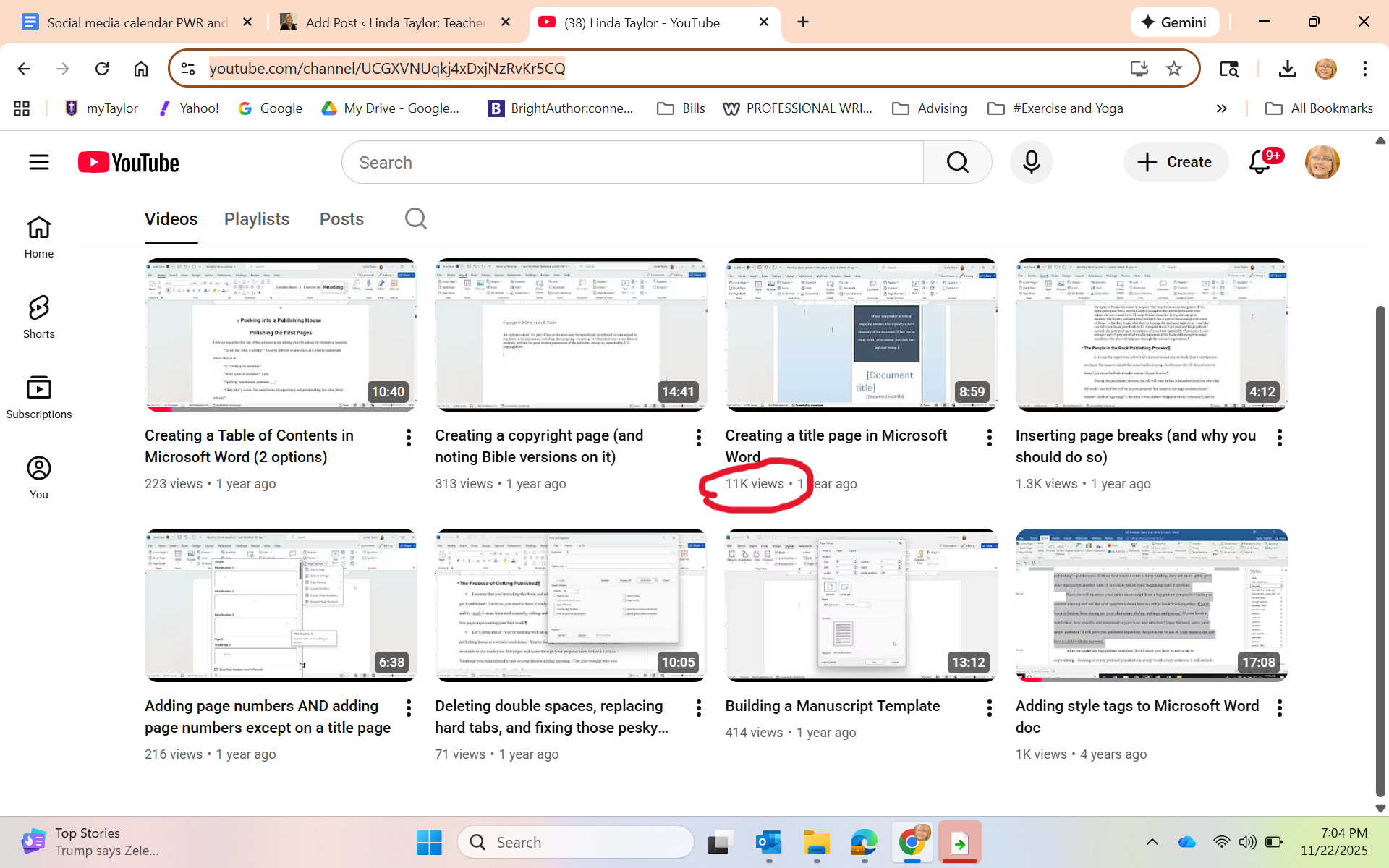
Just in case you can’t see it:
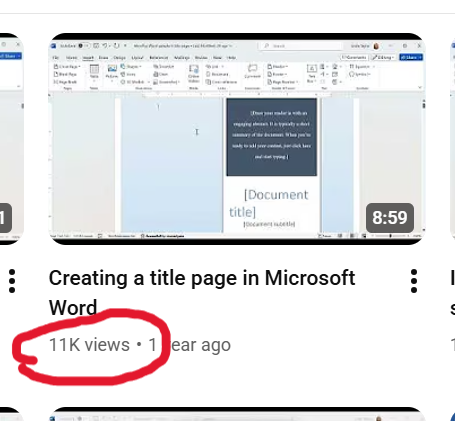
I honestly didn’t think it was real. I sent the screenshot to Grant, thanking him profusely and asking him also if this could even be real. He checked it for me, and then sent me this screenshot, showing that my video appears as the first video option when he googled “how to create a title page in Microsoft Word.”

“You should be proud of yourself,” he kindly said.

I don’t think I’d say that. I just find it exciting to see that yes, indeed, SEO thinking works. AND that so many folks happened upon my little video and, hopefully, made killer title pages!

I’m basically an influencer now …
4 keys to your author social media strategy

As much as I talk and teach about social media, I have rarely written about it on this blog. Turns out, 2015 was the last time. In rereading that post from nine years ago, I see that it stands the test of time. While social media constantly changes, some things stay the same. One thing that is the same:

If you want to get your book published, you need to be out there on social media.

So how do you build a social media strategy? I know many of you struggle with this. But every publisher or agent will tell you that it is vital that you have a presence on social media. Let me help you get over your distress and offer four key points.

1. It’s not all about you.

That’s meant to make you feel better. Being on social media as a writer means the privilege of engaging with your “tribe” (a Seth Godin term), the community of writers — and not just writers, but writers writing in your genre, published and unpublished, local or around the world. On social media you find and follow those people. It has never been easier to connect with your favorite authors and with other likeminded writers working in the trenches. Seriously, we need one another.

Make your social media about those folks. Celebrate their successes. Read their books and learn from them, then share them on your social media, write reviews, be excited. Point to others, not at yourself. The more you do this, I guarantee you’ll begin to build a network of people around you who will support you when your time comes.

2. But you should also share about you–authentic you.

But at the same time, you need to let people see a window into your world. You’re not just lurking over in their world while presenting a blank slate about your own. That’s hardly helpful because the whole purpose is to join these networks of people. So let them know you a little. But be you. Be authentic.

Share about your writing process: was today a great day of writing? Why or why not? What works best for you? Share about what you’re researching and learning. All writers know the rabbit trails we can get on when we’re researching information on the internet. What new pertinent (or not) information did you learn today? Then you can get a little more personal.

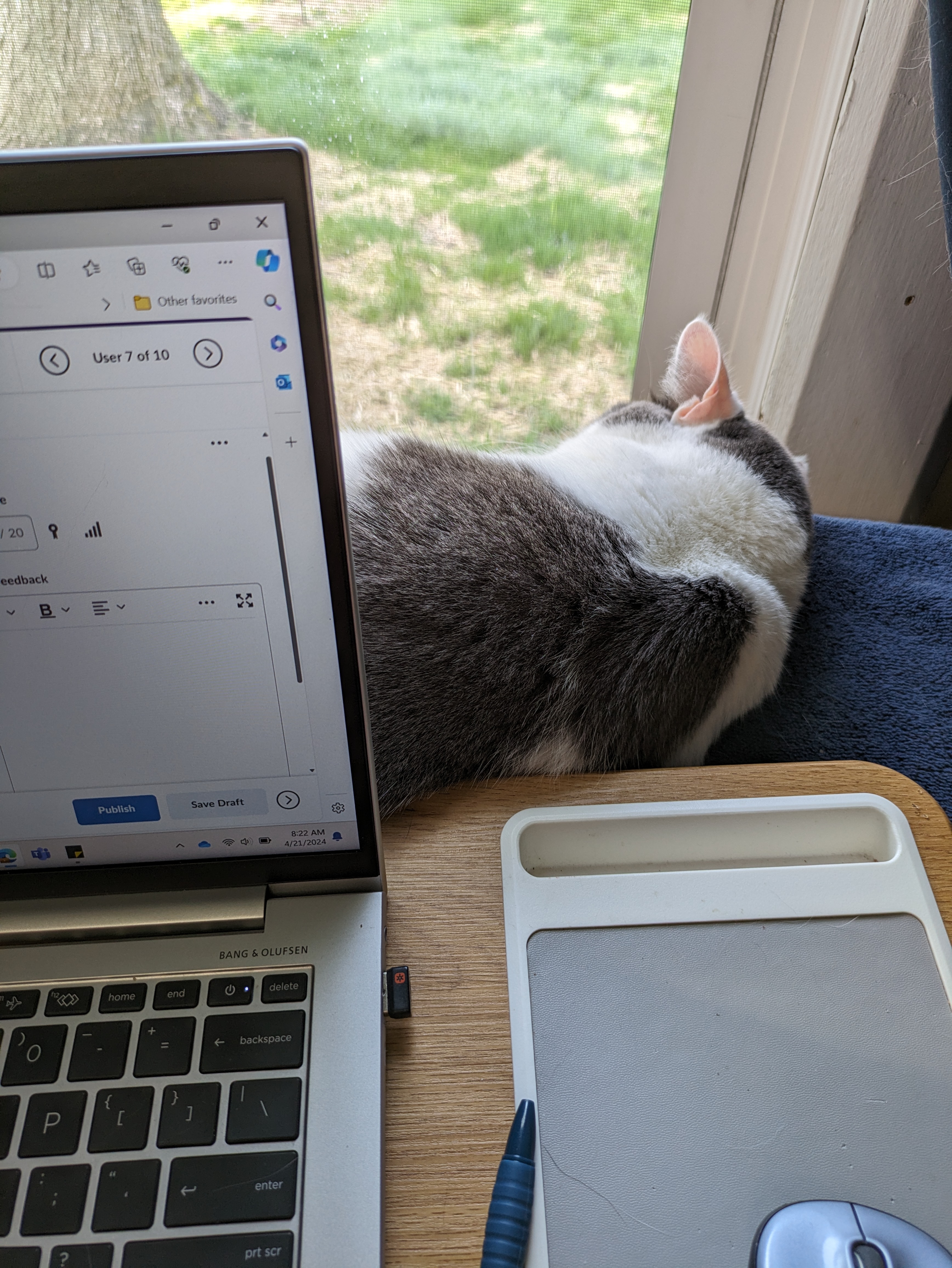
Pinky is not helpful at all.

You don’t need to go overboard, but do know that people are interested. Talk about how your cats are not helpful. Pets are always safe and fun, especially if you don’t want to share family photos or information. Fine, just stick with your writing. I would advise you to stay out of politics unless that’s what your book is about. Just stay on brand. You can do all of these whether you’re blogging or posting on social media.

3. You don’t need to be everywhere.

You can’t do every social media platform and do it well. After all, you have a book to write and, I assume, probably a million other things going on in your life. You should be on the platforms you’re comfortable with and where your readers are. I would advise that you have a website, because that is your own piece of real estate that all of your social media can point back to. This is where you have your author photo and bio and your blog (and yes, you need a blog so it can showcase how you write and that you can indeed write).

From there, perhaps you just want to do Facebook. Or Goodreads. Or Pinterest. If you’re writing YA, then you need to be where the young people are, which is probably Instagram. Study how to use these platforms well. Find your favorite authors or writers you admire and see what they’re doing on these platforms to give you ideas.

4. Post and engage consistently.

This ties back to the “if you want to get published” theme and the “you can’t be everywhere” idea. You may despair that you haven’t been active for a long time or you don’t have many followers. That’s okay. Start back in again, and then create a weekly schedule that you can keep up with. It has to work for you or it won’t work.

Perhaps on Monday you’ll share on Facebook about something you learned in your research. On Wednesday you’ll post on Pinterest some photos you found about the time period of your historical fiction. On Friday, you’ll share the link to an article you read that was pertinent to your book’s topic. On Saturday, maybe a Canva-created quote from your book.

Then, as people engage with you, engage with them. While many social media experts will talk about how you need X number of followers to even be considered for publication, that’s not true everywhere. If you’re building a following and engaging with your followers, if you’re actively and consistently posting on brand, if you’re showing yourself as winsome and creative and someone any publisher would love to work with, well, you’re doing it exactly right.

Realize you’re building relationships. That’s the most important thing you can do as you build your social media and create your author platform. It’s not all about you. You don’t have to become an internet influencer posting selfies all day. In fact, that’s the opposite of what you want to do. Focus not on yourself but on your tribe and your readers. Put good content out there that will be interesting and helpful to them.

Be you. Be there. Enjoy. Drop your blog link or social media handles below so I can follow you!

What’s your author brand?

I teach a class called Social Media Strategy at Taylor University. It’s a required course for my Professional Writing majors, although I usually get a plethora of other majors taking the course as well.

It’s purpose? In the first half of the semester, I help students navigate social media personally (more in another post about the second half of the semester). While many are active on social media, most students don’t know how to be strategic in beginning to think of themselves no longer as “kids” or even “college students” but as professionals seeking internships and jobs.

Since 67% of employers use social media sites to research potential job candidates, my students need to up their game. This class gives practical hands-on skills and encourages students in wise use of social media in all areas.

One of the first things we do is create a website. Each student uses a free platform (no $ or coding required) in order to nab their own piece of real estate on the internet. Their other social media then will branch out from this hub. But this is where it begins. This is where they showcase their brand and then build consistently on it through all their other media.

What do I mean about “brand”? When you think about a brand, you think about, for instance, McDonald’s arches—and then you immediately have some kind of emotional reaction tied to their branding of families coming together to eat, or eating in the car on road trips, or how that burger tastes the same whether you’re in Marion, Indiana, or Paris, France. Let me let Erik Deckers and Kyle Lacy, authors of Branding Yourself: How to Use Social Media to Invent or Reinvent Yourself, explain this: “It’s an emotional response to the image or name of a particular company, product, or person” (6). So, when you think about yourself as a brand:

Branding yourself means that you create the right kind of emotional response when someone hears your name, sees you online, or meets you in real life. The “right” kind doesn’t mean being someone you’re not. It’s your personality, your voice, your interests, your habits—everything about you that you want people to know. The information you show to other people, the things you say, and the photos you post should all fit within the theme of your personal brand. (7)

For instance, in the first iteration of my website and blog, I wrote devotional thoughts. A later version was about moving from the city to the country and the attendant adventures (like the time our rooster attacked me from behind and jumped on my back). Those were fine, and I still have those blog posts in my current website under various categories.

But what is my brand? What am I most knowledgeable and passionate about? What should I be writing about? What do I have to offer into the world?

For me, it’s anything having to do with writing, editing, and publishing.

When I figured that out, that made all the difference. This gave focus to my website and my blog topics, and it helped me understand how to use my website and social media more strategically.

Deckers and Lacy suggest asking yourself, “What do I want to be known for? What qualities do I want people to associate with me? What is the first thing I want to have pop in their heads when they hear my name?” (7).

As my students realize that potential employers will be seeking out their social media (which we clean up) and will find their website, this is where they can express themselves as future writers, editors, PR professionals, journalists, filmmakers, etc. This is where they show that they aren’t just one of many students graduating from college in their chosen field; this is where they show how serious they are about what they’re learning, and this is where they show their uniqueness, how they are “purple cows,” standouts.


Their website is a powerful tool. They will continue to change and adjust, as I did, but I’m counting on them being able to impress their future employers because they are more than just a name on a resume. They are interesting people with their own stories.

This is their brand.

Writers, what’s your brand? What are you known for? How might you build your website to showcase that?

More on social media usage for writers in upcoming posts.