Writers Need Thick Skin, Part 2: Dealing with Acceptance

As I noted in Part 1 of this topic, writers need a thick skin in order to handle the inevitable rejection that occurs as they submit their writing for publication.

Here, in Part 2, I want to discuss the entirely opposite reason that we need thick skin — dealing with the results of being accepted for publication: the inevitable reviews.

(The following is excerpted from my book Pathway to Publication, now available from Amazon.)

Be prepared for negative reviews

I’m going to burst your bubble, but only a little bit. I’m going to warn you about the perils of publication. Granted, this was your goal. But I want to make sure you’re prepared with a thick skin for the reviews of your book—maybe not in major publications, but everywhere that readers go. On blogs. On book reviewing websites. On Goodreads. On Amazon. And even when you write articles or blogs, be ready for folks to chime in wherever they can.
https://tenor.com/view/bubbles-gif-6215216

When your book is published, folks will read it and give their opinions. You may receive some five-star reviews on Amazon or Goodreads. You may receive some one-star reviews. Some readers will say yours is one of the best books they’ve ever read. Others will say your book wasted their time, and they didn’t finish reading it.

Be ready for both types of reviews. Take them at face value, realizing that never has any book pleased everyone. It always amazes me—the vast variety of comments and how a book can resonate with some people and be completely disliked by others.

I’ve started going to the Goodreads site online every time I finish a book, first to put it on my virtual shelves to keep track of what I’ve read, then to settle in and look for one-star reviews. Sometimes I have to scroll a bit, and sometimes they are waiting for me on the first page. I want to understand what makes people dislike a book. Sometimes the reviews help me pinpoint a niggling concern I had as I was reading—something I couldn’t quite put into words. Other times, it seems that readers are looking for something to complain about.

Some authors say that you shouldn’t read your reviews at all, for those very reasons.

But, let’s face it. You will.

When you see these reviews, you can’t do anything. These aren’t critique readers or your editor commenting. You can’t make changes. These are readers of your published work putting their opinions out in the world for all to see.

Take everything in stride. Remember that you can’t please everyone. Don’t take the one-star reviews so deeply to heart that you decide never to write again because you’re a failure. But, at the same time, don’t take the five-star reviews so deeply to heart that you decide never to write again because you can’t possibly do another book that would be as good. And if you do get many five-star reviews, stay humble.

Reviews are reviews. When you get hit with a one-star review (and you most likely will), don’t engage, go to battle, or try to change their mind. They read it, they didn’t like it, end of story. Move on. Some people just won’t get what you were trying to say or do in your book.

The problem is that no matter how many encouraging four- or five-star reviews you may get, it is those one- or two-star reviews that will keep you up at night, doubting yourself.

To make yourself feel better, choose a couple of favorite books you’ve read recently (choose some that are fairly new—not a classic from the 1800s).

Go to Goodreads or Amazon. Type in the title, find the book, and read the reviews. Read some five-star reviews (yay! They agree with you!). Now read some one- or two-star reviews (boo! They hated the writing, the metaphors, the characters, the plot, whatever).

Now realize that if your favorite book has such a variety of reviews, surely you are in good company.

Your best defense is to keep marketing your book and engaging with the folks who liked it—they are your audience, and they surely know others who will also like the book. And don’t be ashamed to ask for a positive review from them.

But don’t ASK for trouble

Here is where I get concerned and want to offer a warning. What you don’t want to happen is for your book to get legitimate negative reviews. What I mean is don’t be in such a hurry to self-publish (for instance) that you don’t have your book edited or proofread. If reviewers comment on typos and poor writing, that’s on you. Another issue would be rushing a book to press without fact checking or consideration of truthfulness. Seems obvious, right? Well, here is my plea to be careful and not to count on your editors to catch everything.

I never really thought about this until I finished reading Three Cups of Tea, by Greg Mortensen and David Oliver Relin. From the cover, it sounded like a lovely read about a man seeking to make a difference in Pakistan and Afghanistan in the late 1990s and early 2000s by building schools in remote villages. It topped The New York Times bestseller list for three years, so it must be good, right?

Well, not so much. It was an okay read. I didn’t love it, although I found it inspiring.

I finished the book, went to Goodreads to do my thing, and spent the rest of the afternoon reading review after review, which led me to article after article. The reviews, many of them glowing at first about the topic of the book (although many didn’t like the writing) turned negative after flaws and inconsistencies in the book began to be pointed out. Then in 2011, the 60 Minutes TV show did an exposé about parts of the book that had been allegedly fabricated, along with alleged mismanagement of funds by Mortensen’s nonprofit. Some articles and blogs vilified the book and the authors. Others pointed out the great work Mortensen had done in the region in spite of those lapses in judgment.

All that to say, sadly, the hard work of the book has given rise to questions and lawsuits. What was the motivation for the material that was not factual—such as the story of getting lost coming down from a failed attempt to summit K2 and crossing a bridge to a village (a bridge that did not exist at the time)? This story in the book’s opening provides the impetus for the remainder of the book. So, having that story’s facts on the first pages challenged called into question the rest of the book.

The author recounts another story of visiting Mother Teresa’s charity just after her death and his thoughts as he was able to sit quietly with her body. Problem is, the author says he was there in 2000, but Mother Teresa died in 1997 (not difficult to fact check). And none of the book’s editors caught it.

Mortensen said in interviews that various details had to be conflated to get the millions of original words down to the workable and publishable amount. Perhaps it was just faulty memory, or editing gone awry, or running stories together to keep the narrative moving. I don’t know. I just know that as I read beyond the whiny reviews by people who didn’t like the writing style and got to these very problematic issues that took down the author’s reputation, I felt terribly sad.

Be cautious with what you put into the world

This is merely a cautionary tale. In your rush to get your book out there, don’t skip the important steps because, trust me, you won’t get away with it. Don’t publish a book that hasn’t been vetted, edited, copyedited, fact-checked, and proofread. Make sure it is truthful and represents writing you’re proud of.

Then, when the inevitable nay-sayers don’t like your book, their reasons will be from their own particular tastes versus legitimate concerns. But in the process, you can stand behind your work with no apologies or backtracking.

The experience of getting published is like nothing else! But as you trek along the pathway to publication, take your time, be careful, do it right. Your moment at the mountaintop will be the better for it.

Copy taken from Linda K. Taylor, Pathway to Publication (Friendswood, TX: Bold Vision Books), March 24, 2023, pp. 211-215.

In Praise of Bookstores

You can spot a book lover. I mean, a real book lover. In a world where everywhere we look people are scrolling through backlighted pages on their phones, real book lovers are sitting on the bus, or in the waiting rooms of doctors’ offices, or in the corner of the office lunch room engrossed in the pages of an actual book.

And book lovers, by definition, are often bookstore lovers as well. This is what is celebrated in Lewis Buzbee’s little book, The Yellow-Lighted Bookshop: A Memoir, A History. The book celebrates the wonder and beauty held in your local bookstore.

When a bookstore opens its doors, the rest of the world enters, too, the day’s weather and the day’s news, the streams of customers, and of course the boxes of books and the many other worlds they contain—books of facts and truths, books newly written and those first read centuries before, books of great relevance and of absolute banality. Standing in the middle of this confluence, I can’t help but feel the possibility of the universe unfolding a little, once upon a time. (3)

Those of us who love bookstores—the smell of paper, the colors of covers beckoning us, the intense desire that we could just, somehow, read it all. (Except for the banalities, of course.)

bookshopBuzbee has spent a lifetime around books—working in small independent bookstores, visiting small stores as a sales rep, and, of course, as a reader. His love for bookstores is unabashed. Where else, he asks, can you go in and sample the merchandise in the way you can with books—sitting over your latté reading the first half of that novel before you decide to purchase? Where else can you purchase for a minimal price the wisdom of the ages (or, if you so desire, the wisdom of a Kardashian or two)? Where else can you be so alone as a shopper and yet so connected to the others in the store—simply because of your love for books? Where else is there absolutely something for everyone and someone for everything? Where else can you purchase something that doesn’t need any upkeep but promises hours of entertainment—and then willingly sits on a shelf for as long as you choose to keep it, easily accessible, ready with the same words in the same spot with, perhaps, the same effect as they had on you the first time?

Buzbee describes bookstores’ evolution—the stalls where a hawker sold his wares, the semi-permanent store, and the itinerant bookseller going from town to town with his wares on his back. Before the invention of the printing press, books were copied by hand, often by the bookseller himself. Sometimes booksellers acted as publishers, entering into contracts with authors.

It wasn’t until the expansion of the universities across Europe that books came to be more required and thus needed to be made more cheaply. A new class of copyists and the introduction of paper into Europe transformed the face of books and publishing. Then, of course, Gutenberg’s printing press was the game changer. “A printer could create in one day what it might take a single monk six months to accomplish. It’s estimated that before the printing press, there were 50,000 books in all of Europe; fifty years after Gutenberg’s first Bible, there were more than 20 million” (102).

Along came copyright laws and the rise of brick and mortar stores. One bit of information I found fascinating was that in early stores, books sat horizontally on shelves, just the pages bound in signatures (sets of pages), no covers. A customer would purchase the book, then choose the color and cost of the binding. (So that’s why all those books in the big old mansion libraries are all the same color!)

Those who get to frequent (or work in) today’s bookstores have a distinct advantage—the ability to work around things we love.

I can say we because, for a few summers after my college years, I was happily employed in my parents’ small Christian bookstore. I dusted shelves and shelved books. I watched my dad meet with the salesmen in the office in the back, my mom making a fresh pot of coffee, considering the books our clientele in the little rural town of Corry, Pennsylvania, would buy. I loved to see my mom putting together tasteful book displays in the front window. I loved to see my dad behind the counter with several Bibles laid out on the glass-top case, explaining the various features of each to an intent-looking customer. I loved that my parents would sell a Bible to a person who couldn’t afford it right away, but would allow them to take it, knowing that the person would be coming in with maybe only a dollar or two each week to pay off the purchase.

bookstore-opening
The grand opening and ribbon cutting of Ye Olde Book Shoppe, 1980. That’s me second from the left.

Ye Olde Book Shoppe had been an institution in town for decades. The previous owner had it in a room of her home; when my parents purchased it, they moved it to a storefront on Center Street. The bookstore was always such a peaceful place – soft music humming through the speakers, sunlight through the windows, the smell of fresh books, and the opportunity to sit at the counter ready to wait on customers. When I wasn’t busy dusting, I could pick up the latest book off a shelf to read at the front counter or purchase it (at a discount!).

So as a reader and writer and publishing professional and former bookstore employee, I found the history in Buzbee’s little book fascinating. His description of the Paris bookshop, Shakespeare & Co., opened in 1919 by Sylvia Beach is itself worth the read. Not only was the bookshop the haunt of expatriate writers like Fitzgerald and Hemingway and Pound, Beach also acted as publisher for Joyce’s Ulysses. Then the story of how she hid the entire contents of the store from the Nazis—well, that makes her a bookseller’s hero.

You reader friends will agree—there’s just something about a bookstore. Tell me your favorite bookstore story. What do you love about bookstores?

Buzbee, Lewis. The Yellow-Lighted Bookshop: A Memoir, A History. Saint Paul, MN: Graywolf Press, 2006.

My Favorite Books about Editing

So I’m writing a book. Yes indeed. A couple actually. One is for my MFA program; the other is for a small publisher. Both are about editing–one more in a memoir-esque fashion, the other more like a textbook, something I want to use in my future editing classes.

In the process of putting together my proposal, I needed to check out books similar to mine. As I ordered books online and checked them out from the local library, I fell in love with some of them–the voice, the humor, the helps, the advice, the exercises. So I thought I’d pass along to you some of my favorites. If you want to learn about editing or want to work more on being your own self-editor, you might check into some of these excellent resources. The great thing about reading books about editing is that you really get a double-whammy–you are also studying how to be a better writer, the kind of writer editors dream about!


dumCopyediting & Proofreading for Dummies, Suzanne Gilad. Wiley Publishing, Inc., 2007.

I’ve used this book in my editing class since 2010 when I first began teaching. The book does an excellent job of being very introductory, has exercises for practice, and incorporates vocabulary. It’s also the only book I could find that gives a clear delineation between copyediting and proofreading. It includes practice exercises, proofreading marks, and publishing vocabulary.


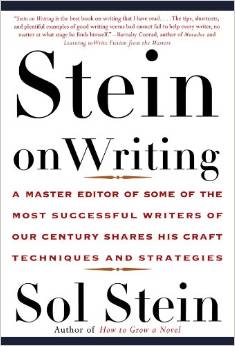
Stein on WritingStein on Writing: A Master Editor of Some of the Most Successful Writers of Our Century Shares His Craft Techniques and Strategies, Sol Stein. St. Martin’s Press, 1995.

I wrote more about this book in this post, so you can check it out there. Suffice it to say that this is one of those books that really will help you ask the right questions as you work on your own writing. He also offers advice to both fiction and nonfiction writers.


artfulThe Artful Edit: On the Practice of Editing Yourself, Susan Bell. W. W. Norton & Company, 2007.

Bell takes on the topic of editing yourself (and, by extension, others). She covers what she calls Macro-Editing and Micro-Editing. I love that she uses several pages working from information in Scott Berg’s book about Maxwell Perkins to discuss the editing process—and how Fitzgerald edited The Great Gatsby from Perkins’s advice. In between are testimonies from various authors about their editors. She discusses the history of editing–which is quite fascinating.


thanksThanks, But This Isn’t for Us: A (Sort of) Compassionate Guide to Why Your Writing is Being RejectedJessica Page Morrell. Jeremy P. Tarcher/Penguin, 2009. 

Morrell talks about her experience as a developmental editor, includes chapters that focus on the various elements of good writing (plot, suspense, characterization, stories, etc.), and teaches with anecdotes and examples. Her focus is on helping writers write better so that they can avoid getting rejected for the most common reasons that manuscripts get rejected.


companionThe Editor’s Companion: An Indispensable Guide to Editing Books, Magazines, Online Publications, and More. Steve Dunham. Writer’s Digest Books, 2014.

If you’re interested in more than just book editing, this one is a great resource. Dunham includes a level of content editing, copyediting, and proofreading. There are chapters on “Editing for Content,” “Editing for Focus,” “Editing for Precise Language,” “Editing for Grammar,” “Typography,” and some tips about word usage, words that are often misused, etc. He includes some checklists and examples. There is information about magazines, online publications, “and more.”


forestThe Forest for the Trees: An Editor’s Advice to Writers, Betsy Lerner, Putnam, 2010.

I also wrote about this one in a blog post. Lerner describes some general types of writers and then peeks behind the editor’s desk and into the publishing world. If you want an idea of what goes on in the editing world at a publishing house, this is a great book.


on writing wellOn Writing Well: The Classic Guide to Writing Nonfiction, William Zinsser, Harper Perennial, 2016.

No list of books would be complete without this little gem. If you often write nonfiction, this little guide offers everything you need to “write well.” We lost Zinsser in 2015, but his legacy lives on. I wrote more about this book in this post.


Of course, every copy editor should have style manuals (Chicago Manual of Style or an AP Style Guide). I’m sure I’m missing a few. If you’re an editor or interested in editing, what books have you read that you’ve found most helpful?

How to Support an Author’s New Book: 11 Ideas For You

So last week I talked about Literary Citizenship and why I love it. A key, of course, is supporting our fellow authors. In fact, that’s what it’s all about. Chuck Sambuchino offers 11 ideas for how we can support new books.

writersinthestorm's avatarWriters In The Storm Blog

By Chuck Sambuchino

large_5595133805My Writer’s Digest coworker, Brian A. Klems, recently geared up for the release of his first book — a humorous guide for fathers called OH BOY, YOU’RE HAVING A GIRL: A DAD’S SURVIVAL GUIDE TO RAISING DAUGHTERS (Adams Media). On top of that, my coworker Robert Brewer (editor of Writer’s Market) recently got a publishing deal for a book of his poetry.

So I find myself as a cheerleader for my writing buddies — trying to do what I can to help as their 2013 release dates approach. I help in two ways: 1) I use my own experience of writing & publishing books to share advice on what they can expect and plan for; and 2) I simply do whatever little things I can that help in any way.

This last part brings up an important point: Anyone can support an author’s…

View original post 1,450 more words

The Art of the Book Review

I just got off the phone with my friend, L. Marie, who recently created a blog, “Thoughts about writing and life.” I’m thrilled that she’s blogging! We chatted about Literary Citizenship and how she needs this online presence in order to impress the agents where she’s currently shopping her young adult fantasy book. She has an MFA and is a terrific writer—but she realized that she needed to get online and join the literary world. I talked to her all about what we’re doing in our class; we talked through WordPress and how to add hyperlinks and tags. She’s on a roll now!

She’s also an avid reader, so I encouraged her to do reviews of books (her current blog is a movie review that ties into her writing). And wouldn’t you know it, our Lit Cit class is talking about that very topic this week. Book reviews are extremely important–especially book reviews by book lovers and writers who understand the craft.

That’s you.

Indeed, Robin Becker at Penn State has an entire class on book reviewing because “my own experience had led me to book reviewing. Years ago, just as my first book entered production, I asked a more experienced poet how to get my book reviewed. She replied, ‘Review other people’s work. That way, you participate in the conversation.'”

As citizens of the literary world, we should participate in the conversation about books by reviewing books and helping along other authors who are just getting started.

Sure, review the latest Stephen King if you want, but it will be a great help to another fledgling writer if you discover and love his or her book and write a well-crafted review. Post it on your blog, sell it to a magazine where it might fit, offer it to a newspaper in the town where the author will be doing a reading. Follow up with an interview and do the same thing.

But maybe, like me, you wonder how to craft a good book review. Well, here’s some help.

I’m new to this, so I come to the topic eager to learn. Our class website featured an interview with David Walton, author and prolific book reviewer, who offered his advice on writing book reviews. So I am passing along what I’m learning to you.

I love the pie chart included there; further detail about each category on that pie chart is here so that you understand what plot synopsis (35%), critical analysis (25%), showing off (20%), providing context (10%), and quoting from the text (10%) mean in the context of a book review.

I also discovered that there is a lot of conversation happening in the literary world regarding book reviews. I think I’ve stayed away because I thought: (a) I’m not high profile enough to write in the New York Times book review column, (b) I don’t know how to write a review, and (c) I don’t even want to comment on Amazon because isn’t that just people who either like or dislike the author or the topic and really write nothing about the quality of the book? (Charles Baxter calls this “Owl Criticism”: I don’t like owls; this book is about owls; I don’t like this book.) Indeed, many publishers are vetting their book reviewers to make sure they’re legit.

Well meanwhile, over at Amazon, there’s been plenty of conversation about fake reviews, with Amazon actually pulling down many suspect ones. (For help in writing one of those short Amazon reviews, check out this post.)

So what does that mean for those of us just getting started?

First, read the book.

Second, understand the craft and study the book well enough to be able to see what the writer is doing as a writer.

Charles Baxter’s “Owl Criticism” post puts it this way, “A reviewer is entitled to any opinion at all, but he or she earns that opinion based on a description and a judicious citation of evidence. . . . Is it too much to ask of a reviewer that he should know what he’s talking about?” He goes on:

The marks of a trustworthy review, therefore, have a kind of doubleness: the reviewer manages to assert somehow that the book under discussion is of some importance for one reason or another; and second, a good review provides a formal description of the book’s properties, so that you could reconstruct it from the reviewer’s sketch of it. This description is not the same as a plot summary, although a plot summary may figure into it. What a formal description does is to show what a book is about in relation to the form in which the subject matter has been shaped or located. In order to write such a review, let’s say of a novel, you have to have a basic idea of how novels are constructed; you have to have the technical knowledge that allows you to stand back from the book and to say how a book is put together. By these criteria, quite a few book reviews are worthless.

Los Angeles Times book critic, David Ulin, discusses the importance of well-crafted reviews:

Criticism matters — not because of how many people read it, or whether they agree or disagree with it, but because it is a way of engaging with literature. . . .

Books can stir this range of emotions also, which is why the act of criticism can be so hard. It’s not just about opinion but engagement, the sense of hope, of anticipation with which we come to a book, and the ideas, the feelings, with which we walk away from it, even, or especially, if they are not what we expect.

For me, this is how I know I’m doing my job: not by whether I like a book or don’t (whatever that means), but by what I learn. When I’m reading and writing well, books open up before me; often, they turn my preconceptions around. They make me think — not just about the flow of this text, but also about the flow of all texts: the different texts by this particular author, the different texts that I have read. I have, in other words, to confront myself, to figure out what I think, and then like all writers, to follow that line to its logical conclusion, for good or for ill.

For us writers, it’s a part of our craft to learn to write a good book review. It’s an art form. It keeps us reading. It allows us to learn from one another. It connects us in this literary world. It allows us to share good books with one another.

It helps us be good literary citizens.