Prepping for Life (Part 2)

“Calling is the truth that God calls us to himself so decisively that everything we are, everything we do, and everything we have is invested with a special devotion, dynamism, and direction lived out as a response to his summons and service.”

–Os Guinness, The Call

In a previous post, I told you about how our Professional Writing capstone class was kicking off with my 17 seniors. That was Part 1.

For Part 2, my students worked on the Flower Diagram from What Color Is Your Parachute? (I used the 2017 version). If you don’t know, the Flower Diagram is a self-inventory that helps individuals work through their own personal preferences in working style, environment, coworkers, location, and even stretching to what each person wants to accomplish in life. The students overwhelmingly found this exercise (which took us two class days, so seven hours) to be helpful in capturing in one spot a lot of scattered information about themselves. (We even built a preliminary budget on Excel docs!)

For another class, we talked about how to network — which basically means learning how to be a good listener. I then had each student write a 30-second elevator pitch to answer the question, “So tell me about yourself” (much as an interviewer might). They then did a “speed dating” exercise where they moved from one person to the next, spending three minutes sharing their pitch, listening to the other person’s pitch, and then conversing before the bell rang and they moved on to the next person and did it again.

Having to say the pitch and hone it over eight times helped them be ready for . . .

. . . mock interviews.

I gave the students a list of the most-asked questions, and a link to a website that would help them understand what employers are looking for when they ask these questions. I required the students to use their journals to write answers to each question, or at least to take notes as to what they would need to do to prepare for those questions.

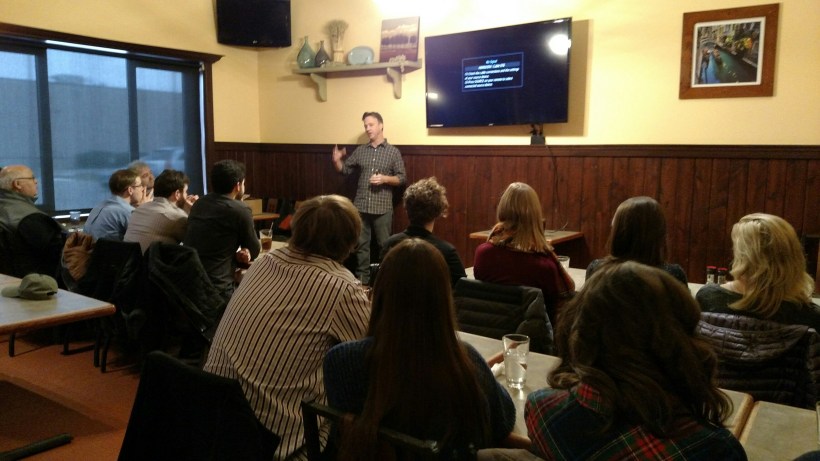
Six professionals gave of their time to interview six students each. The students went in groups of three; each was interviewed while one of the other two kept time and both observers wrote assessments. After each interview, they all had five minutes to talk together about the good and the areas that need improvement, and then the groups moved to another interviewer to try again and improve.

Sort of helped with the jitters and to make the interviewing process a tiny bit less intimidating.

I really wanted this to be a practical class so that they are ready — resume polished, LinkedIn profile and portfolios ready, answers to interview questions prepped, all with a feeling of certainty that they understand themselves and their goals just a bit better.

But lest you think it was all fun and forms, stay tuned for Part 3.


Prepping for Life (Part 1)

“Calling transforms life so that even the commonplace and menial are invested with the splendor of the ordinary.” (Os Guinness, The Call)

My seventeen Professional Writing seniors are closing in on the end of their careers at Taylor. I’m privileged to be teaching what our program calls the “capstone” class — three credit hours together to “cap” their time at Taylor U and their time in our major.

It’s a daunting class — and this was the first time I’ve taught it.

From the start, I knew the class needed to have a writing element, it needed some self-inventory, it needed some interview and job hunt practice and information, and it needed some “adulting” conversations. Three solid weeks, 3-1/2 hours per day. And I wanted all of it to feel practical and meaningful and purposeful.

And that’s what I’ve tried to do.

One day, we talked about our “callings,” considering the definition in Os Guinness’s classic book. How calling can be to many types of work, not just “Christian” work per se. How calling can be simply to finding splendor in the ordinary. How calling can change the world in small ways. How calling, with the acknowledgement of a Caller, gives meaning to life. That was the initial part of our self-inventory.

Then we did what one of my colleagues calls “the red thread.” Each student went through all of the classes taken at Taylor, noting what they liked and didn’t about each — trying to understand how they like to learn, how they learn best regarding type of class, type of instruction, type of content, etc. This traces a “thread” that serves to remind them of the many types of information and skills they’ve gained across these four years.

A highlight was a bus trip to Grand Rapids to visit Zondervan Publishing House, RBC (Our Daily Bread and Discovery House Publishers), and lunch with author Travis Thrasher. The students were encouraged that many of the folks in jobs they hope to have got there in convoluted ways while learning much about themselves along the way.


The Zondervan folks were incredibly welcoming, even offering us a panel discussion. They shared with my students about their pathways to their “dream job.”

taylor students

In the lobby at Zondervan. The mission statement applies to my students as well.

img_20190109_123846996-2624x1476

Travis Thrasher has gone from being an employee at a publisher to being a full-time writer. We enjoyed hearing about his fiction writing and ghostwriting.


img_20190109_142127780-2624x1476img_20190109_152705558-2624x1476

At RBC (Our Daily Bread and Discovery House), we learned about their incredible worldwide ministry, got to see their printing presses in action, and heard from two editors who told about their pathways to where they are today.

The takeaway? Be patient. Try on a lot of jobs. Learn what you can wherever you are. Network with people and let them know the kind of work you’re looking for.

And this was pretty much just week one. I’m excited to watch my students get excited about their possibilities for the future. They are well prepared to become publishing professionals.

Stay tuned for more adventures in Professional Writing capstone!